
June 22, 2026
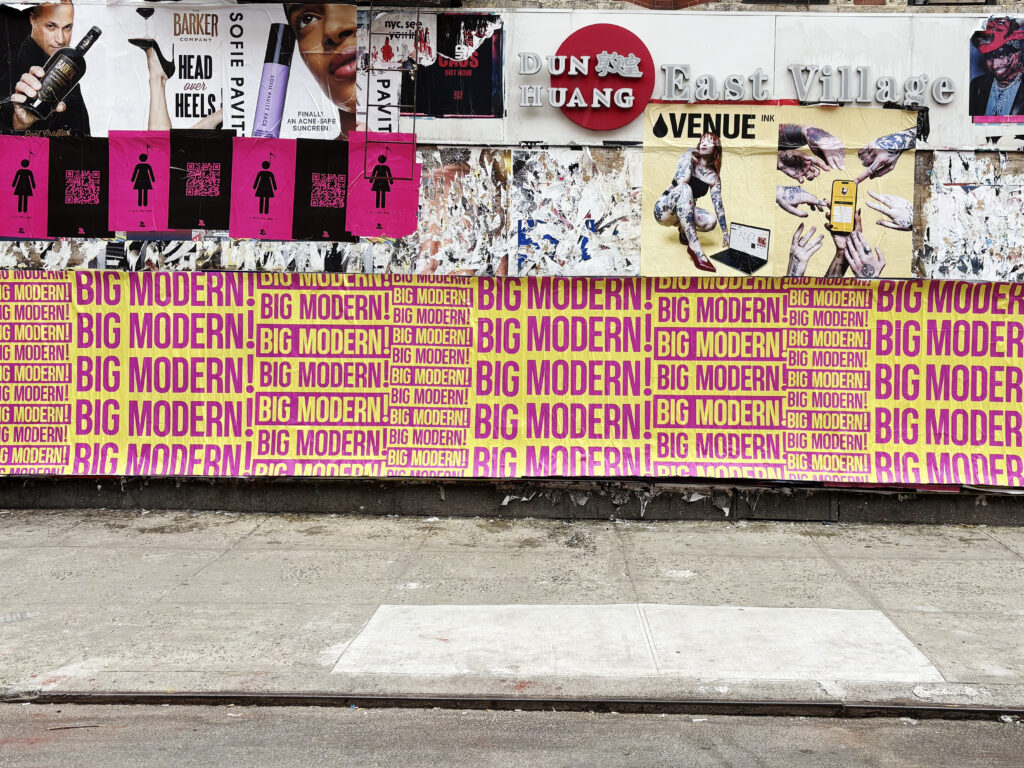
Most brands ask about permits after they’ve already been scared by an agency’s legal disclaimer page. The real question isn’t “what permits do I need”, it’s “which formats need paperwork in which cities, and who handles it?” In most cases, the answer is: the operator handles it, and in many major markets for many formats, there’s nothing to file at all.
Street advertising has been part of urban visual culture for over a century. Cities that tried to eliminate it largely gave up. The ones that embraced it built entire neighborhoods around it, Wynwood, the Arts District in LA, Wicker Park. What looks like regulatory chaos from the outside is actually a fairly stable ecosystem that experienced operators know how to read. The brands that treat guerrilla marketing like a legal minefield are usually the ones who’ve never actually run a campaign.
Here’s the real breakdown, by format, by city, and by what actually matters before you sign with an operator.
—
The formats that require permits are the ones that involve public infrastructure, extended physical occupation of a space, or commercial vehicle operation. Most street-level formats don’t qualify on any of those counts.
LED billboard trucks are the most operationally transparent format in the category. Full commercial vehicle permitting, CDL drivers, and some cities require advance route filing. This isn’t a gray area, it’s fully above-board, and a professional operator handles all of it as standard procedure. The permitting process is well-established, predictable, and not prohibitive. AGM has run hundreds of LED truck routes across the country; none of it requires brands to be involved in the paperwork.
Building projections occupy an interesting middle ground. Short-duration light projections, under four hours, are treated like event lighting in most cities, which means they’re subject to illuminated signage codes at most, not outdoor advertising regulations. For longer activations or anything involving branded messaging on a landmark, it’s worth confirming local codes in advance. In practice, most building projections in urban markets run without formal permitting because the footprint is temporary, non-physical, and genuinely difficult to regulate.
Large-scale sidewalk decals in business districts can trigger temporary sign or sidewalk obstruction frameworks in cities like NYC and LA. These frameworks exist, and when they apply, AGM navigates them as part of campaign planning. The application process is procedural, not restrictive.
Wheatpaste on private property requires agreement with the property owner. That’s a relationship, not a permit. No city agency is involved when a brand’s creative goes up on a privately-owned wall under an agreement with the owner. AGM maintains an active network of vetted wall relationships across major markets, property owners who have agreed to hosting, understand the format, and have seen dozens of campaigns go up and come down cleanly. The “permit question” for wheatpaste is actually a property question, and the answer is: work with an operator who has real relationships.
Sidewalk stencils in chalk are water-soluble and non-permanent. Cities almost universally leave chalk alone because there’s nothing to cite, rain takes care of it within days. The format is self-regulating in the most literal sense.
Snipe advertising, paper signs on poles, fences, construction barriers, is technically coded in most cities and practically tolerated in high-traffic urban corridors where it’s part of the visual landscape. Anyone who’s walked through Midtown Manhattan, the Mission in San Francisco, or Logan Square in Chicago knows what poster saturation looks like. Experienced operators know which routes are clean and which are actively swept. The knowledge is the value.
Reverse graffiti is the most legally clean format in the category, full stop. No paint, no adhesive, no surface alteration, you’re cleaning a surface to reveal a message. The permit question doesn’t apply. There’s no legal mechanism to cite someone for cleaning a sidewalk.
Street teams and leafleting on public sidewalks are protected as free speech in most US jurisdictions. No permit, no application, just show up, know where you’re going, and execute. It’s the most straightforward format in the category.
Chalk stencils at events are generally fine as long as placements avoid protected government surfaces (federal buildings, memorials, monuments). Standard event venues and public plazas don’t present issues.
—
This isn’t legal research. It’s what running campaigns in these markets actually looks like.
NYC has active enforcement on MTA and DOT property. Don’t touch subway stations, bus shelters, light poles, or anything bearing city signage. The city takes transit infrastructure seriously and enforcement is consistent.
The private wall market is a different story entirely. It’s strong, relationship-driven, and operates without city involvement. The Bowery, Williamsburg, Bushwick, Long Island City, these areas have established posting cultures that have existed for decades. Property owners in these neighborhoods understand the format and in many cases actively solicit it.
LED truck routes in NYC require commercial vehicle permitting, which AGM handles as standard procedure. Building projections are common in NYC and generally unopposed, particularly in Midtown and around major event activations. The format is visible enough that it’s become part of the city’s event marketing vocabulary.
LA is one of the most permissive major cities in the country for street advertising. The LADOT has a sidewalk permit process that AGM navigates for larger decal campaigns, but most street-level formats in LA operate without significant pushback. Melrose, Fairfax, Silverlake, the Arts District, these are established posting cultures where wheatpaste and street-level advertising are expected, not exceptional. Property owners in these corridors have been hosting campaigns for years.
The city’s sheer scale also works in a campaign’s favor. With 88 incorporated cities in Los Angeles County and a street advertising culture that spans from Silver Lake to Venice Beach, enforcement is patchy by nature. Experienced operators know the geography.
Chicago has city-issued outdoor advertising permits for most formal signage, but downtown and Wicker Park have strong commercial posting cultures that operate largely independently of that framework. The city’s enforcement is concentrated on illuminated signage and permanent structures, not wheatpaste, not stencils, not street teams.
AGM has worked Chicago extensively. The market has excellent wall inventory, active property relationships, and a street advertising ecosystem that’s been operating for decades.
Wynwood is the template for what commercial street advertising coexistence looks like at full development. Property owners there have actively monetized their walls, it’s not guerrilla marketing at that point, it’s a media buy. But it set the tone for how Miami as a whole approaches street advertising: with relative openness.
Outside Wynwood, Miami is permissive across most formats. The city’s visual culture skews toward the vibrant, and street advertising fits the aesthetic. Little Havana, Brickell, Overtown, all viable depending on the campaign.
Three cities with strong street advertising cultures and notably lower enforcement intensity than coastal metros. Most campaigns run clean without paperwork. East Austin, East Nashville, RiNo in Denver, all have active posting cultures with established wall inventory and property owners who understand the format.
These are also cities where the operator relationship network matters. Smaller markets mean fewer players, and the operators who have built genuine relationships in these cities are worth finding.
This is where the calculus changes, not because of stricter enforcement, but because smaller cities are more personal. A campaign with strong political or provocative messaging in a city of 200,000 people may get a faster call from a property owner or a local elected official than the same campaign in NYC, where it might run for two weeks without anyone officially noticing.
It’s not a legal difference. It’s a social one. Know your creative, know your market, and work with an operator who has actually run campaigns in that specific city, not just adjacent ones.
—
This is the most important thing brands consistently misunderstand about how guerrilla marketing actually works.
In most execution scenarios, the operator carries the execution risk, not the brand. If a placement gets a removal notice, the operator handles the call. The brand’s name isn’t on any documentation related to the placement. There’s no signed agreement with the city, no permit with a company name on it, no trail that connects the creative to the client in any formal sense.
Wheatpaste creates no surface damage. The adhesive used in professional campaigns is a biodegradable gel bond that peels clean without residue. No damages means no civil liability. The worst realistic brand-level outcome from a professionally executed campaign isn’t a fine or a lawsuit, it’s that a poster comes down earlier than planned. You paid for two weeks and got ten days. That’s a make-good conversation with your operator, not a legal exposure.
This is precisely why operator selection matters more than researching local statutes. A brand can spend a week trying to understand the nuances of NYC’s sidewalk advertising framework, or they can hire an operator who has navigated it hundreds of times. The second option is both faster and more accurate.
An operator with genuine location relationships, active market knowledge, and real field experience is doing something fundamentally different from an operator who posts wherever they can and hopes for the best. The former has relationships with property owners who call them when there’s an issue. The latter has a lot of campaigns that disappear overnight.
—
These aren’t due-diligence checkboxes for brands that are afraid. They’re the questions that distinguish operators who actually know what they’re doing from ones who are going to waste your budget.
1. Do you have written agreements with your wall locations, or are you just posting and hoping?
This is the single most important question. An operator with real property relationships can produce documentation. An operator who is flyposting illegally will tell you their network is “established” and “trusted” without being able to say what that means.
2. What’s your process when a property owner calls asking for removal?
A professional operator has a protocol. They respond to the call, handle the removal, and document it. An operator who doesn’t have a clear answer to this question is telling you something important.
3. Do you have liability insurance for the campaign?
Not every operator does. The ones worth hiring do. Ask for proof of coverage, not a verbal confirmation.
4. Have you operated in this specific city before? What does your wall network there look like?
“We can work anywhere” is not the same as “we’ve worked there.” Market-specific knowledge is not transferable. An operator who knows LA well is not automatically an operator who knows Chicago.
5. What documentation do you provide, geo-tagged photos, run reports?
Professional operators document their placements. You should receive geo-tagged photos confirming placement location and timing, run reports, and removal confirmation at the end of the campaign. If an operator is vague about this, your campaign is running on their word.
6. If pieces come down early, what’s your make-good policy?
It happens. Pieces come down. The question is what the operator does about it. A clear make-good policy, replacement placement, schedule extension, credit toward future work, is a marker of a professional operation. No policy is a red flag.
Operators who can answer all six of these questions clearly and specifically are the ones worth hiring. The answers reveal not just competence but operational maturity, whether they’ve actually built a real business or are just running placements and hoping.
—
For the formats that do involve some permitting, here’s what the process actually looks like, practical and non-scary.
Sidewalk decal permits in NYC go through NYC DOT as a temporary sign application. The process is procedural: application, fee, approval. Timelines vary based on location and district. AGM handles this as part of campaign setup, brands don’t need to be involved in the paperwork.
LA LADOT sidewalk use permits follow a similar application process. The LADOT is generally responsive to commercial applications, and timelines in most districts are predictable. This is a process that AGM navigates regularly for larger decal campaigns.
LED truck route filing in select cities involves advance notice of planned routes. A handful of cities have developed formal processes for this; most have not. AGM handles route filing as standard operating procedure in every market where it’s required.
None of this is prohibitive. It’s paperwork. The value of working with an established operator is that all of this is already built into their process, not something a brand needs to research, manage, or worry about.
—
For posters on private property with owner permission, no city permit is required. For placements on city-owned surfaces, infrastructure, or transit property, yes, and those placements generally shouldn’t be part of a professional campaign. An experienced operator in NYC works with private wall owners and avoids city property entirely.
On private property with the property owner’s agreement, wheatpaste is a private matter between the operator and the property owner. No city permit is involved. On public surfaces without permission, it becomes a different legal question, and it’s not how professional operators work. The distinction is property ownership, not the format itself.
If a professional operator has placed it on a wall with a property owner agreement, the property owner can request removal, and the operator handles it. No brand involvement, no fines, no formal enforcement process. If an operator has placed without any permission, the outcomes are less predictable and the operator should be fired. This is why property relationships are the defining quality marker in the field.
The short answer: they don’t go through an approval process in most cases. The operator secures property owner agreements for wall placements, handles any applicable permits for formats that require them (LED trucks, large decals in certain districts), and executes the campaign. The brand reviews and approves the creative; the operator handles logistics and placement.
In most cases, no. Street teams leafleting on public sidewalks are protected under free speech provisions in most US cities. Chalk stencils, in most contexts, don’t require licensing. For large-scale decal installations in specific cities, a sidewalk use permit may apply, this is operator-handled.
LA, Miami, Austin, Nashville, and Denver consistently emerge as among the most permissive major markets. NYC is highly permissive for private wall placements once you understand where not to operate (MTA and DOT property). Chicago is strong in established commercial posting corridors. Smaller markets vary more by political climate and community character than by formal regulation.
In a properly structured campaign, the operator. The property owner agreements are between the operator and the wall owner. Any applicable permits are in the operator’s name. The brand is a client who purchased placement services. This separation is one of the structural advantages of working with a professional operator rather than attempting to execute in-house.
A permit is issued by a government agency and authorizes a specific activity on public or regulated property. A property owner agreement is a private arrangement between two parties, the operator and the wall owner, governing use of private property. Most street advertising formats that work well in practice run on property owner agreements, not permits. Permits matter for formats that interact with public infrastructure: LED trucks, large sidewalk installations, extended building projections.
—
The permit question is rarely the limiting factor in a well-run guerrilla marketing campaign. The limiting factors are wall inventory, market knowledge, field team quality, and documentation. Those are all operator-selection questions, not legal research questions.
American Guerrilla Marketing has executed campaigns across 20+ US markets, wheatpaste, sidewalk decals, reverse graffiti, LED billboard trucks, snipe advertising, street teams, and building projections. We handle permitting where it applies and property relationships everywhere else. If you’re planning a campaign and want to understand what execution actually looks like in your target market, contact us, we’ll give you a straight answer about what’s involved, what it costs, and what results look like in that market.
No legal disclaimer. Just operator knowledge.
—
Ready to Run Your Campaign?
Call us or email us. We’ll tell you exactly what we can do in your market and what it costs.
American Guerrilla Marketing — Los Angeles
Street-level campaigns in Los Angeles and nationwide. Wheatpasting, LED trucks, street teams, and more.
(646) 776-2770
June 22, 2026
June 22, 2026
June 22, 2026
June 22, 2026
June 22, 2026
