
June 11, 2024
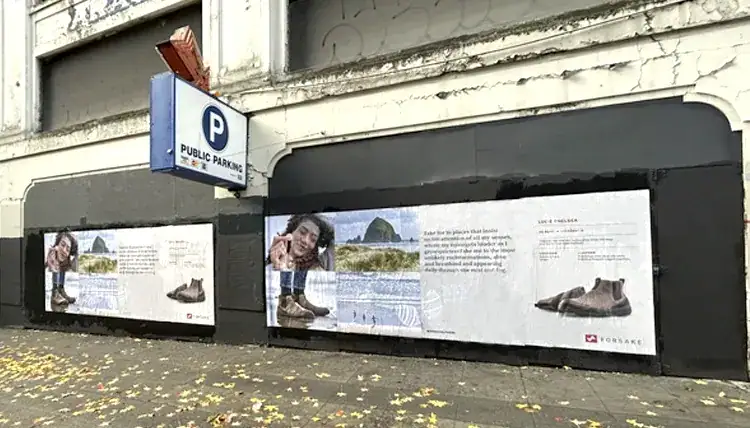
Guerrilla marketing near Duke University is rarely about scale first. It is about repetition in the right blocks. Students move in patterns, and the brands that win are the ones that understand those patterns well enough to appear useful, timely, or at least impossible to ignore. In 2026 student audiences are fluent in promotion. They know when a brand is faking local knowledge. That is why route quality and tone matter so much.
Search behavior around college marketing this year keeps supporting the same field truth: off campus routes and peer shaped interactions often outperform generic awareness buys. Around Duke University, the planning conversation should start with places like Ninth Street, West Campus, Chapel Drive, Main Street in Durham, and the American Tobacco Campus. Those corridors tell you where students transition between class, food, housing, games, social time, and transit. That is where a campaign earns multiple exposures instead of one disposable impression.
A useful campaign near Duke University should map the student week, not just the student day. Early week traffic can look very different from game day traffic, nightlife traffic, or move in traffic. Morning class routes often reward simple visual exposure, while afternoon and evening routes are better for conversation, offers, or sampling. A good plan treats those differences as creative inputs.
The real test is whether a student can encounter the brand in a way that feels natural two or three times in a week. Around Duke University, that usually means concentrating effort along just a few strong paths rather than attempting to cover everything. Density builds familiarity faster than spread.
Students respond to immediate relevance. That can be a fast reward, a practical offer, a clear social moment, or a real convenience. They do not respond well to abstract branding language that asks them to care before the brand has earned the right. The call to action should feel proportionate to the moment. Scan this. Try this. Grab this. Save this code. Meet us at this event tonight. Short and direct wins.
They also respond to authenticity in field behavior. Ambassadors who sound scripted or disconnected from the campus rhythm hurt performance. A crew that understands how to approach lightly, give space, and explain the offer in a sentence usually performs much better.
The strongest starting mix is often repeated posters or snipes for frequency plus a shorter ambassador program for action. Temporary chalk, decals, or directional wayfinding can connect the route when a brand wants students to move to a nearby retail or event destination. During heavier weekends, a mobile or pop up element can create a more social, visible anchor that gives people a reason to stop and film.
Near Duke University, timing is not optional. Orientation, move in, rivalry weekends, home games, open house periods, and early semester weeks can all change campaign performance dramatically. Finals week usually requires a different tone and a stronger practical value exchange if the brand wants attention at all.
Respect is a performance variable on student work. Around Duke University, the campaign should fit the space, stay clear on boundaries, and avoid behaving like the audience owes the brand its time. That means crews should not block flow, pressure people, or treat the route as if it exists for the campaign. Students notice that immediately, and negative sentiment spreads fast.
Respect also means knowing when the brand should show up and when it should stay quiet. Some campus moments are right for an activation. Others are not. Good field planning protects the brand from forcing itself into the wrong context.
The landing experience should be built for a person standing outdoors with limited patience. If the QR page is slow, cluttered, or asks for too much, the scan is wasted. Keep forms short, incentives clear, and follow up immediate. Campus audiences are mobile native, but that does not mean they tolerate friction.
Measurement should happen at route and time window level. Which block worked. Which line of copy converted. Which game or event window lifted response. That feedback is how a student campaign gets sharper over time instead of becoming a repetitive flyer exercise.
Contact AGM for pricing because Duke campaigns depend on route scope, creative production, and ambassador staffing.
The budget should reflect the number of days, the level of staff involvement, the amount of print or fabrication needed, and whether the campaign is tied to a major calendar moment. Some college projects are best as quick bursts. Others need a sustained run so route repetition can do the work.
The difference between a generic campus campaign and a strong one near Duke University is local knowledge. Knowing the unofficial cut throughs, the food stops that hold attention, the blocks that are all pass through and no dwell, and the times when the route feels social instead of hurried changes everything. Without that knowledge a brand often buys effort instead of impact.
If you want a student campaign shaped around the actual streets and rhythms of this market, contact AGM at americanguerrillamarketing.com/contact. The best college activations feel less like interruption and more like they showed up in exactly the right place at exactly the right time.
A strong plan for Duke University should confirm the route, the time window, the audience promise, the mobile follow through, and the proof you expect to gather in the field. That means confirming who owns documentation, who adjusts if a zone underperforms, how weather affects the schedule, and what the backup move is if a placement or staff plan changes. Campaigns usually fail in execution gaps, not in brainstorming sessions.
It also helps to pressure test the campaign against real conditions in Durham, North Carolina. Will the copy read from the distance people actually stand. Will the offer still feel attractive when the audience is in a rush. Does the scan page work well on weak mobile data. Is the physical setup obvious enough that a passerby can understand the point without a long explanation. The more of those questions that are answered before launch, the more confident the field team can be.
Creative should be reviewed against a blunt checklist. Can a person understand the point in one glance. Does the visual have one clear job. Is the call to action short enough to act on outdoors. Is there enough contrast to survive daylight, distance, and movement. Is the brand identifiable without overpowering the idea. This kind of discipline often feels basic, but it is the reason some activations travel beyond the street and some do not.
Another good review question is whether the campaign would still make sense if someone encountered only one piece of it. Not everyone will see the full route. Each touchpoint should still communicate enough value on its own to earn the next step.
The first reporting window should not just measure Duke University. It should improve it. If one block performs better than the others, move resources there. If one line of copy scans more strongly, replace weaker creative. If a certain shift underperforms, test a different day part. Field marketing gets stronger when the team treats the launch as the first useful version, not the final perfect version.
That learning loop is one reason experienced operators often outperform bigger budgets. They make faster, better decisions once the campaign meets the street. In 2026 that ability to adjust is part of the product, not an extra. Brands that build for learning usually get more from every activation.
A strong plan for Duke University should confirm the route, the time window, the audience promise, the mobile follow through, and the proof you expect to gather in the field. That means confirming who owns documentation, who adjusts if a zone underperforms, how weather affects the schedule, and what the backup move is if a placement or staff plan changes. Campaigns usually fail in execution gaps, not in brainstorming sessions.
It also helps to pressure test the campaign against real conditions in Durham, North Carolina. Will the copy read from the distance people actually stand. Will the offer still feel attractive when the audience is in a rush. Does the scan page work well on weak mobile data. Is the physical setup obvious enough that a passerby can understand the point without a long explanation. The more of those questions that are answered before launch, the more confident the field team can be.
Creative should be reviewed against a blunt checklist. Can a person understand the point in one glance. Does the visual have one clear job. Is the call to action short enough to act on outdoors. Is there enough contrast to survive daylight, distance, and movement. Is the brand identifiable without overpowering the idea. This kind of discipline often feels basic, but it is the reason some activations travel beyond the street and some do not.
Another good review question is whether the campaign would still make sense if someone encountered only one piece of it. Not everyone will see the full route. Each touchpoint should still communicate enough value on its own to earn the next step.
The first reporting window should not just measure Duke University. It should improve it. If one block performs better than the others, move resources there. If one line of copy scans more strongly, replace weaker creative. If a certain shift underperforms, test a different day part. Field marketing gets stronger when the team treats the launch as the first useful version, not the final perfect version.
That learning loop is one reason experienced operators often outperform bigger budgets. They make faster, better decisions once the campaign meets the street. In 2026 that ability to adjust is part of the product, not an extra. Brands that build for learning usually get more from every activation.
A strong plan for Duke University should confirm the route, the time window, the audience promise, the mobile follow through, and the proof you expect to gather in the field. That means confirming who owns documentation, who adjusts if a zone underperforms, how weather affects the schedule, and what the backup move is if a placement or staff plan changes. Campaigns usually fail in execution gaps, not in brainstorming sessions.
It also helps to pressure test the campaign against real conditions in Durham, North Carolina. Will the copy read from the distance people actually stand. Will the offer still feel attractive when the audience is in a rush. Does the scan page work well on weak mobile data. Is the physical setup obvious enough that a passerby can understand the point without a long explanation. The more of those questions that are answered before launch, the more confident the field team can be.
Creative should be reviewed against a blunt checklist. Can a person understand the point in one glance. Does the visual have one clear job. Is the call to action short enough to act on outdoors. Is there enough contrast to survive daylight, distance, and movement. Is the brand identifiable without overpowering the idea. This kind of discipline often feels basic, but it is the reason some activations travel beyond the street and some do not.
Another good review question is whether the campaign would still make sense if someone encountered only one piece of it. Not everyone will see the full route. Each touchpoint should still communicate enough value on its own to earn the next step.
The first reporting window should not just measure Duke University. It should improve it. If one block performs better than the others, move resources there. If one line of copy scans more strongly, replace weaker creative. If a certain shift underperforms, test a different day part. Field marketing gets stronger when the team treats the launch as the first useful version, not the final perfect version.
That learning loop is one reason experienced operators often outperform bigger budgets. They make faster, better decisions once the campaign meets the street. In 2026 that ability to adjust is part of the product, not an extra. Brands that build for learning usually get more from every activation.
A strong plan for Duke University should confirm the route, the time window, the audience promise, the mobile follow through, and the proof you expect to gather in the field. That means confirming who owns documentation, who adjusts if a zone underperforms, how weather affects the schedule, and what the backup move is if a placement or staff plan changes. Campaigns usually fail in execution gaps, not in brainstorming sessions.
It also helps to pressure test the campaign against real conditions in Durham, North Carolina. Will the copy read from the distance people actually stand. Will the offer still feel attractive when the audience is in a rush. Does the scan page work well on weak mobile data. Is the physical setup obvious enough that a passerby can understand the point without a long explanation. The more of those questions that are answered before launch, the more confident the field team can be.
Creative should be reviewed against a blunt checklist. Can a person understand the point in one glance. Does the visual have one clear job. Is the call to action short enough to act on outdoors. Is there enough contrast to survive daylight, distance, and movement. Is the brand identifiable without overpowering the idea. This kind of discipline often feels basic, but it is the reason some activations travel beyond the street and some do not.
Another good review question is whether the campaign would still make sense if someone encountered only one piece of it. Not everyone will see the full route. Each touchpoint should still communicate enough value on its own to earn the next step.
The first reporting window should not just measure Duke University. It should improve it. If one block performs better than the others, move resources there. If one line of copy scans more strongly, replace weaker creative. If a certain shift underperforms, test a different day part. Field marketing gets stronger when the team treats the launch as the first useful version, not the final perfect version.
That learning loop is one reason experienced operators often outperform bigger budgets. They make faster, better decisions once the campaign meets the street. In 2026 that ability to adjust is part of the product, not an extra. Brands that build for learning usually get more from every activation.
Guerrilla Marketing Near Duke University: A Durham Street Level Plan generates better results when placement, timing, creative, and local execution all work together. These questions cover the details brands usually need before launch, during rollout, and while evaluating performance.
For ar, the strongest campaigns usually come from tight geographic targeting, message discipline, and enough repetition to be remembered. Market conditions, neighborhood flow, event calendars, commuter behavior, and production logistics all change how the tactic performs, so the planning details matter as much as the idea.
The main goal is to create a real world encounter that turns attention into a clear action such as a scan, signup, visit, sample, or booking inquiry.
That depends on the route and the moment. Some campaigns work as short bursts around one event, while others need one or two weeks of repeated exposure.
Yes. The rules change by property, city, and format. A compliant campaign is easier to sustain, document, and scale.
Simple language, strong contrast, and a very clear next step. Public attention is short, so the idea should be understandable in a glance.
Start with field output, then response, then business effect. That keeps reporting grounded instead of vague.
Yes. Strong photos and video extend the life of the campaign and help paid social, PR, and internal reporting.
Absolutely. Concentrated local campaigns often work especially well for smaller brands because they can connect the activation to a nearby action quickly.
Share the market, dates, audience, and desired action, then contact americanguerrillamarketing.com/contact for a route and format recommendation.
The best campaigns focus on one repeatable path, one offer, and one audience segment at a time. Around Duke University, that usually means matching the message to the part of campus where students already move with purpose instead of trying to blanket everything at once.
That depends on approvals and timing. If school rules limit what can happen on campus, the smarter move is often the streets, coffee shops, apartments, and retail corridors students use every day around Duke University.
Ready to Run Your Campaign?
Call us or email us. We’ll tell you exactly what we can do in your market and what it costs.
American Guerrilla Marketing — Los Angeles
Street-level campaigns in Los Angeles and nationwide. Wheatpasting, LED trucks, street teams, and more.
(646) 776-2770
June 22, 2026
June 22, 2026
June 22, 2026
June 22, 2026
June 22, 2026
