
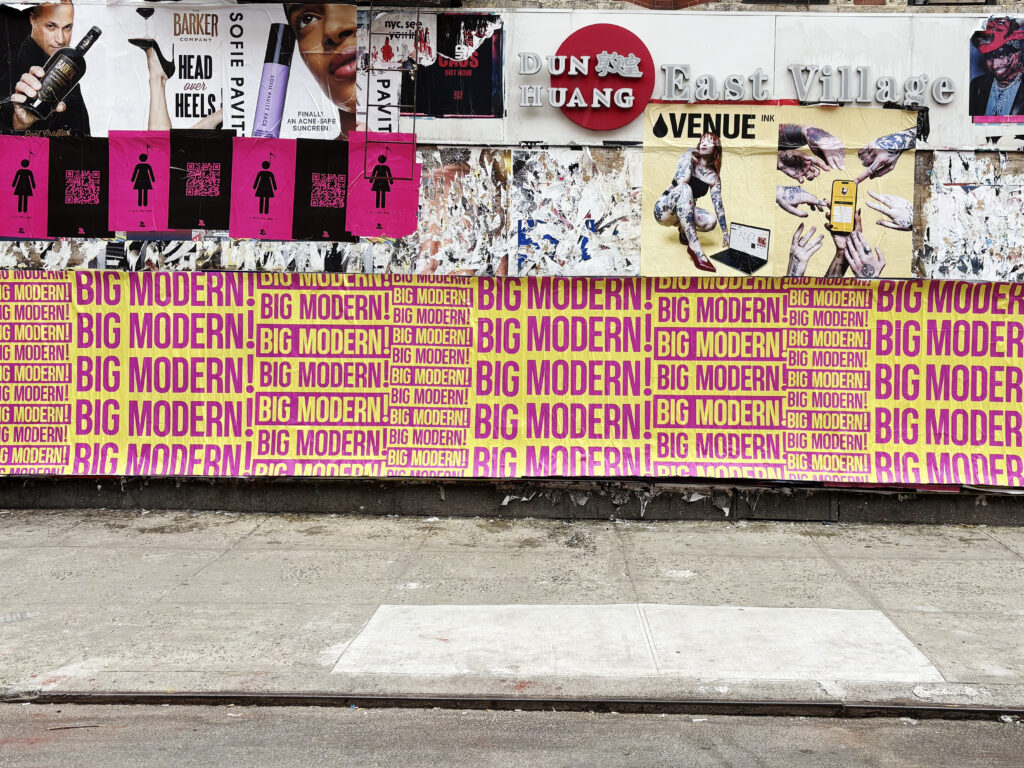
By Justin Phillips, AGM Campaign Director | Published May 2026 | Updated May 2026
AGM has run 500+ street-level poster campaigns across 50 U.S. markets since 2014. Every placement is GPS-tagged and independently verifiable.
Wild posting is a form of outdoor advertising where posters are placed in mass quantities on walls, buildings, plywood construction hoardings, and other flat urban surfaces. The goal is saturation: covering a neighborhood so thoroughly that the campaign becomes impossible to ignore.
It’s one of the oldest forms of street-level advertising still running at scale. And in 2026, it’s growing again.
What Is Wild Posting?
Wild posting means plastering a lot of posters in a concentrated area, fast. A crew goes out overnight and hits every legal wall, hoarding, and approved surface on a predetermined route. By morning, the brand is everywhere in that neighborhood.
The format is simple: paper posters, typically printed in bulk, applied with wheat paste or adhesive to flat vertical surfaces. They’re not framed. They’re not lit. They’re raw, physical, and hard to miss at eye level on a sidewalk.
The effect is cumulative. One poster is easy to walk past. Fifty in the same ten-block area creates a different impression. That’s the point.
Where Wild Posting Came From
The roots are in the music business. In the 1970s and 1980s, concert promoters in New York, Los Angeles, and London couldn’t afford radio or TV buys. So they printed posters and put them everywhere. The punk scene did it. The hip-hop scene did it. Record labels promoting new acts did it.
It worked because it met people where they actually were: on the street, walking to a show, waiting for a bus, hanging outside a venue. The posters were part of the neighborhood’s visual fabric. They felt authentic because they were.
That credibility carried over. As brands outside music started paying attention to street culture in the late 1990s and 2000s, wild posting became part of the playbook for launches, album drops, product releases, and anything that needed to feel culturally relevant rather than just advertised.
Wild Posting vs. Wheatpasting vs. Fly Posting: Are They the Same Thing?
Mostly yes. The names come from different communities using the same format.
| Term | Who Uses It | Context |
|---|---|---|
| Wild posting | U.S. advertising and marketing industry | Paid brand campaigns, commercial use |
| Wheatpasting | Street art and activist communities | Grassroots, often political or artistic |
| Fly posting | UK and European markets | General term for unsanctioned poster placement |
The physical act is identical: print a poster, paste it to a wall. The differences are in who’s doing it, why, and whether the placements are permitted or unauthorized.
In a commercial wild posting campaign, AGM works with property owners and approved wall networks. The placements are legal. The documentation is thorough. That’s the distinction between a professional campaign and someone going out with a bucket of paste at 2 a.m.
Wild Posting vs. Snipe Advertising
These two formats often get grouped together because both are street-level and both look unofficial. But they’re different.
Snipe advertising goes on poles, signposts, and other vertical cylindrical structures. The signs are usually smaller, printed on rigid or semi-rigid material, and stapled or cable-tied in place.
Wild posting goes on flat wall surfaces: building sides, construction plywood, boarded storefronts, warehouse walls. The posters are large, paper-based, and pasted directly to the surface.
Both formats are effective at street level. The choice usually comes down to what a city has more of, what the brand’s artwork needs, and what neighborhoods you’re trying to hit.
Where Wild Posting Is Placed
Crews look for flat, visible surfaces with foot traffic nearby. The most common placements include:
- Building walls on commercial and mixed-use blocks
- Plywood hoardings around construction sites
- Boarded-up storefronts in transitional neighborhoods
- Alley-facing walls with side-street access
- Warehouse sides in arts and industrial districts
- Approved wall networks managed by outdoor advertising vendors
The best spots combine visibility with dwell time. A wall next to a bus stop is worth more than the same wall in a fast-moving corridor. People waiting have time to actually read the poster. They might look at it twice.
What Makes a Good Wild Posting Location
Three things matter most: foot traffic volume, eye-level visibility, and how long people linger nearby.
High pedestrian counts are obvious. But dwell time is what separates a good location from a great one. Subway stair approaches, bus stops, the block outside a venue, the sidewalk near a coffee shop with a line out the door — these are places where people slow down or stop. That’s when advertising has the best chance of actually registering.
Height matters too. Posters placed at eye level on a pedestrian-scale wall perform better than the same artwork mounted 15 feet up. The goal is to be seen by someone walking by, not someone driving past.
Best Cities for Poster Campaigns
Wild posting works in any dense urban market, but some cities have more infrastructure, more wall inventory, and more street culture around the format.
- New York: SoHo, the Lower East Side, Williamsburg, and Bushwick all have deep wild posting history. High inventory, high foot traffic, culturally aware audiences.
- Los Angeles: Fairfax, Silver Lake, Melrose, and the Arts District are the core zones. The format travels well here because the neighborhoods are walkable and visually active.
- Chicago: Wicker Park, Pilsen, and Logan Square have strong wall inventory and dense creative communities. Good for music, fashion, and consumer brands targeting 20s and 30s demographics.
- Austin: South Congress and East 6th are the primary corridors. The market is smaller but concentrated, and event-driven campaigns do well here.
- Miami: Wynwood is purpose-built for this format. Brickell works for more corporate-facing campaigns. The visual environment is saturated, so artwork has to compete harder.
- Philadelphia: Fishtown and Northern Liberties have become stronger wild posting markets over the last five years as the neighborhoods have densified and foot traffic has grown.
How a Wild Posting Campaign Works
The process from brief to installation usually takes one to three weeks depending on scale and city.
- Brief and artwork prep: The brand shares the campaign concept. Files are prepared to spec for the poster format being used. Print production runs in parallel with location scouting.
- Location scouting: The crew maps the route before install night. They’re looking for the right walls, checking for conflicts with existing permits, and confirming access.
- Overnight installation: Most wild posting crews work at night. Fewer obstructions, faster movement, less disruption. A well-run crew can hit a lot of placements in a single night.
- GPS documentation: Every placement is logged with GPS coordinates and timestamp. This is how accountability works in professional campaigns.
- Photo report: Clients receive a documented report with location photos for every placement. You can see exactly where your posters went.
Wild Posting Dimensions
The most common sizes are:
- 24 x 36 inches: Standard format. Works well for single placements and mixed-wall environments.
- 48 x 72 inches: Large format. Higher visual impact, often used for tentpole campaigns and major launches.
- Double-wide: Two or more posters applied side-by-side to create a panoramic canvas. Effective on long construction hoardings and wide building walls.
Artwork that reads well at distance and at a glance performs best. High contrast, minimal copy, a clear focal point. The street is a noisy visual environment. Simple wins.
Who Uses Wild Posting
The format started with music and it’s still heavily used there. Artists promoting tours or releases, labels building awareness for new signings, festivals announcing lineups — all of it runs through wild posting because the format has credibility with music audiences.
Beyond music, the consistent users are:
- Entertainment companies: Netflix, Disney, EA Sports, and similar brands use wild posting to build ambient awareness for releases in key markets. It signals cultural relevance in a way that digital alone doesn’t.
- DTC consumer brands: Brands entering a new market or launching a new product use wild posting to create physical presence fast. It’s especially effective when the brand has strong visual identity and no existing awareness in the city.
- Fashion and streetwear: The format fits the aesthetic. It’s where these brands have always lived. Supreme, KITH, Off-White, and dozens of smaller labels have used it consistently.
- Political campaigns: Poster saturation in high-turnout neighborhoods has been part of local campaign strategy for decades.
Wild Posting in 2026
Digital ad fatigue is real. Average click-through rates on display ads are fractions of a percent. People have trained themselves to scroll past sponsored content without registering it. Attention online is fragmented and expensive.
Physical advertising in the right urban corridor doesn’t have a skip button. You can’t block a poster on a wall. If the placement is good and the artwork is strong, the impression happens whether the person intends it or not.
That’s not a new insight — it’s why the format has survived for 50 years. But the return to it is accelerating as brands realize that a concentrated physical presence in the right neighborhood creates brand memory that digital can’t replicate at the same cost.
One notable evolution: QR codes on wild posting. A well-placed code on a large-format poster connects the physical impression to a digital action. That attribution link — from a wall in Williamsburg to a product page or ticket purchase — is making it easier to measure a format that used to be hard to track.
For a single-market campaign, you’re typically looking at $1,800 to $6,500 depending on the city, the number of posters, the format size, and any premium placement fees. New York and Los Angeles run higher than secondary markets. Large-format and double-wide work costs more than standard 24×36.
AGM has a full pricing guide that breaks this down by market and format. This page focuses on explaining the format itself rather than running through the full rate card.
Frequently Asked Questions
It depends on where the posters are placed and whether the property is permitted. Professional wild posting campaigns work with wall owners and approved surface networks to ensure every placement is authorized. Unauthorized fly posting — putting posters on surfaces without permission — is illegal in most cities and results in fines. AGM operates exclusively on permitted surfaces with proper documentation.
The physical method is essentially the same: paper posters applied to a flat surface using paste. The terms come from different communities. Wild posting is the term used by the U.S. advertising industry for commercial campaigns. Wheat pasting is the term used by street artists and activists, often for DIY, unauthorized, or non-commercial work. In a professional campaign context, the two are functionally identical — the distinction is in permitting and intent.
Typically two to four weeks before natural wear, weather, and subsequent postings reduce visibility. In high-traffic markets like New York and LA, turnover is faster. Some campaigns are designed as short bursts for a specific event window. Others run on a rotating schedule with fresh installations every few weeks to maintain saturation.
Yes. That’s one of the main advantages of the format. If you want to hit Williamsburg and Bushwick but not other parts of Brooklyn, a route can be built around exactly those corridors. Neighborhood-level targeting is standard. AGM scouts specific blocks and confirms inventory before any campaign goes out.
Yes. AGM runs campaigns in 50+ U.S. markets. The format is available in every major city and most secondary markets. Multi-city campaigns are common, especially for tours, national launches, and brands entering multiple regions at once. Each market has its own crew, its own wall inventory, and its own photo documentation.
Every AGM campaign comes with a GPS-tagged photo report. Each placement is photographed with a timestamp and location data. You get a documented record of every poster installed. If something wasn’t placed correctly or didn’t go up as planned, it shows in the report and gets addressed.
Ready to Run Your Campaign?
Call us or email us. We’ll tell you exactly what we can do in your market and what it costs.
American Guerrilla Marketing — New York City
5.0 · 34 Google reviews
Street-level campaigns in New York City and nationwide. Wild posting, LED trucks, street teams, and more.
(646) 776-2770
Pricing
| Format | 100 Posters | 200 Posters | Duration |
|---|---|---|---|
| Standard (24×36 inches) | $4,500 | $5,500 | 2 weeks |
| Large Format (48×72 inches) | $10,500 | $13,500 | 2 weeks |
Included: Targeting and scouting, printing, installation, GPS-tagged photo documentation, reporting, and refreshers. Initial creative design is complimentary.
- Minimum order: 100 posters
- Optional maintenance (final 2 weeks of monthly campaign): $3,500
- Additional 24×36 creative design: $650 each
- Additional 48×72 creative design: $750 each
Pricing varies by market, campaign scope, and duration. Contact us for a custom quote.

Justin Phillips — AGM Campaign Director
Livy’s team has run 500+ street-level campaigns across 50 U.S. markets since 2014. Every AGM placement is GPS-tagged, photo-documented, and independently verifiable. About Livy