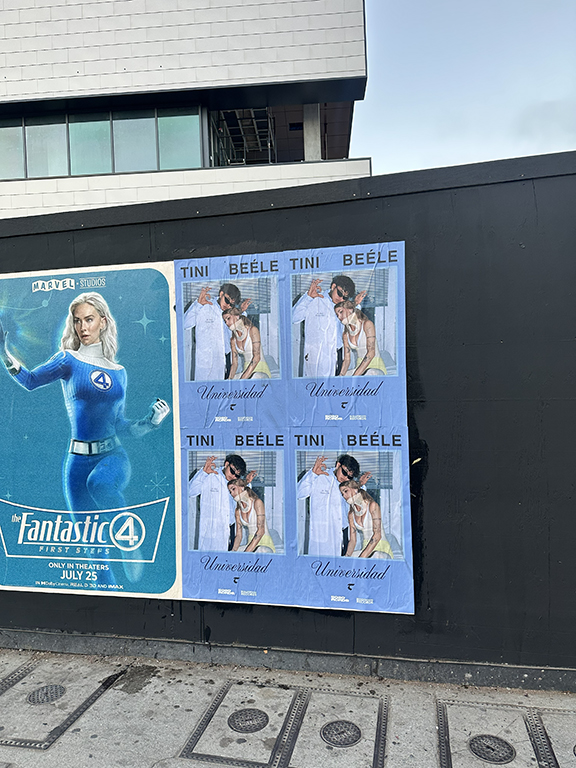
Connecticut’s bar and restaurant market is shaped by geography and demographics in ways that make guerrilla marketing a particularly strong fit. The state has a high concentration of educated, urban-oriented consumers clustered in a small geographic area. New Haven’s Yale-driven foot traffic creates one of the most walkable and brand-receptive dining corridors in New England. Hartford’s Front Street development and Asylum Avenue have transformed a historically quiet capital city into a legitimate evening destination. Stamford’s proximity to New York City has brought a sophisticated restaurant scene to the Gold Coast’s urban core.
These are dense, walkable environments where street-level advertising reaches consumers at the exact moment they’re deciding where to eat and drink. A sidewalk stencil on Chapel Street in New Haven, a coaster at a Front Street Hartford bar, or a poster in the Parkville arts district reaches a consumer who is already in the hospitality consumption zone, already on foot, already evaluating options. That’s the moment when brand presence converts to cover counts.
Our team at American Guerrilla Marketing deploys bar and restaurant advertising campaigns throughout Connecticut. We handle every aspect of campaign execution, from compliance research and zone mapping to deployment, documentation, and post-campaign reporting. Here’s a complete picture of what bar and restaurant advertising in Connecticut looks like when it’s done with precision.
Connecticut’s Hospitality Market: What Makes It Distinct
Connecticut is a state of contrasts. The Gold Coast corridor from Greenwich to Stamford operates at New York City income levels with a consumer base that commutes to Manhattan and expects NYC-quality dining options when they stay local. New Haven operates as a college town with the cultural sophistication of a much larger city, driven by Yale’s institutional influence and the diversity it imports. Hartford is a post-industrial capital city with an active arts and nightlife scene that has emerged from decades of economic challenge with a genuine creative energy. These three distinct market personalities require different marketing approaches and different tactical deployments.
New Haven: Chapel Street and the Yale Effect
New Haven is Connecticut’s most effective guerrilla marketing environment for bar and restaurant brands. Chapel Street and College Street form the spine of a walkable dining and nightlife district that serves Yale’s 13,000 students and faculty alongside New Haven residents and visitors from throughout the region. The density of foot traffic in this corridor, particularly on Thursday through Saturday evenings, creates ideal conditions for sidewalk stencil campaigns and poster placements.
Sidewalk stencil advertising on Chapel Street reaches a highly educated, brand-aware consumer with significant discretionary spending on dining and nightlife. Beer coaster distribution at the Chapel Street and Orange Street bar cluster provides extended brand exposure to patrons who are physically present in the hospitality zone for two to four hours per visit. New Haven’s walkability means that a consumer who sees a sidewalk stencil can be inside a target restaurant within minutes of that encounter.
Hartford: Front Street, Parkville, and Asylum Avenue
Hartford’s dining and entertainment market is concentrated around Front Street, the Colt Gateway complex in the South End, and the Asylum Avenue corridor on the city’s west side. Front Street, developed as an entertainment district adjacent to Dunkin’ Park, now hosts a cluster of bars and restaurants that generate evening foot traffic from Hartford’s urban professional population, Capital Region commuters, and event attendees at the nearby sports and concert venues.
The Parkville arts district has emerged as Hartford’s most creatively active neighborhood, with a growing concentration of bars, breweries, and restaurants serving the arts and young professional demographic. Wheatpaste poster campaigns in Parkville reach an audience that is both consumer-active and highly receptive to creative street-level advertising. The district’s visual culture, shaped by its warehouse-to-arts-space conversion history, creates an environment where poster advertising is noticed and appreciated rather than ignored.
Stamford: Downtown Bar Scene and Gold Coast Consumers
Stamford’s downtown entertainment district is Connecticut’s most affluent guerrilla marketing environment. The city functions as an outer borough of New York City for many of its residents, with a consumer base whose income and spending behavior reflects Gold Coast demographics. The downtown bar and restaurant scene along Atlantic Street, Summer Street, and Main Street generates consistent Thursday through Saturday foot traffic from Stamford’s professional population and Metro-North commuters who choose to stay local rather than head into Manhattan.
Beer Coaster Advertising in Connecticut’s Bar Markets
Connecticut’s bar scene, from Yale-adjacent New Haven pubs to Stamford’s upscale cocktail bars, is a high-dwell-time environment where coaster advertising delivers exceptional contact per impression. When a patron orders a drink at a New Haven bar on a Thursday night, they’re sitting in that bar for an average of 90 minutes to two-plus hours. Your branded coaster is beneath their glass for the entire visit, providing uninterrupted brand exposure in a positive, social, leisure mindset.
New Haven Coaster Distribution Strategy
We establish coaster distribution partnerships with bars and restaurants on Chapel Street, College Street, Crown Street, and the surrounding New Haven entertainment district before the campaign launches. Our distribution targets the venues where your specific consumer demographic concentrates: collegiate bars for brands targeting the Yale market, upscale cocktail venues for brands targeting the professional and alumni demographic, and neighborhood restaurants for brands targeting New Haven residents. Coaster campaigns in New Haven typically run for four to eight weeks to build sustained brand recall across multiple visits.
Hartford and Stamford Coaster Networks
Hartford coaster distribution focuses on the Front Street entertainment complex, the Parkville neighborhood bar cluster, and the Asylum Avenue corridor. Stamford distribution targets the downtown Atlantic Street and Summer Street bar environment. Both markets benefit from coordinated coaster campaigns timed to coincide with specific local events: Hartford’s First Friday art walks, Stamford Downtown Special Services District events, and seasonal restaurant promotion programs. Event alignment ensures your coasters are in high circulation when consumer engagement is highest.
Sidewalk Stencil Campaigns in Connecticut Entertainment Districts
Sidewalk stencil campaigns place brand messages on the walking surfaces of Connecticut’s most trafficked dining and nightlife corridors. Unlike vertical surface advertising, sidewalk stencils are encountered by every pedestrian who passes through the deployment zone, regardless of where they’re looking. When your brand message is stamped on the sidewalk outside a high-traffic New Haven bar entrance, every patron who walks through that door has a brand encounter before they order their first drink.
Connecticut municipalities have varying regulations for temporary sidewalk markings. New Haven, Hartford, Stamford, Bridgeport, and other Connecticut cities each have their own sign codes and public space ordinances. Water-soluble stencil applications are generally classified as temporary markings rather than permanent commercial signage in most Connecticut municipalities, but we conduct compliance research specific to each target city before any placements are deployed. Our team handles all the municipal compliance work so you don’t have to navigate Connecticut’s varying local regulations.
Wheatpaste and Poster Campaigns in Connecticut’s Creative Districts
Connecticut’s arts and creative districts, particularly Hartford’s Parkville and New Haven’s Audubon Arts District, offer the kind of permitted posting surfaces that make wheatpaste poster campaigns particularly effective. These neighborhoods’ warehouse-to-creative-space conversion history has produced extensive wall surfaces and construction barriers that serve as natural high-visibility posting locations. A campaign that saturates the Parkville corridor with bold food and beverage creative reaches an arts-aware, dining-active consumer base that is predisposed to notice and respond to street-level advertising.
Beyond Hartford and New Haven, Stamford’s downtown construction activity has created poster-friendly surfaces throughout the core entertainment district. For brands launching in the Stamford Gold Coast market, a two-week poster campaign across the downtown corridor creates neighborhood awareness that precedes and supports a digital advertising push. The physical familiarity that poster placement creates converts to digital engagement when the consumer subsequently encounters the brand’s social media presence.
Street Team Activations at Connecticut Events
Connecticut’s events calendar creates recurring opportunities for brand ambassador activations in front of concentrated hospitality consumer audiences. Yale Bowl home football games bring 40,000-plus fans into New Haven on fall Saturdays. Hartford’s Riverfest attracts tens of thousands of attendees to the Connecticut riverfront. Stamford’s Harbor Harvest and Main Street events draw the Gold Coast consumer demographic into the downtown core. New Haven’s International Festival of Arts and Ideas concentrates a culturally sophisticated audience for two weeks each June.
Event-aligned street team activations deploy brand ambassadors at the perimeter of these events to distribute promotional materials, conduct product sampling, and create direct brand encounters with consumers who are in an entertainment and leisure mindset. A brand ambassador at the Yale Bowl tailgate can distribute sample menus and reservation cards for a New Haven restaurant to 500 to 1,000 football-attending consumers in a single Saturday morning deployment.
Flyer Distribution in Connecticut Campus and Transit Markets
Flyer distribution campaigns in Connecticut’s campus and transit environments reach concentrated consumer populations efficiently. Yale University’s campus and surrounding New Haven streets, the University of Hartford campus, and Western Connecticut State University in Danbury are college market distribution zones for bars and restaurants targeting student-aged consumers. Metro-North station environs in Stamford, Greenwich, Norwalk, and Bridgeport reach the commuter demographic that drives Gold Coast restaurant spending on evenings and weekends.
Integration and Campaign Scale in Connecticut
The most effective bar and restaurant advertising campaigns in Connecticut run multiple tactics simultaneously across the same geography. A New Haven restaurant launch that combines Chapel Street sidewalk stencils, coaster distribution in five nearby bars, poster placements in the Audubon Arts District, and a street team activation at a Yale-adjacent event creates layered brand presence that builds rapid market awareness. The consumer who encounters the brand in multiple formats and contexts within a short time window is far more likely to make a trial visit than one who sees a single ad impression in a single channel.
We build integrated Connecticut campaigns with this layering logic from the planning stage. Each tactic is selected and positioned to reinforce the others, creating a campaign where the whole is meaningfully greater than the sum of its parts.
Flyer Distribution and Promotional Material Campaigns in Connecticut
Flyer distribution campaigns in Connecticut’s college and transit markets reach concentrated consumer populations efficiently. Yale’s campus and surrounding New Haven streets, the University of Hartford campus adjacent to Hartford’s North End, and Western Connecticut State University in Danbury are productive distribution environments for bars and restaurants targeting the 18-30 demographic. Metro-North station environs in Stamford, Greenwich, Norwalk, and Bridgeport reach the commuter demographic that drives upscale Connecticut restaurant spending on evenings and weekends.
Effective flyering in Connecticut hospitality markets requires precise timing and targeting to avoid the diminishing returns of indiscriminate distribution. A flyer delivered to a Yale student leaving a Thursday afternoon seminar, promoting Friday evening happy hour at a Chapel Street bar, has a high probability of influencing behavior within 24 hours. The same flyer distributed without timing logic to random New Haven pedestrians yields significantly lower conversion. We build the distribution plan, timing, and target zone into the campaign before any materials are printed.
Measuring Guerrilla Marketing Results for Connecticut Hospitality Brands
Connecticut bar and restaurant operators expect accountability from every marketing investment. Guerrilla marketing is not exempt from performance measurement, and the good news is that most campaign formats support meaningful tracking.
Reservation and Cover Count Analysis
For restaurant campaigns, comparing cover counts or reservation volume during the campaign window against prior comparable periods provides a direct performance indicator. A New Haven restaurant that runs a three-week Chapel Street stencil campaign alongside coaster distribution in four nearby bars can assess whether dining activity changed during that window. We help clients establish pre-campaign baseline metrics so the comparison is statistically meaningful rather than anecdotal.
QR Code and Promotional Offer Tracking
Campaigns built with a trackable response element generate attributable digital performance data. Connecticut bars and restaurants running coaster campaigns with QR codes linking to reservation pages or special offers can directly attribute scan traffic and redemptions to the coaster campaign. This attribution approach is increasingly standard for Connecticut hospitality guerrilla campaigns because it satisfies the performance accountability requirements of modern marketing management without requiring complex research infrastructure.
Why Connecticut Hospitality Brands Choose American Guerrilla Marketing
Connecticut’s bar and restaurant market is sophisticated and competitive. Operators in New Haven, Hartford, and Stamford are accustomed to working with marketing partners who understand the market, execute with precision, and deliver documentation that stands up to internal scrutiny. Our team brings the strategic depth, compliance rigor, and operational reliability that Connecticut hospitality brands need from a guerrilla marketing partner.
Our location at Industry City in Brooklyn, New York gives us geographic proximity to Connecticut markets that national guerrilla marketing providers based elsewhere lack. We can respond quickly to campaign timeline changes, handle New Haven or Stamford permit questions with local knowledge, and activate crews across Connecticut’s major markets with the kind of coordination that distance makes difficult for less well-positioned operators.
Campaign Timelines and Working With American Guerrilla Marketing in Connecticut
Connecticut hospitality brands planning guerrilla marketing campaigns should plan for a two to three week lead time from initial briefing to first placement for standard campaigns. This window covers compliance research for the target Connecticut municipality, creative finalization, material production, crew scheduling, and logistics coordination. For campaigns with event-tied activation windows, such as a Yale event, a Hartford First Friday, or a Stamford downtown festival, we work backward from the activation date to ensure everything is in place before the deployment window opens.
Rush timelines of seven to ten days are available for grand openings and time-sensitive launches, with a modest expedite premium that reflects the additional logistics coordination required. We have executed rush Connecticut campaigns for restaurant and bar openings in New Haven and Stamford when construction delays compressed the pre-opening marketing window, and we have the crew relationships in Connecticut markets to mobilize quickly when the situation requires it.
Our base of operations at Industry City in Brooklyn, New York gives us geographic proximity to Connecticut’s major markets that national guerrilla marketing providers based in other parts of the country lack. Drive time to New Haven, Hartford, and Stamford from Brooklyn is under two hours, which means our team can respond to campaign issues, make placement adjustments, and conduct quality control checks with the kind of frequency that distance makes impossible for less well-positioned operators. For Connecticut hospitality brands that want a marketing partner who can be on-site quickly when circumstances require it, our proximity to the Connecticut market is a meaningful operational advantage.
Frequently Asked Questions: Bar and Restaurant Advertising in Connecticut
What guerrilla marketing tactics work best for bars and restaurants in Connecticut?
Beer coaster advertising, sidewalk stencils on Chapel Street in New Haven and Front Street in Hartford, wheatpaste poster campaigns in Parkville and the Audubon Arts District, and street team activations at Yale events and Hartford festivals are among the most effective tactics. The right mix depends on your target Connecticut market and brand positioning.
Which Connecticut cities are best for bar and restaurant guerrilla marketing?
New Haven is Connecticut’s premier guerrilla marketing environment for bars and restaurants, driven by Yale University’s presence and Chapel Street’s dense dining and nightlife corridor. Hartford’s Parkville and Front Street districts, Stamford’s downtown bar scene, and Middletown’s Main Street are also productive markets for Connecticut hospitality campaigns.
How does beer coaster advertising work in Connecticut bar markets?
Custom branded coasters are distributed to bars and restaurants across your target Connecticut market. In New Haven, that means Chapel Street and College Street venues. In Hartford, it’s the Front Street and Asylum Avenue corridor. In Stamford, it’s the Atlantic Street and Summer Street bar cluster. Coasters provide 90-plus minutes of direct brand exposure per patron visit in these environments.
Can you coordinate Connecticut campaigns with New York City or Boston?
Yes. Connecticut sits between New York City and Boston, and we regularly coordinate multi-market campaigns for brands operating in all three geographies. Stamford is particularly well-positioned for brands that also want coverage in Westchester County and the outer NYC boroughs. We manage multi-market compliance and logistics as a unified campaign.
How long does it take to launch a guerrilla marketing campaign for a Connecticut bar or restaurant?
Standard lead time is two to three weeks for planning, creative finalization, and logistics. Rush timelines of seven to ten days are available for time-sensitive launches. Contact our team as early as possible to confirm your activation window.
Do you document Connecticut campaigns with photos and GPS data?
Yes. Every campaign includes GPS-tagged placement photos, timestamped deployment logs, and a full post-campaign report. For coaster campaigns, we document venue distribution and quantities. All documentation is delivered within five business days of campaign completion.
Frequently Asked Questions
What is bar restaurant advertising connecticut?
American Guerrilla Marketing provides bar restaurant advertising connecticut services across 50+ U.S. markets. Every campaign is planned, scouted, executed, and GPS-documented by our field teams. We work with regional brands and Fortune 500 companies on campaigns that require real street-level execution and documented proof of performance.
How does AGM approach advertising connecticut?
Our process starts with a market consultation to understand your goals, target audience, and budget. We then scout locations, handle any required permissions or permits, coordinate production and installation with our local crews, and provide a full GPS-tagged photo report after the campaign runs.
What markets does American Guerrilla Marketing cover for advertising connecticut?
We operate in 50+ U.S. markets including New York, Los Angeles, Chicago, Miami, Houston, Atlanta, Seattle, Denver, Boston, and dozens of secondary markets. Contact us to confirm availability and pricing for your specific market.
How much does a advertising connecticut campaign cost?
Campaign pricing depends on market, format, quantity, and duration. We work with budgets ranging from targeted single-market runs to national rollouts across multiple cities. Use our RFP Builder or contact us directly for a custom quote based on your specific campaign requirements.
How do I get started with advertising connecticut through AGM?
The fastest way to get started is to submit your campaign details through our RFP Builder at americanguerrillamarketing.com, or contact us directly at [email protected] or (646) 776-2770. Our team typically responds within one business day with availability and initial pricing.