American Guerrilla Marketing
Nationwide serivce
Media planning, media buying, billboard advertising, & guerrilla marketing

New Orleans is a city that does not respond to passive advertising. Its residents are culturally literate, visually sophisticated, and deeply embedded in a street-level existence that unfolds on foot, on bicycle, and at the corner of every neighborhood block from the Tremé to the Garden District. If your brand is going to land in this city, it needs to show up where the city actually lives — on the poles along Magazine Street, on the fences bordering the Marigny shotgun houses, and on the corridors that connect the neighborhoods where real New Orleans culture happens every single day. Snipe advertising is one of the few outdoor formats that can do exactly that: saturate a corridor at eye level, repeat your message block after block, and generate the kind of street-level familiarity that digital impressions simply cannot replicate in a city like this.
American Guerrilla Marketing has operated snipe campaigns across New Orleans for years, working with clients ranging from local fitness studios launching in Uptown to national brands activating during Mardi Gras and Jazz Fest. We know which streets generate the most consistent foot traffic, which neighborhoods respond to which formats, and how to coordinate multi-zone deployments that cover the city’s most commercially valuable corridors without redundancy or waste. Every campaign we run in New Orleans is GPS-documented, strategically zoned, and executed by a field team with deep local knowledge of how this city moves — because New Orleans moves differently than anywhere else in America, and your marketing strategy needs to account for that.
Snipe advertising in New Orleans works because the city’s built environment is fundamentally oriented toward the street. The density of New Orleans neighborhoods — the narrow lots, the wraparound porches, the sidewalk culture — means that utility poles, fences, and corner posts are not incidental elements of the streetscape; they are the connective tissue between every block and every destination. A well-placed snipe on North Rampart Street or Freret Street is not a piece of litter — it is a piece of information embedded directly into the daily walking routes of tens of thousands of people. AGM designs every snipe campaign in New Orleans to exploit that architecture, placing your brand message at exactly the right density, in exactly the right zones, to generate maximum recall and measurable response.
New Orleans MSA Population: ~1.27 million | City Population: ~383,000 | Annual Visitor Count: 19+ million | Key Corridors: Magazine St, Freret St, North Rampart St, Tchoupitoulas St, Elysian Fields Ave
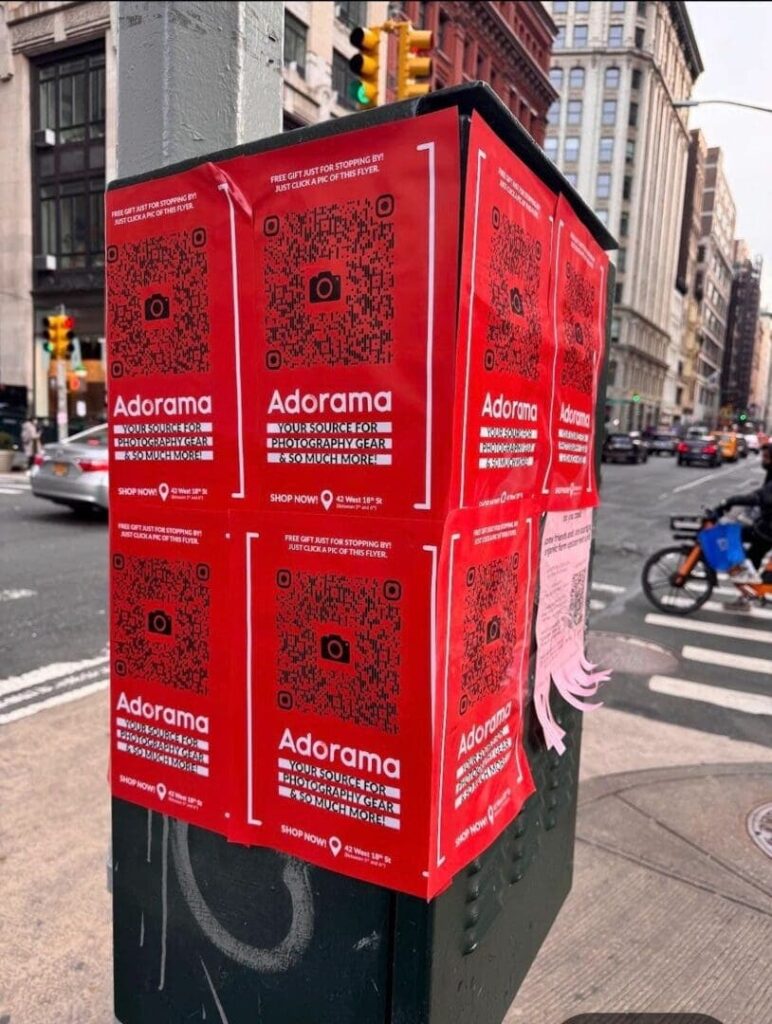
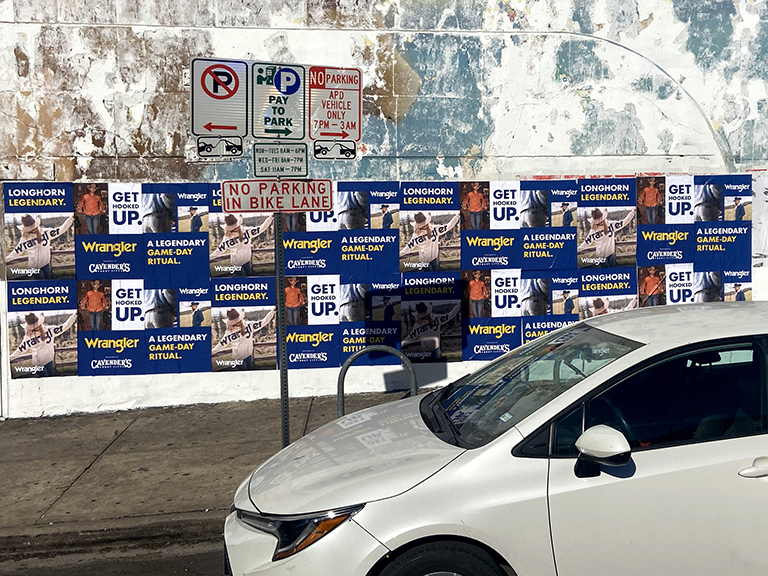
Snipe advertising — sometimes called pole posting, street snipes, or sign snipes — refers to the placement of small-format printed signs (typically 9×12 or 11×14 inches) on utility poles, fence posts, and other approved vertical surfaces throughout a target geography. Unlike large-format billboard advertising, snipe campaigns achieve their impact through density and repetition: rather than one enormous sign seen once, a snipe campaign places dozens or hundreds of signs along a corridor, ensuring that your audience encounters your message multiple times during a single walk or drive. In a city like New Orleans, where pedestrian traffic is high, streets are narrow, and the cultural norm is to pay attention to what is posted in your neighborhood, snipe campaigns deliver an outsized return on investment compared to almost any other outdoor format at a comparable price point.
AGM’s New Orleans snipe campaigns are available in two core formats: standard 9×12 cardstock snipes for dense pole saturation, and 11×14 jumbo snipes for high-visibility placements in commercial zones and along wider arterial corridors. Campaigns can be deployed as standalone snipe runs or bundled with AGM’s wheatpaste poster service for a full-spectrum guerrilla street presence. All campaigns include GPS photo documentation, zone-by-zone coverage reporting, and direct coordination with your creative team to ensure your artwork is optimized for street-level visibility in New Orleans’s specific light and environmental conditions.
AGM deploys professional snipe advertising across New Orleans neighborhoods with GPS documentation, rush deployment in 72 hours, and bundle savings when combined with wheatpaste. Get your campaign in the street fast.
Impression estimates are based on publicly available pedestrian count data, New Orleans City Planning Commission foot traffic studies, AGM field observation, and neighborhood-level demographic data. Daily foot traffic figures reflect average weekday counts; weekend and event-period counts are typically 30–80% higher in entertainment-adjacent zones. Estimates represent potential visual exposures, not guaranteed engagements. Individual results will vary based on creative quality, posting density, and campaign duration.
| Zone / Neighborhood | Est. Daily Foot Traffic | Est. Impressions per Location (14-Day Campaign) | Best Campaign Types |
|---|---|---|---|
| Freret Street Corridor (Uptown) | 4,800–7,200/day | 67,200–100,800 per posting location | Fitness studios, restaurants, bars, local retail, event promos |
| Marigny / Bywater (St. Claude Ave Perimeter) | 5,500–9,000/day | 77,000–126,000 per posting location | Music events, nightlife, art shows, food & bev, creative brands |
| Mid-City (Tulane Ave / Canal Blvd Corridor) | 6,000–10,500/day | 84,000–147,000 per posting location | Healthcare, real estate, gyms, community campaigns, retail |
| Tremé / North Rampart St | 4,200–7,800/day | 58,800–109,200 per posting location | Entertainment, nightlife, cultural events, food & bev, advocacy |
| Carrollton / Oak Street Corridor | 3,800–6,500/day | 53,200–91,000 per posting location | Local retail, service businesses, university-adjacent brands, restaurants |
| Location Name | Street / Address | Neighborhood | Est. Snipe Capacity | Best Campaign Type |
|---|---|---|---|---|
| Freret Street Commercial Block | 4500–5000 Freret St, New Orleans, LA 70115 | Uptown / Freret | 18–26 snipes per block | Fitness, restaurants, nightlife, local retail |
| Elysian Fields Ave Corridor | 1000–1600 Elysian Fields Ave, New Orleans, LA 70117 | Marigny | 20–30 snipes per block | Music events, arts, food & beverage, creative brands |
| Tulane Avenue Mid-City Strip | 2800–3400 Tulane Ave, New Orleans, LA 70119 | Mid-City | 22–32 snipes per block | Healthcare, gym, real estate, community advocacy |
| Tchoupitoulas Street Warehouse District | 700–1100 Tchoupitoulas St, New Orleans, LA 70130 | Warehouse District / CBD | 16–24 snipes per block | Events, entertainment, hospitality, corporate brand launches |
| North Rampart Street Tremé Corridor | 900–1400 N Rampart St, New Orleans, LA 70116 | Tremé | 18–28 snipes per block | Nightlife, music, cultural events, advocacy, food & bev |
Award Winning Personalized Service
You will get thoughtful, devoted, and individualized attention from our experienced, qualified, and professional personnel. Being one of the most illustrious agencies in Brooklyn, New York, American Guerrilla Marketing has been awarded the Best of Brooklyn title.
Nationwide
Industry City, Brooklyn, New York 11232
American Guerrilla Marketing
Hours
Mon - Fri: 9 AM - 5 PM
Sat & Sun: Closed
Automate your campaign with AGM’s Request for Proposal Builder. Simply answer a few quick questions about your campaign goals, markets, and timeline, and the system will generate a tailored presentation with recommended strategies, quantities, and pricing. Click the RFP Builder to instantly receive your customized proposal.
New Orleans is one of the most pedestrian-oriented cities in the South. Its famous neighborhood grid — dense blocks of shotgun doubles, corner stores, and street-facing businesses — creates a walking culture that is almost unmatched in a metropolitan area of its size. Residents of the Marigny walk to Elysian Fields Avenue for their morning coffee. Uptown professionals walk or bike along Magazine Street and Freret Street to reach their offices, gyms, and favorite lunch spots. Bywater artists and creatives walk the St. Claude Avenue corridor daily. In each of these micro-environments, utility poles and fences are part of the visual vocabulary of the neighborhood — people look at what is posted on them because that is how they have always learned about what is happening in their city. A snipe campaign that respects this culture and presents a clean, well-designed message at the right posting density will generate genuine brand awareness in a way that no algorithm-driven digital placement ever could.
The second reason snipe advertising thrives in New Orleans is the city’s extraordinary event density. New Orleans hosts more major public events per capita than virtually any other American city — Mardi Gras, Jazz Fest, French Quarter Festival, Voodoo Fest, Essence Festival, and dozens of smaller neighborhood celebrations collectively bring tens of millions of visitors and residents into the streets every year. Each of these events creates a surge of foot traffic along specific corridors that can last days or weeks. A snipe campaign deployed before Jazz Fest along Freret Street or before Essence Festival along the
Oretha Castle Haley Boulevard can generate thousands of impressions from audiences already primed to engage with new experiences, discover local businesses, and share what they see on social media.
Beyond the headline festivals, New Orleans also sustains a remarkable everyday street culture. The French Quarter draws visitors 365 days a year. Magazine Street sees consistent foot traffic from Uptown residents, tourists, and shoppers. The Marigny and Bywater attract a creative, socially active demographic that walks, bikes, and lingers. St. Claude Avenue has emerged as a corridor of galleries, music venues, and late-night culture that keeps pedestrian traffic active well past midnight. In a city where public life never fully retreats indoors, snipe advertising maintains its visibility and impact around the clock in ways that digital or indoor media simply cannot replicate.
The physical character of New Orleans also rewards snipe advertising in ways unique to this city. The low-rise streetscape, the abundance of historical wood and brick surfaces, the ironwork balconies and painted stucco walls — all create an environment where hand-crafted, visually compelling wheat-paste posters feel native rather than intrusive. A snipe on a Canal Street utility box or along the pressed-tin storefronts of the Tremé doesn’t fight the environment; it becomes part of it. Locals and visitors alike are accustomed to seeing art, announcements, and handmade expression woven into the visual fabric of the city’s streets. This cultural receptivity gives snipe advertising in New Orleans an authenticity premium that no other format can claim.
AGM’s New Orleans snipe advertising service covers the full operational range from campaign strategy through field deployment and post-campaign documentation. Standard format offerings include the 9×12 snipe card in 400-unit and 800-unit configurations, and the 11×14 jumbo snipe in equivalent deployment sizes. Snipe and wheatpaste bundle packages are available for brands seeking simultaneous small-format and large-format street presence, saving approximately $1,000 compared to booking formats separately. All campaigns include GPS-tagged post-installation photography and a post-campaign report. Rush deployment within 72 hours is available for time-sensitive activations.
The French Quarter is the most visited neighborhood in New Orleans and one of the most visited tourist destinations in the entire United States. Bourbon Street, Royal Street, Decatur Street, and the surrounding blocks absorb millions of domestic and international visitors every year, with peak density during Mardi Gras, French Quarter Festival, and the summer tourism season. Our snipe campaigns in this corridor target the transition zones between the Quarter and the adjacent Marigny neighborhood — particularly along Frenchmen Street, which draws a local music-going crowd distinct from the tourist mass on Bourbon. Snipes placed on utility infrastructure, construction hoardings, and approved surfaces near the entrances to the Spotted Cat, the Maple Leaf annex stages, and the cluster of jazz clubs at the Frenchmen Street Arts Market consistently reach an audience that is highly engaged, socially connected, and primed to share discoveries. For brands targeting the live music demographic, nightlife operators, or cultural events, this corridor delivers unmatched concentration of the right eyes.
Stretching from the Lower Garden District through the heart of Uptown, Magazine Street is one of New Orleans’ most commercially vital and pedestrian-friendly thoroughfares. The six-mile corridor is lined with independent boutiques, coffee shops, restaurants, yoga studios, galleries, and specialty retailers — attracting a demographic of relatively affluent, locally rooted residents who walk, bike, and browse rather than drive through. This is not a transient tourist crowd; it is the engaged, spending, word-of-mouth class of New Orleans consumer. Snipe campaigns along Magazine Street — particularly in the blocks between Napoleon Avenue and Jefferson Avenue, where retail density is highest — achieve the kind of repeated impression frequency that builds genuine brand familiarity. A resident who walks Magazine Street three times a week will see a well-placed snipe on Monday, process it on Wednesday, and act on it by the weekend. For local businesses, fitness brands, food and beverage operators, and lifestyle products, Magazine Street snipe campaigns represent some of the highest-ROI placements in the city.
Mid-City has undergone a remarkable transformation over the past decade, emerging from post-Katrina recovery to become one of New Orleans’ most vibrant and fastest-growing residential and cultural neighborhoods. The Broad Street corridor — anchored by the Broad Theater, a cluster of well-regarded restaurants, and the expanding footprint of the arts district — draws a mixed audience of young professionals, longtime residents, families, and the creative class. Bayou St. John, which runs through the heart of Mid-City, is one of the city’s great gathering places, hosting picnics, outdoor concerts, and weekend crowds that spill onto adjacent streets. Snipe campaigns in Mid-City target the pedestrian corridors along Bayou St. John, the blocks surrounding City Park Avenue, and the retail nodes on Carrollton Avenue near the Camellia Grill. This audience skews local and loyal — people who will support a brand they discover on their own streets precisely because they encountered it there, in their own neighborhood, rather than in an advertisement.
The Bywater and St. Claude Avenue corridor has become the creative frontier of New Orleans, attracting artists, musicians, chefs, designers, and the broader community of people who gravitate toward emerging cultural scenes. St. Claude Avenue runs from the Marigny through the Bywater into the St. Roch neighborhood, passing art galleries, music venues, experimental theater spaces, cocktail bars, and the kind of independent businesses that define a neighborhood on the rise. The demographic is young, culturally literate, digitally active, and deeply skeptical of conventional advertising — which makes snipe advertising the ideal medium. A wheat-paste poster on St. Claude doesn’t feel like an ad; it feels like part of the visual conversation of the street. Snipe campaigns in this corridor, particularly timed to coincide with Second Line parades, gallery openings along the Bywater Art Market corridor, or the monthly art walk events, achieve exceptional engagement among an audience that influences cultural trends across the broader city. For music events, creative brands, food and beverage launches, and apparel, the St. Claude corridor is a must-include placement.
The Central Business District and adjacent Warehouse Arts District form the commercial and cultural heart of downtown New Orleans. The CBD absorbs the daily commuter population of the city’s major employers, the convention traffic from the Ernest N. Morial Convention Center, and the hotel guests staying in the cluster of major properties along Canal Street and Poydras Street. The Warehouse District adds a layer of cultural credibility — with the Contemporary Arts Center, the Ogden Museum of Southern Art, and a concentration of galleries and upscale restaurants that draw both visitors and the city’s professional class. Snipe campaigns in this zone target the pedestrian corridors between the Convention Center and the French Quarter, the blocks surrounding the Superdome and Smoothie King Center on event days, and the streets of the Warehouse District on gallery night circuits. During major conventions or sporting events — the Sugar Bowl, the Super Bowl, NBA All-Star — the foot traffic density in this corridor rivals Mardi Gras on Canal Street, making pre-event snipe deployments here among the highest-volume impression opportunities in the southeastern United States.
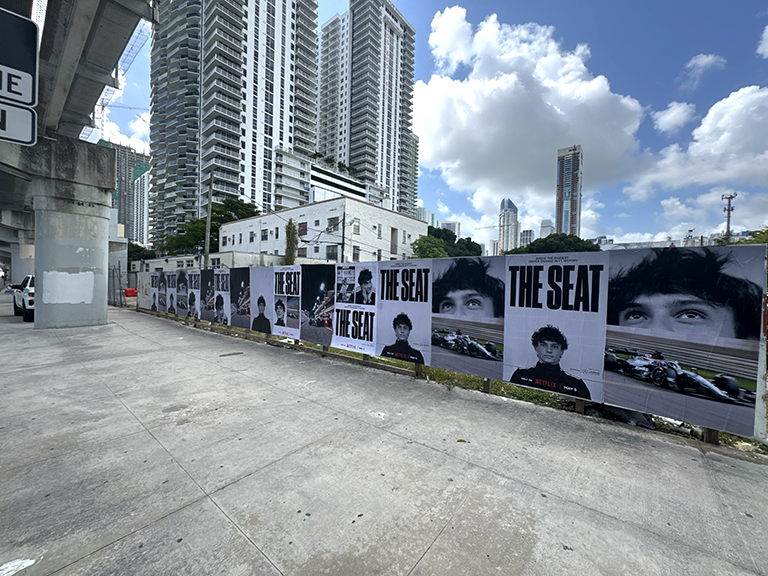
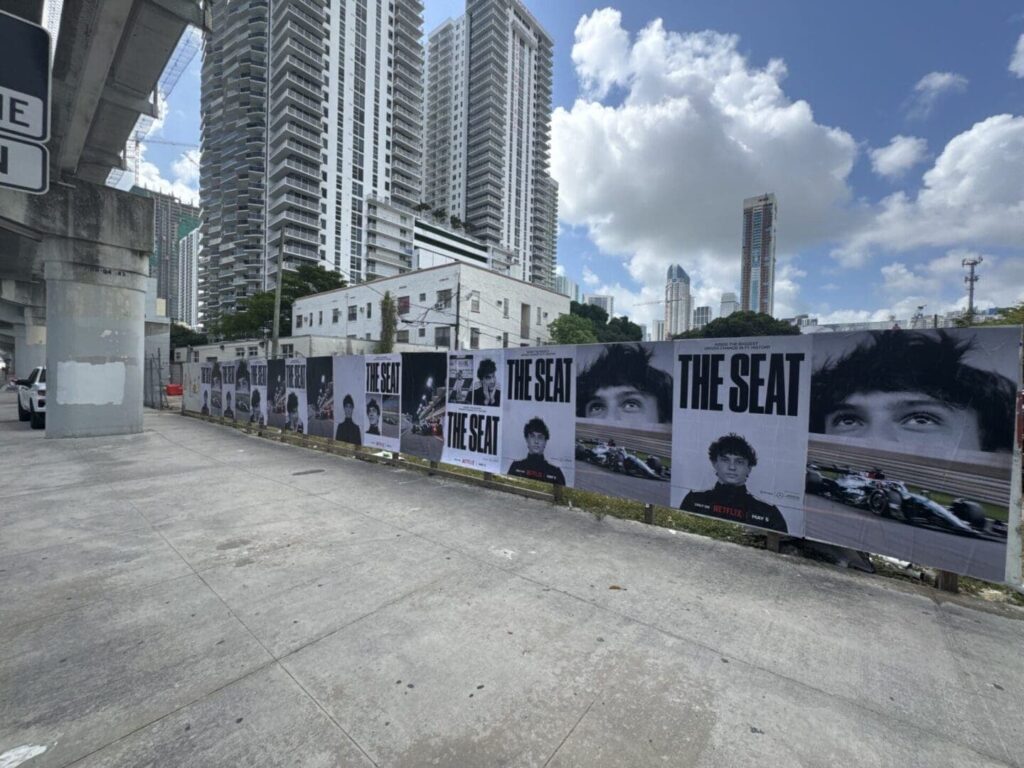
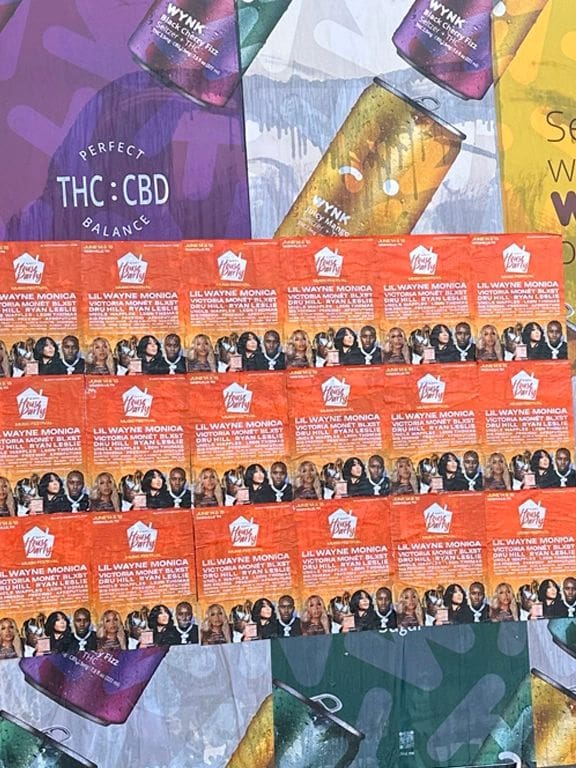
Netflix partnered with AGM for a high-visibility wheatpasting campaign in Miami.
Result: Dominant street-level presence across Miami’s highest-traffic neighborhoods.
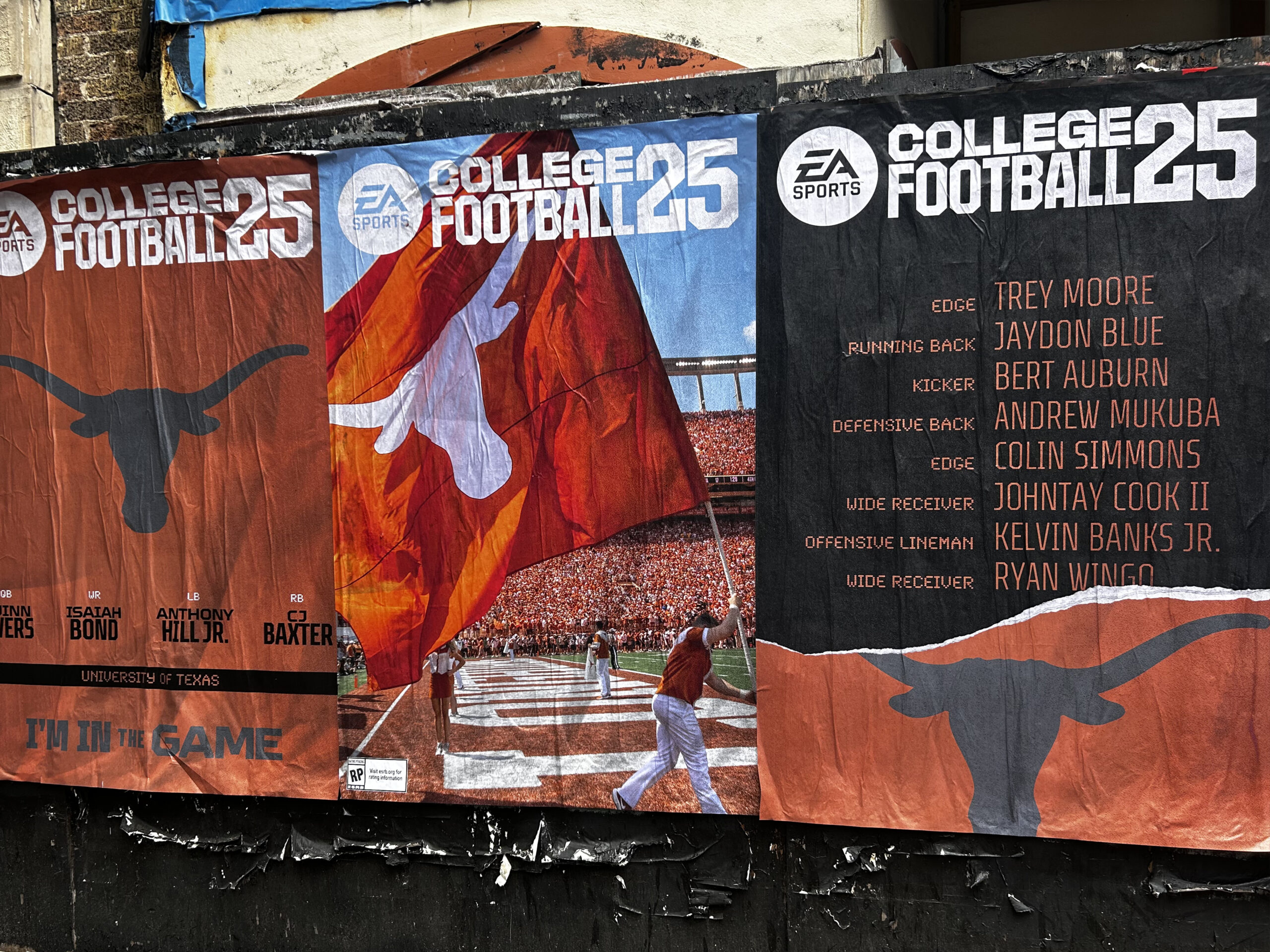
EA Sports partnered with AGM for a street-level activation campaign around the launch of EA Sports FC25.
Result: Massive street-level visibility timed to the game’s release window.
American Guerrilla Marketing has been executing snipe advertising campaigns across the United States since 2014, and New Orleans has been an active market in our national deployment network throughout that decade. The operational knowledge we have built here — surface intelligence, neighborhood pedestrian rhythm data, seasonal patterns, and the creative sensibilities that resonate with New Orleans’s consumer audience — represents years of refinement that informs every placement decision we make in this market. When you work with AGM on a New Orleans snipe campaign, you are engaging a team with proven national experience and genuine local knowledge built into every recommendation, every creative consultation, and every post-campaign report we deliver.
Absolutely. AGM runs rush campaigns in New Orleans with turnarounds as fast as 48-72 hours, which is critical when you’re trying to catch the Mardi Gras crowd or Jazz Fest traffic. We keep local installation crews on standby during peak festival seasons because timing matters here more than most cities. Rush campaigns during Carnival typically focus on the parade routes along St. Charles Avenue, the Marigny entertainment zone, and high-traffic spots near the French Quarter. Keep in mind that demand spikes significantly from January through early March, so booking even a week ahead gives you better placement options. For events like Essence Fest or Voodoo Fest, we recommend at least 5-7 days notice to secure prime locations in the Warehouse District and City Park areas. Rush fees apply, but you won’t miss your window.
Our New Orleans campaigns start at 50 placements minimum for pole snipes and yard signs. This baseline works well for neighborhood-focused efforts in areas like Bywater or along Magazine Street where foot traffic is concentrated rather than spread across miles of sprawl. For citywide coverage that hits multiple corridors—say, Uptown through Mid-City and into the Marigny—most clients find 150-200 placements deliver the frequency needed for real brand recall. Poster snipes have a 25-piece minimum since they’re larger format. Campaign floors typically run around $1,500 for localized pushes, with full-market saturation starting closer to $4,000. New Orleans rewards density over spread because the city’s compact geography means people walk and bike through the same areas repeatedly. We’ll help you figure out the right count based on your target neighborhoods and campaign duration.
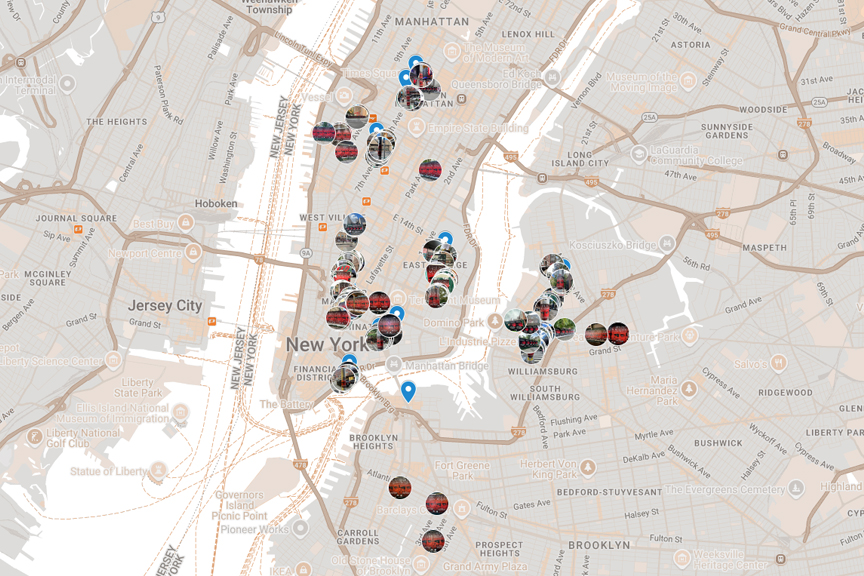
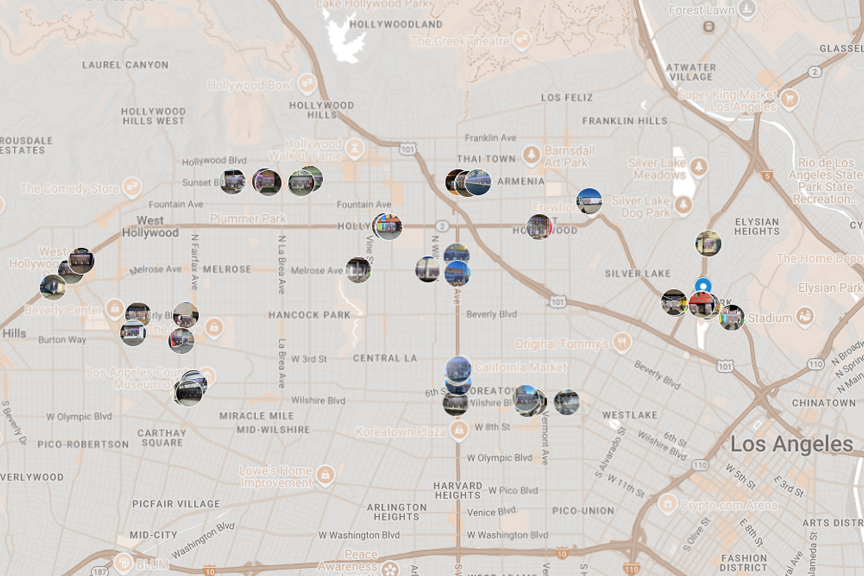
We track several metrics that actually mean something in the New Orleans market. First, we document every placement with GPS-tagged photos so you see exactly where your signs went up—whether that’s Frenchmen Street or the Oak Street corridor. Visibility estimates factor in local pedestrian counts, which spike dramatically in areas like the French Quarter (20,000+ daily foot traffic) versus residential neighborhoods in Gentilly. For direct response campaigns, we use unique URLs, QR codes, or dedicated phone numbers to trace leads back to specific sign locations. Clients promoting events or venues often measure ticket sales or foot traffic increases during campaign windows. The tangible nature of snipe advertising here works well because New Orleans residents actually walk their neighborhoods—they’re not just driving past at 45 mph. Many bars, restaurants, and music venues report 15-30% upticks in first-time visitors during active campaigns.
The smartest approach treats your street-level snipes as the anchor and your digital ads as the follow-up. In New Orleans, we coordinate placements in high-traffic areas like Magazine Street or the Bywater, then run geofenced mobile ads targeting anyone who passes through those zones. When someone walks by your poster snipe on St. Claude Avenue, they might see your Instagram ad an hour later—that repetition builds recognition fast. QR codes on snipes work surprisingly well here because the city’s younger demographics and tourist population are phone-ready. We’ve seen strong results pairing snipe campaigns with Spotify and podcast ads during Jazz Fest when visitors are streaming constantly. The physical presence gives credibility that pure digital can’t match, especially for local businesses competing against national chains with bigger ad budgets.
New Orleans doesn’t have subway stations, so we focus on the real commuter corridors: streetcar stops along St. Charles Avenue and Canal Street, the RTA bus transfer points at Elysian Fields and Canal, and the bike paths that run through the Marigny and Bywater. The Rampart-St. Claude streetcar line hits a younger, local demographic that’s different from the tourist-heavy Canal line. We also target the areas around Union Passenger Terminal for Amtrak travelers and the ferry landings at Canal Street and Algiers Point. Commuter parking lots near Lee Circle and the CBD catch the 9-to-5 crowd heading to office jobs. Unlike other cities where subway platforms dominate, New Orleans rewards placements near the neutral grounds where people wait for streetcars and near the major bike racks in business districts. These spots deliver repeated daily impressions to the same audience.
Magazine Street from Uptown through the Garden District delivers consistent foot traffic year-round—shoppers, diners, and locals running errands pass the same blocks daily. Frenchmen Street in the Marigny is unbeatable for nightlife and music promotion, with crowds seven nights a week. The Bywater along St. Claude Avenue has grown into a major corridor for younger residents and artists. Oak Street near Carrollton draws a loyal neighborhood crowd that actually pays attention to local advertising. For tourist-heavy impressions, Royal Street in the Quarter works, but you’re competing with visual noise from every direction. The Warehouse District near the Convention Center catches business travelers, while the Tulane-Loyola corridor on Broadway hits students and faculty. Each neighborhood has distinct demographics—Magazine skews toward affluent locals while St. Claude reaches a more artistic, budget-conscious crowd. We match your target audience to the right streets.
Standard installation across New Orleans takes 2-4 days depending on placement count and neighborhood spread. A focused campaign hitting just the Marigny and Bywater might go up overnight. Citywide campaigns covering Uptown, Mid-City, the CBD, and the Ninth Ward usually need 3-4 days for proper execution. Our crews know the city’s quirks—narrow streets in the Quarter, one-way complications in the Marigny, and permit-sensitive areas near certain historic districts. We install during early morning hours in business districts and evening hours in entertainment zones to minimize interference and maximize fresh placement visibility. Weather delays happen, especially during summer afternoon storms, so we build buffer time into July and August schedules. Post-installation, we conduct verification drives within 48 hours and replace any signs that got damaged or removed. You’ll receive a full photo report documenting every placement location.
Yes, and the Tulane-Loyola corridor is one of our most requested zones. We place along Broadway, on Freret Street’s restaurant row, and throughout the Carrollton area where students live off-campus. The key is hitting spots where students actually spend time—near coffee shops, bars, record stores, and the cheaper dining options along Maple Street. Xavier University and Dillard University in Gentilly offer additional campus-adjacent opportunities with less advertising competition. UNO near Lake Pontchartrain reaches a commuter student population. We avoid placing directly on university property but saturate the surrounding blocks. Fall semester launch (late August) and spring break timing (early March) are prime windows. Students here respond well to concert promotions, food and drink specials, and app launches. The 50,000+ college students across New Orleans represent serious spending power, and they’re walking these neighborhoods daily between classes, jobs, and social activities.
New Orleans weather is tough on outdoor advertising. Summer humidity runs 80-90% regularly, afternoon thunderstorms drop heavy rain from June through September, and hurricane season brings real risks from August through October. We use water-resistant substrates and UV-protected inks as standard here—not upgrades. Signs in direct sun along treeless stretches of Claiborne Avenue fade faster than shaded placements in the Garden District. We schedule more frequent maintenance checks during summer months and include replacement provisions in longer campaigns. Winter is actually ideal for snipe advertising here—mild temperatures, lower humidity, and the festival season brings maximum foot traffic. Termite and mold concerns mean we’re careful about placement surfaces and avoid spots with standing water nearby. Salt air near the lakefront and river can accelerate wear on metal pole hardware. Most clients book 2-4 week campaigns because that’s the sweet spot before weather degradation becomes visible.
New Orleans regulates signage through the Department of Safety and Permits, with specific rules varying by historic district overlay. The French Quarter and most of the Marigny fall under Vieux Carré Commission oversight with stricter aesthetic requirements. Pole snipes on utility infrastructure occupy a gray area—technically prohibited but enforcement is inconsistent outside protected historic zones. We navigate this by focusing on private property partnerships, construction site agreements, and areas with established posting traditions like St. Claude Avenue’s commercial stretches. Yard signs on private residential property require owner permission but face fewer restrictions. Fines for improper placement can hit $500 per sign in historic districts, so we don’t take chances there. The CBD has different rules than residential neighborhoods, and areas near City Park have Parks and Parkways oversight. AGM handles all the local compliance research and maintains relationships with property owners throughout the city to keep your campaign legal and protected.