Coachella is the most culturally influential music festival in the United States. Two weekends in the Coachella Valley draw an audience that sets trends for the rest of the year, generates more organic social media content than almost any other consumer event, and concentrates a demographic that marketers spend enormous effort trying to reach through conventional channels without nearly the impact.
American Guerrilla Marketing executed brand activations in and around the Coachella Valley during the 2026 festival weekends. This roundup covers what we observed worked, what didn’t, and how brands can think about building a stronger 2027 Coachella activation strategy: or catch remaining 2026 festival windows with the same strategic approach.
The geographic constraints of the Coachella Valley make this a different kind of activation environment than an urban festival. Understanding those constraints and working with them, rather than against them, is what separates effective Coachella campaigns from expensive ones that generate minimal results.
The Coachella Valley as an Activation Environment
Unlike urban festivals where the surrounding city provides a dense ecosystem of street-level advertising opportunities, Coachella exists in a semi-contained desert geography. The festival audience is distributed across a relatively defined area: Palm Springs, Palm Desert, La Quinta, Indio itself, and the highway corridors connecting them. This constraint is actually a strategic advantage for brands that understand it.
A Contained Audience Footprint
Because the Coachella audience has nowhere else to go: they’re in the valley for the weekend: the concentration of campaign impressions per dollar is higher than in an open urban environment. A well-placed campaign in Palm Springs hotel district or on the Highway 111 corridor reaches the same audience multiple times across multiple days. There’s minimal leakage into non-festival populations the way there would be in a major city.
The Lodging Corridor Advantage
One of the most valuable insights from the 2026 activation season: the lodging corridors along Highway 111 between Palm Springs and Indio are among the highest-value outdoor advertising surfaces in the Coachella activation market. Brands that placed campaigns in hotel, Airbnb, and vacation rental districts reached the audience at the precise moments when they’re relaxed, socializing, and most receptive to brand experiences: which is the evening hours before and after festival days, not during the festival itself.
What Worked: LED Truck Advertising in the Valley
Our LED billboard trucks running the Highway 111 corridor during the peak afternoon-to-evening transition window: when festival-goers are heading from their accommodations toward the venue or returning: generated some of the highest impression density per deployment hour we’ve documented across any festival market. The roads are the arteries of the entire event, and a mobile LED display on those corridors is essentially unavoidable for anyone in the market.
Shuttle Stop Deployment
Coachella’s shuttle system creates predictable high-density congregation points. Brand ambassador teams and LED trucks positioned near major shuttle loading areas caught the audience at a natural pause moment: waiting is receptive time. The brands that focused activation resources at shuttle infrastructure rather than trying to work the festival perimeter itself consistently reported stronger direct engagement rates.
Palm Springs Downtown Saturation
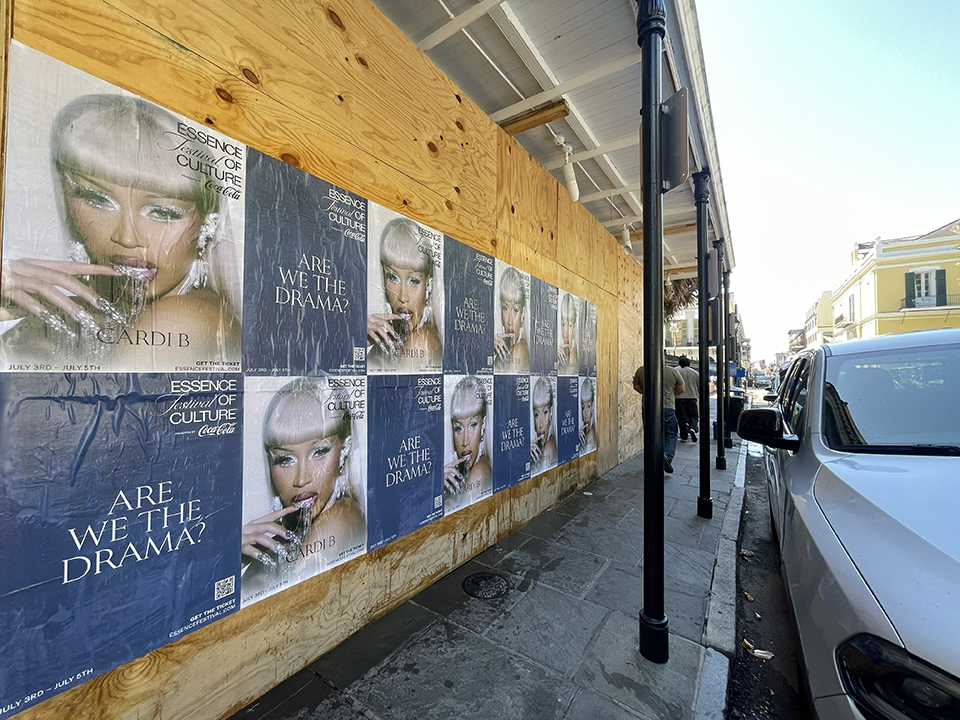
Palm Springs downtown functions as the social hub for much of the Coachella audience during off-festival hours. Restaurants, bars, pool events, and nightlife concentrate the audience in a walkable urban environment: the most natural street-level advertising environment in the entire Coachella Valley. Our poster campaigns and sidewalk stencil activations in Palm Springs proper outperformed placements closer to the festival venue for brands seeking brand awareness and social engagement rather than direct venue-adjacent impressions.
What Didn’t Work: Lessons from 2026 Coachella Activations
Not every approach delivered results. Here’s where brands struggled and what the 2026 activation season clarified about the Coachella market.
Single-Weekend Campaigns
Brands that only activated during Weekend 1 missed the Weekend 2 audience entirely: which is a distinct cohort with its own engagement patterns and brand exposure history. The most efficient Coachella investment covers both weekends with the same campaign infrastructure, effectively doubling impressions within the same logistical footprint at marginal additional cost.
Festival Perimeter Focus Without Valley Presence
Campaigns that concentrated exclusively on the festival venue perimeter: where competition for attention is highest and access constraints are strictest: significantly underperformed compared to campaigns that extended into the residential and lodging areas where the audience spends the majority of their time. The festival grounds are four to six hours of a festival-goer’s twelve-hour day. The rest of that time is spent in the valley infrastructure.
Low-Visibility Surface Choices
The flat desert light in the Coachella Valley is unforgiving for campaigns that rely on subtle creative execution. High-contrast, large-format creative that reads from a distance in bright afternoon sunlight consistently outperformed detailed or low-contrast executions. This is a market where visual clarity and scale matter more than nuance.
The Two-Weekend Strategy: Why It Matters
Coachella’s two-weekend structure is one of the most important strategic considerations for brand activations. Weekend 1 and Weekend 2 draw overlapping but distinct audiences. Some dedicated fans attend both, but the majority of the 250,000+ total attendees choose one weekend. A campaign active for both weekends essentially doubles its audience reach within the same geographic footprint and infrastructure.
Weekend 1 vs. Weekend 2 Dynamics
Weekend 1 tends to draw heavier media and industry presence: the social content generated in Weekend 1 sets the cultural narrative that Weekend 2 audiences arrive already knowing. Brands that establish strong visual presence in Weekend 1 get referenced in the social media content that primes Weekend 2 audiences before they arrive. This organic content amplification effect is one of the unique mechanisms that makes Coachella different from every other festival in our portfolio.
The Coachella Brand Activation Ecosystem in 2026
Coachella 2026 presented a markedly more competitive brand activation environment than previous years. The combination of post-pandemic resurgence in experiential marketing budgets, the growing sophistication of brand activation teams, and increased awareness of the Coachella Valley’s unique geographic containment advantages meant that more brands were competing for the same audience across a relatively fixed geographic footprint. This heightened competition had significant implications for what worked and what didn’t.
Differentiation Became More Important Than Presence
In a market where multiple brands were deploying similar activation formats simultaneously, presence alone was no longer sufficient to generate meaningful audience response. Brands that showed up with undifferentiated creative: the standard LED truck with a logo loop, the standard brand ambassador team in matching T-shirts handing out the same tote bags as four other brands: generated baseline awareness at best. Brands that differentiated through either creative quality, unexpected format, or unusually precise location selection stood apart in a way that produced measurable engagement lift above the market baseline.
The Premium on Location Intelligence
As more brands competed for the same audience in the Coachella Valley, the value of superior location intelligence increased. Brands working with AGM’s established market knowledge: which includes specific data on pedestrian density patterns, social documentation hot spots, and lodging corridor traffic flows developed across multiple Coachella activation seasons: were able to position campaigns with a precision that ad-hoc market research couldn’t match. The difference between the highest-performing locations in the Coachella Valley and average locations is significant, and that difference compounds when multiple brands are competing for the same audience attention across the same limited geography.
Early Timing Became a Competitive Advantage
Brands that established street-level presence in the Coachella Valley before the crowds arrived: including in the days leading up to Weekend 1: benefited from lower visual competition and higher per-impression quality during the arrival window. Audiences arriving in the valley for the first time on a festival year are in an especially high state of sensory attention as they orient to the environment. Campaigns that reach them during that arrival window are encountered before the audience has established their environmental filtering for that specific geography, which means the initial exposures carry stronger impression quality than later ones.
Creative Observations from the 2026 Coachella Activation Landscape
Beyond strategic positioning, the creative decisions brands made in the 2026 Coachella Valley activation environment told us a lot about what resonates with this specific audience and what falls flat. These observations inform both how we counsel creative teams preparing for future Coachella campaigns and how we think about creative direction for other high-profile festival activations across the U.S. calendar.
Brands That Went Big Won
Scale consistently outperformed restraint in the 2026 Coachella market. Brands that invested in large-format executions: full-wall poster installations, oversized LED truck creative, brand ambassador teams with significant visual presence: generated social documentation at dramatically higher rates than brands that deployed modest, conservatively-sized creative. In the Coachella Valley’s bright desert light and open visual environment, scale is what creates the visual surprise that triggers documentation behavior. A standard-size poster in this environment is invisible against the visual stimulation of the festival context. A floor-to-ceiling wall installation is something worth photographing.
Simple Creative Beat Complex Creative
The Coachella audience is sophisticated enough to appreciate craft and concept, but the viewing conditions of street-level advertising in the desert festival environment are unforgiving to creative that requires more than two seconds to decode. The campaigns that performed best: measured by social documentation rate and organic brand mention volume in our post-campaign analysis: were the ones with clean, simple visual concepts that communicated immediately. One strong image. One strong line. Executed at scale. Everything else was visual noise that dissolved into the festival environment without creating a lasting impression.
Cultural Fluency Mattered
Coachella has a distinct cultural aesthetic and vocabulary. The brands that demonstrated genuine familiarity with that culture: through creative that referenced the right touchstones, spoke in the right register, and positioned themselves as culturally aware rather than culturally intrusive: generated the kind of organic social sharing that money can’t buy. Brands that applied generic national creative without cultural adaptation were filtered out by an audience that is highly attuned to the difference between authentic brand engagement and commercial intrusion into spaces they care about.
Operational Lessons: What Made Campaigns Execute Well
Beyond strategy and creative, the operational quality of 2026 Coachella activations varied significantly, and that variation directly correlated with campaign outcomes. Here’s what the most smoothly-executed campaigns had in common from a logistics perspective.
Location Intelligence
The campaigns that chose their locations based on actual foot traffic patterns and audience movement data: rather than assumptions about where festival-goers would be: dramatically outperformed campaigns placed intuitively. The Coachella Valley’s geography seems simple, but the actual distribution of audience density across the lodging corridors, pool party venues, and shuttle infrastructure is specific and sometimes counterintuitive. Brands that worked with AGM’s location intelligence from the beginning built deployments that were precisely positioned where the audience actually was.
Timeline Adherence
Coachella’s compressed event calendar leaves almost no room for campaign deployment delays. Brands that locked in their logistics: materials production, transportation, crew coordination, permit confirmation: weeks before the first weekend were able to execute cleanly and focus on quality during the event. Brands that were still resolving logistics issues during the first weekend scrambled to execute and consistently got less out of their investment than brands that had the operational foundation in place before the festival began.
Measuring Coachella Activation ROI
Coachella brand activations exist in a measurement environment that’s more complex than most brand advertising contexts. The geographic containment of the Coachella Valley makes it possible to measure campaign performance with more precision than many open-city outdoor campaigns, but it also means that impression volume is inherently limited by the physical size of the market. Understanding the right measurement framework for Coachella campaigns prevents brands from applying urban-market impression benchmarks that don’t apply to the desert festival geography.
Impression Quality Over Impression Volume
The most useful measurement framework for Coachella activations prioritizes impression quality indicators over raw impression volume. An LED truck that reaches 10,000 Coachella Valley residents and tourists during the festival weekend is generating higher-quality impressions than a standard urban campaign that reaches 100,000 general population members in a less targeted environment. The Coachella audience’s concentration, their elevated cultural engagement during the festival period, and the social media amplification behaviors that characterize this specific demographic all suggest that per-impression brand value is substantially higher in the festival market than standard outdoor advertising benchmarks would indicate.
Social Documentation as a Measurement Layer
For Coachella activations where social amplification is a meaningful component of campaign objectives, we track organic social documentation of campaign creative using brand monitoring tools and hashtag analysis. The volume of organic user-generated content featuring campaign elements, the reach of that content through shares and engagement, and the sentiment of associated commentary all provide measurement data that augments the traditional impression count with qualitative performance information. For brands with strong social followings or influencer marketing programs running in parallel, coordinating monitoring of both paid and organic social content during the activation period provides the most complete picture of total campaign impact.
Post-Event Brand Lift Indicators
Where budget allows, we recommend measuring changes in branded search volume, direct website traffic from the Coachella Valley geographic area, and social mention volume during and immediately following the festival period. These digital signals provide indirect evidence of brand awareness lift attributable to the street-level campaign, and when compared against baseline periods, they give brand teams a defensible estimate of the digital response generated by physical campaign presence in the festival market.
What’s Next: Applying Coachella Lessons to the 2026 Festival Circuit
The strategic insights from Coachella 2026 translate directly to the rest of the festival circuit. The contained geography principle: focusing on where the audience actually spends their time rather than just the festival perimeter: applies across every major festival market. The multi-format approach, the lodging corridor targeting, the transit chokepoint activation: all of these work in Chicago, New York, Boston, and Austin as well as they work in the Coachella Valley.
Carry Momentum Through the Season
Brands that activate at Coachella and then disappear from the festival circuit until fall leave impressions on the table. The same audience that was at Coachella in April is at Governor’s Ball in June and Lollapalooza in August. A coordinated summer festival strategy through AGM maintains brand presence across that full audience journey. Explore our complete guerrilla marketing services and brand ambassador programs to understand what a full-season activation strategy looks like.
Documentation for Annual Planning
Every campaign AGM executes generates GPS-tracked, photo-documented performance data that feeds into the following year’s strategy. Brands that commit to a multi-year Coachella activation relationship with our team build increasingly effective campaigns because each year’s data directly improves the next year’s location selection, timing, and format decisions.
Frequently Asked Questions About Coachella 2026 Brand Activation
What brand activation strategies work best at Coachella?
The strategies that consistently outperform at Coachella are the ones that reach the audience before and after the festival grounds: in Palm Springs, Palm Desert, La Quinta, and the highway corridors approaching Indio. LED truck advertising, large-format poster campaigns in festival lodging areas, and brand ambassador activations at key transit and hospitality hubs all deliver strong results in this contained desert market.
Where should brands focus street-level campaigns for Coachella?
The Coachella Valley gives brands a contained geographic footprint to work with. Key activation zones include Palm Springs downtown, Indio Boulevard, the Airbnb and hotel corridors along Highway 111, El Paseo in Palm Desert, and the main festival shuttle drop points. These areas concentrate the audience at moments when they’re highly receptive and not competing with festival stimuli for their attention.
Is Coachella two weekends?
Yes, Coachella runs across two consecutive weekends in April. Brands that activate across both weekends reach two distinct audience cohorts: some attendees do both weekends, but the majority attend one. A two-weekend campaign effectively doubles reach within the same geographic footprint with minimal additional logistical overhead.
What made brand activations fail at Coachella?
Coachella activations fail most often for two reasons: poor location selection that puts campaigns where audience density is low, and single-format campaigns that rely on a single touchpoint. The most effective Coachella brand campaigns combine street presence in lodging areas, mobile LED displays on key corridors, and ambassador activations at high-density shuttle and transit points.
How does AGM handle Coachella brand activation campaigns?
AGM scouts the Coachella Valley in advance, identifies permitted surfaces and high-traffic locations, coordinates LED truck routes timed to festival shuttle schedules and peak traffic windows, and deploys brand ambassador crews at the lodging and transit nodes that concentrate the festival audience. All campaign elements are GPS-tracked and photo-documented for post-campaign reporting.
Frequently Asked Questions
What is coachella 2026 brand activation roundup?
American Guerrilla Marketing provides coachella 2026 brand activation roundup services across 50+ U.S. markets. Every campaign is planned, scouted, executed, and GPS-documented by our field teams. We work with regional brands and Fortune 500 companies on campaigns that require real street-level execution and documented proof of performance.
How does AGM approach activation roundup?
Our process starts with a market consultation to understand your goals, target audience, and budget. We then scout locations, handle any required permissions or permits, coordinate production and installation with our local crews, and provide a full GPS-tagged photo report after the campaign runs.
What markets does American Guerrilla Marketing cover for activation roundup?
We operate in 50+ U.S. markets including New York, Los Angeles, Chicago, Miami, Houston, Atlanta, Seattle, Denver, Boston, and dozens of secondary markets. Contact us to confirm availability and pricing for your specific market.
How much does a activation roundup campaign cost?
Campaign pricing depends on market, format, quantity, and duration. We work with budgets ranging from targeted single-market runs to national rollouts across multiple cities. Use our RFP Builder or contact us directly for a custom quote based on your specific campaign requirements.
How do I get started with activation roundup through AGM?
The fastest way to get started is to submit your campaign details through our RFP Builder at americanguerrillamarketing.com, or contact us directly at [email protected] or (646) 776-2770. Our team typically responds within one business day with availability and initial pricing.