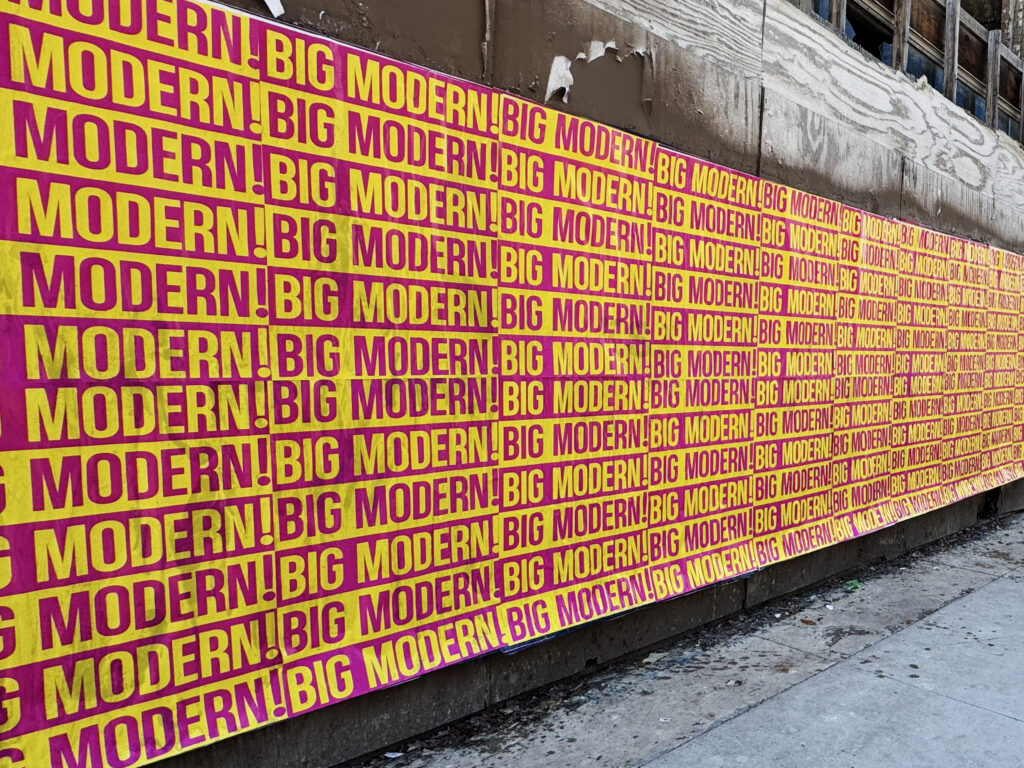
Most brands understand the concept of wheatpasting, large-format posters applied to walls in high-traffic neighborhoods across New York City. What they don’t always understand is what the execution actually involves down to the specific block, the specific wall, the specific poster dimensions, the specific paste timing, and the specific documentation format. This is how it actually works, not a marketing summary, not a capabilities description, of exactly how an AGM NYC wheatpasting campaign runs from brief to delivered photo documentation.
Location Scouting, What We’re Looking For and Why It Comes First
Before a single poster is printed, we walk the target neighborhoods. This is not a formality. Print before scouting means guessing at wall dimensions, surface conditions, and audience alignment, all of which directly affect whether a campaign performs or wastes budget.
For a focused NYC wheatpasting campaign targeting 18–28 year old DTC brand consumers, the primary corridors and their specific confirmed wall inventory:
Williamsburg, Bedford Ave Corridor (8–10 confirmed locations):
Lower East Side, Orchard and Ludlow (6–8 confirmed locations):
Bushwick, Wyckoff Ave and Surrounding (8–10 confirmed locations):
Soho, Spring and Prince Streets (4–6 confirmed locations):
The Overnight Paste Run, Specific Crew Logistics
Paste crews work overnight, typically 11 PM to 4 AM. A standard AGM two-person crew working a defined corridor covers 15–20 locations in a single night. Here is what the logistics look like:
Crew configuration: One paste technician and one lookout/spotter. The paste technician applies the poster; the spotter manages the paste bucket, ensures correct placement alignment, and documents the in-progress work. Both crew members document completed locations with phones before moving to the next spot.
Paste materials: Professional wheat paste is mixed at approximately 1 cup dry paste powder to 1 quart water, producing a thick, adhesive compound that penetrates paper fibers and bonds to the substrate surface. This is not wallpaper paste (too thin, posters peel in rain) and not adhesive-backed vinyl (visible edges peel immediately in NYC’s weather). Professional wheat paste applied to a prepared concrete, brick, or plywood surface creates a bond that survives 2–3 weeks of rain, sun, and competing foot traffic before degradation begins.
Poster application sequence: (1) Surface prep, remove loose material, dust, or existing paper layers that would prevent adhesion. (2) Base coat, apply a thin layer of paste to the wall surface. (3) Poster placement, position the poster against the wet paste. (4) Top coat, apply a second paste layer over the entire poster surface, smoothing from center outward to eliminate air pockets. The top coat seals the edges and dramatically extends the poster’s weather resistance. (5) Documentation, photograph the completed placement before moving to the next location.
Typical overnight output by corridor:
A single overnight run covering all three of these corridors requires 7–7.5 hours of active work, typically requiring two separate crews deployed simultaneously to complete the full scope in a single night.
Morning Documentation, What Gets Delivered and How
By 8 AM, AGM’s documentation team is back on the street with cameras. Every confirmed location from the prior night’s paste run gets documented in a standardized three-shot sequence:
The complete documentation package, organized by neighborhood, labeled by address, and annotated with campaign-relevant notes (e.g., “high-visibility corner location,” “adjacent to subway exit,” “prime festival-approach corridor”), is delivered to the client within 24 hours of the paste run completion. For multi-night campaigns, documentation from each night is delivered the following morning so clients have real-time visibility into campaign progress.
Poster Specifications, Dimensions, Format, and Quantities
AGM works with brands on poster specifications that maximize impact within the confirmed wall inventory for their target neighborhoods:
Campaign Pricing, What to Budget for NYC Wheatpasting
NYC wheatpasting campaign costs at AGM break down as follows:
Find American Guerrilla Marketing on Google: View American Guerrilla Marketing’s Google Business Profile for New York City wheatpasting campaign reviews, installation documentation, and service details.
View AGM on Google Business Profile →
Frequently Asked Questions
How many wheatpaste poster locations are available in Williamsburg Brooklyn for a street campaign?
The Williamsburg wheatpasting corridor contains 15–18 confirmed wall locations: 8–10 on Bedford Ave from N 7th St to Metropolitan Ave, 4–5 on the N 11th St and Wythe Ave cross blocks, and 3–4 in the Grand St and Marcy Ave area. Wall widths on Bedford Ave range from 8–20 feet, accommodating 1–3 standard 24×36 posters or one large 48×72-inch format per location. The premium 20-foot walls adjacent to the Bedford Ave L train entrance support 4–6 poster compound configurations creating billboard-scale presence at pedestrian eye level.
What poster sizes does American Guerrilla Marketing use for NYC wheatpasting campaigns?
American Guerrilla Marketing uses three poster formats for New York City wheatpasting: standard (24×36 inches), fits all NYC wall types, recommended for events, product launches, and brand push campaigns; large format (48×72 inches), billboard-scale presence at pedestrian level on wider walls, recommended for luxury brands and entertainment launches; compound configurations, multiple posters side-by-side on premium large walls (20+ feet wide) creating billboard-equivalent visual impact. Standard print quantities range from 100 to 600+ units depending on campaign scope.
How long do wheatpaste posters last on NYC walls and what is the impression window?
Professionally applied wheatpaste posters in New York City survive two to three weeks before significant degradation. In lower-competition locations like Bushwick and parts of the Lower East Side, lifespan extends to four to five weeks. During the standard two-to-three-week lifespan, the same audience walking the same blocks encounters the same creative an average of five to seven times, that repeated exposure is the mechanism that makes NYC wheatpasting effective for brand recognition. Campaign refresh runs at the two-week mark extend the active impression window for longer-running programs.
What is the paste application process AGM uses for professional NYC wheatpasting campaigns?
AGM’s paste application process for NYC wheatpasting follows a five-step sequence at every location: (1) Surface preparation, crew removes loose paper layers and debris that would compromise adhesion; (2) Base coat, a thin layer of professional wheat paste (mixed at approximately 1 cup dry paste powder to 1 quart water) is applied to the wall surface; (3) Poster placement, the poster is positioned against the wet base coat with precise alignment; (4) Top coat, a second paste layer is applied over the entire poster surface, smoothing from center outward to eliminate air pockets and seal all edges; (5) Documentation, both a close-up and wide-context photo are taken at the completed placement before the crew moves to the next location. The top coat is the critical step that extends poster lifespan from 1–2 weeks to the full 2–3 week standard window, and to 4–5 weeks in lower-competition locations like Bushwick.
What wheatpaste wall inventory does AGM have in Bushwick for NYC street campaigns?
AGM’s Bushwick wheatpaste inventory covers 18–24 confirmed locations across three sub-corridors: (1) Wyckoff Ave from Jefferson Ave to Troutman St (approximately 0.4 miles), 5–6 large-format locations; Wyckoff Ave walls in Bushwick are typically wider (15–30 feet) than comparable LES or Williamsburg surfaces, accommodating compound poster configurations and reducing competing-placement competition; (2) Jefferson Ave between Wyckoff Ave and Cypress Ave, 3–4 locations in the residential Bushwick blocks immediately east of the commercial strip, reaching the local resident audience on their daily home corridor; (3) Myrtle Ave between Wyckoff Ave and Seneca Ave, 6–8 locations along the secondary Bushwick commercial corridor that connects the L train at Myrtle-Wyckoff station (Wyckoff Ave and Myrtle Ave) to the neighborhood’s restaurant and bar zone toward Ridgewood. Lower competing-placement rate in Bushwick gives individual placements 3–4 week lifespans.
How does AGM scout and select wheatpaste locations in New York City before any print production begins?
AGM’s NYC wheatpaste location scouting process follows four sequential steps before a single poster is printed: (1) Neighborhood walkthrough, AGM scouts the target neighborhoods on foot, typically over 2–3 days, identifying candidate wall locations based on pedestrian traffic density, audience alignment, surface condition, and visual environment; (2) Audience verification, for each candidate wall, AGM verifies that the foot traffic pattern actually puts the brand’s target demographic in direct line of sight; a wall on Bedford Ave in Williamsburg reaches a different audience than a wall on Myrtle Ave in Bushwick, even if both are high-traffic; (3) Surface assessment, wall material (concrete, brick, plywood, painted surfaces), existing layer condition, and moisture exposure are assessed to determine paste technique and expected poster lifespan; (4) Location confirmation, confirmed locations are mapped, GPS-tagged, and photographed pre-campaign so the brief includes exact addresses and dimension specifications before print production begins.
What additional services does AGM offer alongside NYC wheatpasting campaigns?
American Guerrilla Marketing offers the following services alongside NYC wheatpasting campaigns: (1) Brand ambassador street team deployments, teams of 4–6 ambassadors at high-dwell locations (Mets-Willets Point station at Roosevelt Ave and 126th St for Gov Ball, Times Square for World Cup, specific festival gate approaches) achieving 600–1,200 direct consumer contacts per hour; (2) LED digital billboard truck advertising, moving display campaigns on the Williamsburg Core Loop (Bedford Ave to Metropolitan to Lorimer to N 7th, 1.4-mile loop) or Midtown Core Loop (Penn Station to Times Square to Grand Central, 2.2-mile loop); (3) Snipe advertising, small-format poster distribution on utility poles and permitted kiosk surfaces in the same neighborhoods as the wheatpaste campaign, creating continuous visual presence between larger placements; (4) Guerrilla projection advertising, nighttime building projections at Wythe Ave and N 3rd St in Williamsburg and Water St in DUMBO for campaign launch moments. All services documented with GPS-verified proof-of-performance.