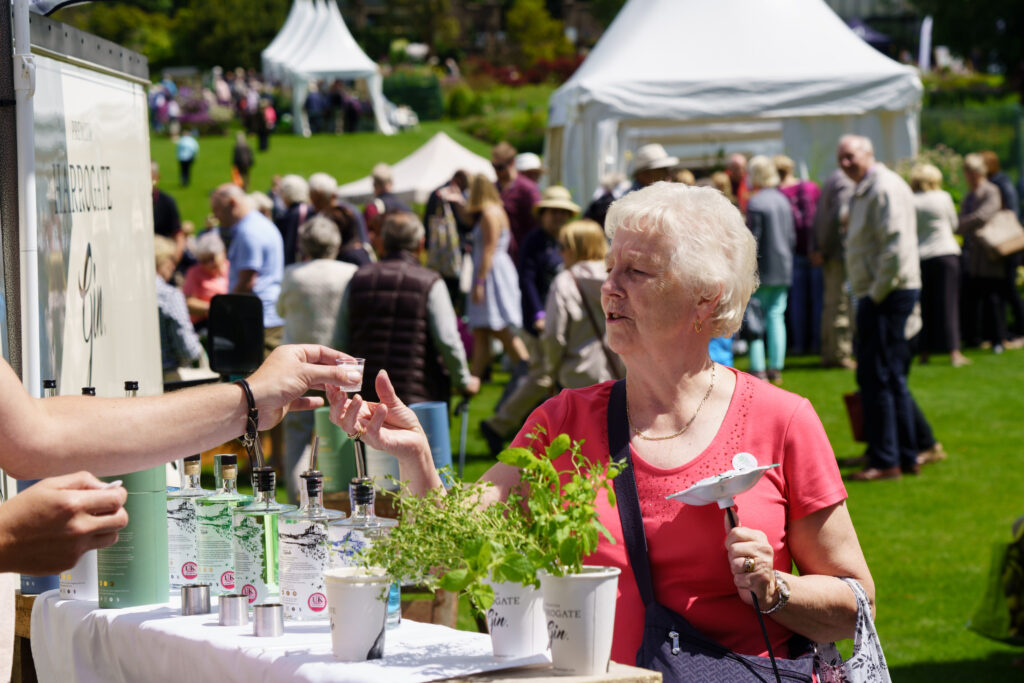
Product sampling is one of the oldest marketing tactics in existence, and it still works because the reason it works has not changed. People need to experience a product before they trust it. That is especially true in food and beverage, personal care, and any category where sensory experience drives the purchase decision. Descriptions and photos do not tell you what a product tastes, feels, or smells like. A sample does.
Street-level sampling — distributing product samples through brand ambassadors at outdoor, high-traffic locations — is a specific execution of that principle. It differs from in-store sampling in a fundamental way: the consumer has not already entered a retail environment with purchase intent. The street-level sample creates the first brand encounter. The ambassador creates the first brand relationship. That combination of product experience and human connection produces conversion rates that passive advertising formats cannot approach.
This guide covers what a well-run street-level sampling program looks like — location selection, ambassador staffing, distribution logistics, permitting, and measurement. Our team at American Guerrilla Marketing executes sampling programs as part of integrated guerrilla marketing campaigns and as standalone programs across 50+ U.S. markets.
Why Street-Level Sampling Outperforms Retail Sampling
In-store sampling reaches consumers who are already in a buying context — they are in the store, they have purchase intent, and they are surrounded by products that compete for their attention. The sample is evaluated in a commercial environment where price, shelf position, and package design all influence the decision simultaneously.
Street-level sampling reaches consumers before they enter that environment. The brand ambassador creates the first impression without competitive pressure. The sample is evaluated in a neutral context — on a sidewalk, at a transit platform, at a park — where the product has the person’s undivided attention for a moment. That contextual advantage translates into higher product recall and higher post-sample purchase rates for many categories.
Audience Quality
In-store sampling at a national grocery chain reaches every type of shopper who walks past the demonstration table, regardless of whether they are the target customer for that product. Street-level sampling lets you choose the specific locations where your target customer concentrates — the gym exit, the farmers market, the transit hub serving the neighborhood where your demographic lives. The quality of the audience you reach is a controllable variable.
Brand Ambassador Control
In-store sampling often uses vendor-provided demonstrators who represent multiple brands and have limited product knowledge. Street-level programs use dedicated brand ambassadors who are trained specifically for your brand, briefed on your key messages, and focused entirely on your product during each activation. That ambassador quality difference shows up in the quality of brand conversations and in post-sample brand recall.
Location Strategy: Where to Sample
Location selection is the most important strategic decision in a sampling program. The right location for your product is the place where your target customer is concentrated in large numbers at a moment when they are receptive to a brand interaction.
Major Transit Hubs
Grand Central Terminal in New York sees 750,000 commuters daily. Navy Pier in Chicago draws more than 9 million visitors per year. Major transit hubs concentrate target audiences at predictable times — morning and evening rush for commuter-oriented products, midday for tourist and leisure-oriented products. Transit authority permits are required for most hub activations but are obtainable with advance planning.
Fitness and Health Events
Race finish lines, yoga festivals, outdoor fitness events, and gym parking lots concentrate health-conscious, active adults who are highly receptive to functional beverages, nutrition products, and personal care brands. Post-race sampling at a 10K finish line reaches 2,000 to 10,000 qualified prospects who have just completed physical activity and are actively looking for recovery products.
Farmers Markets and Outdoor Events
Farmers markets attract food-conscious, quality-oriented consumers who are actively open to discovering new food and beverage products. They have time to engage with an ambassador, sample the product, ask questions, and make a note to purchase. The environment is culturally compatible with premium product positioning.
Lunch-Hour Commercial Corridors
Office districts during the lunch rush — 11:30am to 1:30pm on weekdays — concentrate large numbers of working adults in specific outdoor corridors. For food, beverage, and personal care products with a professional audience, lunch-hour sampling in financial districts, media corridors, and tech campuses provides efficient reach to a defined demographic.
Ambassador Staffing: Who You Send Matters
Brand ambassadors are the brand in a sampling activation. Their appearance, energy, product knowledge, and interpersonal skills determine how the consumer experiences the brand through the sample encounter. A poorly briefed or low-engagement ambassador turns the world’s best product sample into a forgettable transaction. A skilled ambassador creates a brand relationship in 45 seconds.
What We Look for in Sampling Ambassadors
Our brand ambassador agency selects sampling staff based on genuine enthusiasm for the product category, clear and confident communication in outdoor environments, the ability to manage high-volume distribution without losing individual engagement quality, and a personal presentation that matches the brand’s demographic target. A premium wellness brand and a fast-casual food brand need different types of ambassadors, and casting accordingly produces better results.
Training and Briefing
Every ambassador is briefed on the brand story, the product’s key benefits, the most common questions (and the correct answers), the distribution quota for the session, and any claims restrictions that apply to what they can and cannot say. Training happens before every activation regardless of whether the ambassador has worked with the brand before. Product and messaging can change; the briefing ensures current information.
Distribution Logistics: From Product to Hand
Street-level sampling involves more operational complexity than it appears. Product temperature requirements, portion sizing, waste management, refill logistics, and foot traffic management are all variables that need to be planned in advance.
Sample Format
Single-serve packaging — individual cans, foil sachets, blister packs — is the most operationally clean format. It eliminates preparation requirements, maintains product integrity, and allows for clean distribution count tracking. Products that require preparation (mixing, chilling, cooking) add equipment requirements and preparation time that significantly increase per-sample cost and operational complexity.
Carry and Restocking
Each ambassador carries a product supply sufficient for one to two hours of distribution at the target rate. Restocking happens at scheduled intervals from a vehicle or fixed supply point within easy proximity of the activation location. The restocking schedule is built around the distribution rate and the session length — running out of product mid-activation is an operational failure that wastes the time of ambassadors and the foot traffic opportunity of the location.
Distribution Count Tracking
Every sampling session tracks product distributed per ambassador per session. The count is logged by session, location, and time of day. Depletion rate over time tells you which locations and which time windows produce the highest distribution rates — that data informs future location and scheduling decisions. Our team delivers a distribution count report for every campaign we execute.
Permitting for Street-Level Sampling
Sampling on public sidewalks and parks typically requires a permit from the local parks department or city permit office. In New York City, sidewalk sampling on commercial streets requires a revocable consent permit from the NYC Department of Transportation for any setup that occupies sidewalk space. In Chicago, similar permits are issued by the Department of Business Affairs and Consumer Protection. In Los Angeles, film and event permit offices handle outdoor commercial activations.
Transit authority sampling at major hubs requires a separate agreement with the transit authority — typically a license agreement that specifies the activation location, the dates and hours, and the brand’s insurance requirements. Lead times for transit authority approvals range from 2 to 8 weeks depending on the transit authority and the specific location.
Our team handles permit research, application preparation, and submission for every market we operate in. We have established relationships with permit offices and transit authority licensing departments in the major markets where we conduct sampling programs.
Combining Sampling With Other Street Formats
Sampling programs perform better when combined with complementary outdoor formats. A wheatpaste campaign in the same neighborhood as a sampling activation creates visual reinforcement — the consumer who sees the brand’s poster in the morning and receives a sample at lunch has encountered the brand twice through different mechanisms in the same day. That layered exposure drives recall and post-sample purchase rates significantly higher than the sampling event alone.
Our LED billboard trucks are frequently deployed near high-traffic sampling locations to extend the brand’s visual presence beyond the immediate activation footprint. The truck creates brand visibility at street level for blocks around the sampling location, reinforcing the ambassador’s message for people who are approaching the sampling area.
Product Categories Best Suited to Street-Level Sampling
Not every product is suitable for street-level sampling, and not every product that is suitable performs equally well. Understanding which categories produce the strongest results from sampling programs helps brands evaluate whether street-level sampling is the right format for their specific product and objective.
Food and Beverage: The Natural Fit
Food and beverage is the highest-performing category for street-level sampling because the purchase decision is entirely sensory. A cold pressed juice, a new protein bar, or a functional beverage can be evaluated in 15 seconds of consumption. The ambassador does not need to explain the product — the product explains itself through taste. The conversion from sample to trial purchase for food and beverage products in targeted sampling programs typically runs 8 to 20%, significantly higher than any other marketing format that cannot provide sensory experience.
Beauty and Personal Care
Beauty and personal care products with a sensory demonstration dimension — texture, fragrance, application feel — perform well in sampling contexts where the ambassador can demonstrate the product on the recipient’s hand. Products that require significant time or a controlled environment to experience fully (foundations requiring color matching, skincare requiring overnight assessment) are better suited to take-home sample distribution than immediate sampling.
Consumer Packaged Goods in Competitive Categories
CPG products in highly competitive categories where the brand has a quality or differentiation advantage that is not visible through advertising benefit significantly from sampling. If your product genuinely tastes better, smells better, or works better than the market leader, getting it into the hands of potential buyers is the most efficient conversion path. No advertising claim is as persuasive as direct product experience.
Categories That Do Not Sample Well
Products that require time to evaluate (subscription software, insurance products), products with complex purchase processes that sampling cannot simplify (real estate, high-consideration financial products), and products that cannot be safely sampled in an outdoor context (products requiring refrigeration, preparation, or controlled conditions) are poor fits for street-level sampling. In these categories, brand ambassador programs that distribute information and promotional materials are a more appropriate street-level format than true product sampling.
Brand Ambassador Conversation Scripts: What Works at Street Level
The conversation a brand ambassador has with a sampling recipient is the highest-value moment in the entire sampling program. That conversation takes 15 to 60 seconds, depending on the recipient’s interest and the product category. In that window, the ambassador has an opportunity to make the sample into a brand relationship rather than a free product. The difference between those outcomes is the quality of the conversation.
The Effective Opening
The opening line should be brief, non-confrontational, and lead with the product’s primary benefit or the reason the sample is relevant to the person at that moment. “This just launched and it’s meant for people on the go — one second, try it” works because it is brief, it acknowledges the person’s context (they are moving, they are busy), and it frames the sample as relevant without requiring a sales conversation. Starting with the brand’s name or the product’s full description before the person has agreed to engage is the most common ambassador error and produces the highest rejection rate.
What Ambassadors Should Know Cold
Every ambassador should know, without consulting notes: the three most important things about the product (what it is, what it does, what makes it different), the answer to the three most common questions (What’s in it? Where can I buy it? How much does it cost?), and what the ambassador wants the recipient to do next (scan the QR code, download the app, use the coupon). Anything the ambassador has to look up or fumble for breaks the momentum of the conversation and reduces the recipient’s confidence in the product.
Building a Multi-City Sampling Network
For brands operating across multiple markets, a coordinated multi-city sampling program creates simultaneous market presence with unified messaging and consistent execution standards. The coordination challenge is significant — different cities have different permit requirements, different location categories with different character, and different execution logistics — but the payoff is a national sampling footprint that digital advertising cannot replicate.
Market-Specific Location Customization
The same sampling brief executes differently in different cities. A farmer’s market approach that works well in Portland may need to be replaced by a transit hub approach in Chicago or a beach-adjacent approach in Miami. Our team customizes location selection in each market to the specific character of the city’s pedestrian environment while maintaining consistent messaging and ambassador training standards across all markets.
For multi-city programs, we produce a unified documentation report that aggregates location data, distribution counts, QR scan data, and field observations from all markets into a single post-campaign deliverable. The client sees total program performance and individual market performance in the same document, enabling budget allocation decisions for future campaigns based on actual per-market results.
Sampling + Outdoor: Combining Formats for Maximum Impact
Sampling programs deliver their highest ROI when combined with ambient outdoor formats that reinforce the sampling conversation before and after it happens. A pedestrian who sees your brand’s wheatpaste poster on a building two blocks from the sampling location on Monday, encounters a brand ambassador at the transit hub on Wednesday, and then sees a sidewalk stencil at the subway exit on Friday has encountered your brand three times through three different mechanisms in the same week. That frequency and format diversity drives recall rates that single-format campaigns cannot achieve.
The sequence matters. Outdoor placements should precede the sampling activation by at least a week to create ambient awareness before the human encounter. The person who has already noticed your brand on a wall is more receptive to an ambassador’s approach than someone encountering the brand cold. The ambient outdoor placement pre-qualifies the sampling audience by creating passive familiarity before the active brand encounter.
Measuring Sampling Campaign Results
Include a tracking element with every sample: a QR code on the packaging that links to a purchase page, a coupon with a unique code, or a specific URL printed on a card included with the sample. Track QR scans, coupon redemptions, and website sessions from the campaign geography during the campaign period and the two to four weeks following. Post-sample purchase rates of 5% to 20% are common for well-targeted programs in the right categories.
Frequently Asked Questions
What is a street-level product sampling campaign?
A street-level product sampling campaign deploys brand ambassadors at high-traffic outdoor locations to distribute product samples directly to potential customers. Unlike retail sampling, street-level programs reach consumers in transit and can cover specific neighborhoods, transit corridors, or event perimeters with controlled distribution.
How much does a product sampling campaign cost?
A single-day, single-location sampling event with two brand ambassadors runs $800 to $2,000 in staffing and logistics, plus product cost. A multi-day, multi-location program covering a city over a week runs $5,000 to $20,000 in execution costs plus product. Multi-city programs scale proportionally.
Where do street-level sampling campaigns work best?
High-performance locations include major transit hubs, farmers markets, fitness events, outdoor festivals, busy lunch-hour commercial corridors, and college campus perimeters. The best location is wherever your target customer is concentrated in high numbers at a moment when they have time to engage.
Do you need permits for street-level sampling?
In most major cities, yes. Sidewalk sampling on public property typically requires a permit from the local parks department or city permit office. Transit hubs require agreements with the transit authority. Our team handles permit research and applications for every market we operate in.
How do you measure the results of a product sampling campaign?
Primary metrics: units distributed, post-sample purchase rate tracked via coupon or QR code, and sales lift data in the sampled geography. Secondary metrics: social sharing by recipients, qualitative feedback from ambassadors, and website traffic spikes in the sampling geography.
What products are best suited for street-level sampling?
Products with a strong sensory dimension: food and beverage, beauty and personal care, fragrances, snack foods, functional beverages, and health supplements. Products in single-serve, portable format are operationally easiest to distribute at scale.