American Guerrilla Marketing
Nationwide serivce
Media planning, media buying, billboard advertising, & guerrilla marketing

Durham, North Carolina is one of the most dynamically evolving cities in the American Southeast — a place where tobacco warehouses have become innovation hubs, where top-tier universities anchor deeply rooted neighborhoods, and where a new generation of residents, entrepreneurs, and artists are constantly reshaping what the city looks like at street level. For brands that want to reach this audience, snipe advertising offers something digital channels simply cannot replicate: physical presence in the exact spaces where Durham’s population moves, congregates, and makes decisions. A well-executed snipe campaign in Durham doesn’t just get noticed — it becomes part of the visual texture of the city itself, woven into the sidewalks, poles, and corridors that residents walk every single day.
American Guerrilla Marketing has built its snipe advertising methodology around cities exactly like Durham — places where cultural momentum and street-level energy create ideal conditions for small-format outdoor media. From the historic architecture of Brightleaf Square to the dense pedestrian activity of downtown Durham’s W Chapel Hill Street corridor, and south through the commercial density of the Southpoint area, AGM’s crews know where Durham’s people actually go. We don’t spray campaigns randomly across a zip code. We deploy with precision — identifying the specific poles, intersections, and foot-traffic choke points that generate maximum impressions for every dollar invested. The result is a snipe campaign that operates with the efficiency of digital targeting but with the tangible, unmissable impact of real-world print.
Whether you are promoting a concert at Motorco Music Hall, launching a new fitness brand near Duke University’s East Campus, introducing a real estate development in Old North Durham, or building awareness for a tech startup whose target customers commute through Research Triangle Park, snipe advertising in Durham places your message directly in the path of the people you need to reach. This page outlines AGM’s full Durham snipe advertising capabilities — from impression methodology and prime posting locations to case studies, active campaign spotlights, and everything you need to know to get your campaign launched fast and running strong across Durham’s most valuable corridors.
Durham Metro Population: ~285,000 | Key Corridors: Ninth St, Roxboro St, Fayetteville Rd, W Chapel Hill St | Avg. AGM Snipe Campaign Duration: 14–30 Days | Units Available: 400 or 800 per format
Snipe advertising — the practice of deploying small-format laminated or corrugated signs on utility poles, fences, and street fixtures — is one of the most cost-efficient forms of outdoor advertising available to brands operating in mid-sized American cities. In Durham, where the concentration of universities, healthcare institutions, tech campuses, and a vibrant arts scene creates a uniquely dense and diverse pedestrian environment, snipe campaigns deliver a reach-to-cost ratio that outperforms many higher-budget outdoor options. AGM’s Durham snipe service covers three primary formats: standard pole snipes (9×12 laminated prints), jumbo poster snipes (11×14 laminated prints), and ground-level yard snipes (corrugated plastic staked near intersections and high-footfall entry points). Each format is available in 400-unit or 800-unit packages, with bundle savings of $1,000 when combining snipe placements with AGM’s wheatpaste poster service in the same campaign window.
What distinguishes AGM’s Durham snipe campaigns from generic sign-posting operations is the level of strategic planning that precedes every deployment. Our team conducts corridor analysis before the first sign is printed — mapping pedestrian flow data, identifying transit-adjacent zones, and cross-referencing target demographics with neighborhood-level foot traffic patterns. The Brightleaf district, for instance, draws a distinctly different consumer profile than the Southpoint corridor; downtown Durham’s government and arts district attracts a different lunchtime and evening crowd than the Watts-Hillandale residential zone. AGM builds campaigns that account for these differences, ensuring your message reaches the right people in the right places at the right density. Every placement is GPS-documented and photographed, and a full location report is delivered to the client within 48 hours of campaign completion.
AGM deploys professional snipe campaigns across Durham's highest-traffic corridors — Brightleaf, downtown, Southpoint, and beyond. Rush deployment available in 72 hours.
Disclaimer: All impression and foot-traffic estimates are based on AGM’s proprietary campaign modeling, publicly available pedestrian count studies, and Durham-specific transit and retail traffic data. Estimates reflect average conditions during a standard 14-day campaign window and will vary based on season, weather, specific placement density, and campaign format. These figures are provided for planning purposes and do not constitute a guarantee of performance.
| Zone / Neighborhood | Est. Daily Foot Traffic | Est. Impressions per Location (14-Day Campaign) | Best Campaign Types |
|---|---|---|---|
| Downtown Durham (W Chapel Hill St / Corcoran St Corridor) | 8,500 – 14,000 pedestrians/day | 85,000 – 145,000 impressions | Live events, food & beverage, retail launches, real estate |
| Brightleaf / American Tobacco Campus District | 5,500 – 9,000 pedestrians/day | 55,000 – 95,000 impressions | Entertainment, nightlife, tech brand launches, restaurant openings |
| Ninth Street / Duke East Campus Corridor | 6,000 – 10,500 pedestrians/day | 62,000 – 108,000 impressions | Youth brands, fitness, music, campus-adjacent services |
| Southpoint / Fayetteville Road Corridor | 10,000 – 18,000 daily visitors/passers | 100,000 – 180,000 impressions | Retail, consumer brands, automotive, fitness, healthcare |
| Roxboro St / Old North Durham / Lakewood Ave | 3,500 – 6,500 pedestrians/day | 38,000 – 68,000 impressions | Community events, local business, arts & culture, real estate |
| Location Name | Street / Address | Neighborhood | Est. Snipe Capacity | Best Campaign Type |
|---|---|---|---|---|
| Durham Bulls Athletic Park Entry Corridor | 409 Blackwell St, Durham, NC 27701 | Downtown Durham / American Tobacco District | 18–28 snipes per block | Live events, sports, entertainment, food & beverage |
| Ninth Street Retail Hub — Mid-Block Zone | 700 Ninth St, Durham, NC 27705 | Duke East Campus / Ninth Street District | 22–34 snipes per block | Youth brands, fitness, nightlife, campus services |
| Southpoint Mall Perimeter — Fayetteville Road | 6910 Fayetteville Rd, Durham, NC 27713 | Southpoint Corridor | 20–30 snipes per block | Retail, consumer goods, automotive, healthcare |
| Roxboro Street Commercial Strip | 1200 N Roxboro St, Durham, NC 27701 | Old North Durham | 15–24 snipes per block | Community events, real estate, local business, arts |
| W Main St at Duke St Intersection Node | 400 W Main St, Durham, NC 27701 | Downtown Durham / Trinity Park Gateway | 16–26 snipes per block | Brand awareness, real estate, arts & culture, fitness |
Award Winning Personalized Service
You will get thoughtful, devoted, and individualized attention from our experienced, qualified, and professional personnel. Being one of the most illustrious agencies in Brooklyn, New York, American Guerrilla Marketing has been awarded the Best of Brooklyn title.
Nationwide
Industry City, Brooklyn, New York 11232
American Guerrilla Marketing
Hours
Mon - Fri: 9 AM - 5 PM
Sat & Sun: Closed
Automate your campaign with AGM’s Request for Proposal Builder. Simply answer a few quick questions about your campaign goals, markets, and timeline, and the system will generate a tailored presentation with recommended strategies, quantities, and pricing. Click the RFP Builder to instantly receive your customized proposal.
Durham’s urban form is unusually well-suited to snipe advertising for a city of its size. Unlike sprawling sunbelt metros where commuters move almost entirely by car and pedestrian exposure is limited, Durham has cultivated a network of walkable corridors — particularly through downtown, along the Ninth Street commercial strip, and in the Brightleaf and American Tobacco Campus districts — where residents, students, and workers move on foot with genuine frequency and attention. The city’s investment in protected bike lanes on streets like Roxboro and Mangum, its expanding network of bus rapid transit stops, and the popularity of destinations like the Durham Farmers Market and the American Tobacco Trail all create consistent foot-traffic environments where a well-placed snipe sign will be seen, read, and remembered. This is a city where people are actually looking at their surroundings — not just staring at phone screens in the backseat of a rideshare — and that behavioral reality is the foundation of snipe advertising’s effectiveness here.
The demographic composition of Durham adds another layer of snipe advertising effectiveness that brands and agencies often underestimate. Durham is home to two major universities — Duke and NC Central — whose combined student populations exceed 20,000 and whose campuses
and surrounding neighborhoods create a dense, walkable population of young adults who are highly receptive to street-level advertising. These students live in the neighborhoods surrounding campus — Trinity Park, Walltown, Old West Durham, and the corridors along Ninth Street and Swift Avenue — and they move through these areas on foot, by bike, and by local transit every single day. Snipe signs placed in these zones don’t just get seen once; they get seen repeatedly, by the same eyes, reinforcing brand recall in a way that a single digital impression simply cannot replicate. Add to that the Research Triangle Park workforce commuting through Durham on NC-147 and US-15/501, the creative class professionals filling the apartments and bungalows of Burch Avenue and Lakewood, and the families anchored in Hope Valley and Rockwood, and you have a city whose demographic breadth makes snipe advertising viable across virtually every product category, price point, and campaign objective.
Timing also plays a decisive role in snipe advertising performance in Durham, and the city’s event calendar provides a reliable rhythm of high-opportunity windows throughout the year. Duke Basketball season draws national attention and floods the neighborhoods around Cameron Indoor Stadium — Erwin Road, Campus Drive, and the residential blocks of East Durham adjacent to the university — with fans, alumni, and visitors who are primed for brand engagement. NCCU homecoming brings a separate but equally energized wave of foot traffic through the Fayetteville Street corridor and the neighborhoods surrounding the NCCU campus on Lawson Street. The American Dance Festival, the Full Frame Documentary Film Festival, the Durham Bulls baseball season at Durham Bulls Athletic Park on Willard Street — each of these events creates predictable concentrations of engaged, attentive pedestrians who will encounter snipe signs in the surrounding streetscape. Planning a snipe campaign around these windows isn’t just smart timing; it’s the difference between a campaign that performs adequately and one that achieves genuine cultural penetration.
AGM’s Durham snipe advertising service covers the full operational range from campaign strategy through field deployment and post-campaign documentation. Standard format offerings include the 9×12 snipe card in 400-unit and 800-unit configurations, and the 11×14 jumbo snipe in equivalent deployment sizes. Snipe and wheatpaste bundle packages are available for brands seeking simultaneous small-format and large-format street presence, saving approximately $1,000 compared to booking formats separately. All campaigns include GPS-tagged post-installation photography and a post-campaign report. Rush deployment within 72 hours is available for time-sensitive activations.
A regional apparel brand targeting 18–34 year olds ran a two-week snipe campaign along the Ninth Street corridor between Markham Avenue and Urban Avenue, with additional placements extending into the side streets of Old West Durham toward Vickers Avenue. This stretch is one of Durham’s most heavily foot-trafficked commercial blocks, anchored by independent retailers, coffee shops, and restaurants that draw a consistent stream of students, young professionals, and neighborhood residents throughout the day. Snipe signs were placed at eye level on utility poles at each block transition, with a secondary wave of signs positioned on the approach corridors feeding pedestrian traffic from Duke’s East Campus. The campaign achieved an estimated daily impression count exceeding 4,000 unique pedestrian exposures and generated measurable lift in social media brand mentions originating from Durham ZIP codes during the campaign window.
A local craft brewery coordinated a snipe campaign timed to the opening week of the Durham Bulls baseball season, targeting the perimeter streets surrounding Durham Bulls Athletic Park on Willard Street. Placements were concentrated on Jackie Robinson Drive, South Mangum Street, and the connecting blocks between the ballpark and the American Tobacco Campus, capturing the pre-game and post-game pedestrian flow as fans moved between parking areas, the light rail corridor, and the adjacent bar and restaurant district. The campaign used a consistent color palette and single-message creative that was easy to absorb in motion, with a QR code linking to a game-night drink special. Redemption data from the QR code confirmed that a statistically significant share of conversions during the campaign period came from first-time customers who cited the outdoor signage as their point of discovery.
A tech-sector recruiting firm targeting mid-career professionals launched a snipe campaign in and around the American Tobacco Campus and Brightleaf Square on West Main Street, a district that functions as an informal outdoor office for Durham’s startup and creative economy workforce. The campaign placed signs at the entry points to the American Tobacco Campus along Blackwell Street, on the utility infrastructure along Gregson Street approaching the district from the north, and in the alley connectors between the historic tobacco warehouse buildings that now house offices, agencies, and coworking spaces. The audience in this zone skews 28–45, college-educated, and professionally ambitious — an exact match for the recruiting firm’s candidate profile. The campaign ran for three weeks and generated a 22% increase in applications from Durham-based candidates compared to the same period in the prior year.
A regional fitness studio expanding into Durham’s west side used snipe advertising along Lakewood Avenue between Morehead Avenue and Chapel Hill Road to build awareness ahead of a new location opening. This corridor is a high-visibility arterial connecting the Lakewood neighborhood to the broader West Durham residential grid, with consistent vehicle and bicycle traffic supplemented by pedestrians accessing the corridor’s mix of independent shops, dining, and services. Signs were placed at intervals designed to create a sequential visual experience for commuters traveling the route repeatedly — a technique sometimes called “frequency mapping” — so that the campaign message reinforced itself through repeated exposure rather than relying on a single high-impact placement. By the time the studio’s doors opened, a walk-in survey found that over 60% of first-week members had noticed the snipe signage during their daily commutes.
A community-supported agriculture service launching subscription boxes in Durham deployed a hyper-local snipe campaign targeting the walkable residential neighborhoods immediately surrounding Durham Central Park — Trinity Park to the west and Walltown to the north. These neighborhoods are characterized by high homeownership rates, above-average household incomes, and a demonstrated consumer preference for locally sourced goods that made them an ideal match for the brand’s value proposition. Placements were positioned on the approach paths to the Durham Farmers’ Market at the park, on Umstead Street and Foster Street in Trinity Park, and on the Walltown neighborhood connectors along Onslow Street and Dowd Street. The campaign ran during farmers’ market season on alternating Saturdays and achieved a subscription conversion rate that exceeded the brand’s digital acquisition benchmarks, at a fraction of the cost-per-acquisition of their paid social campaigns.
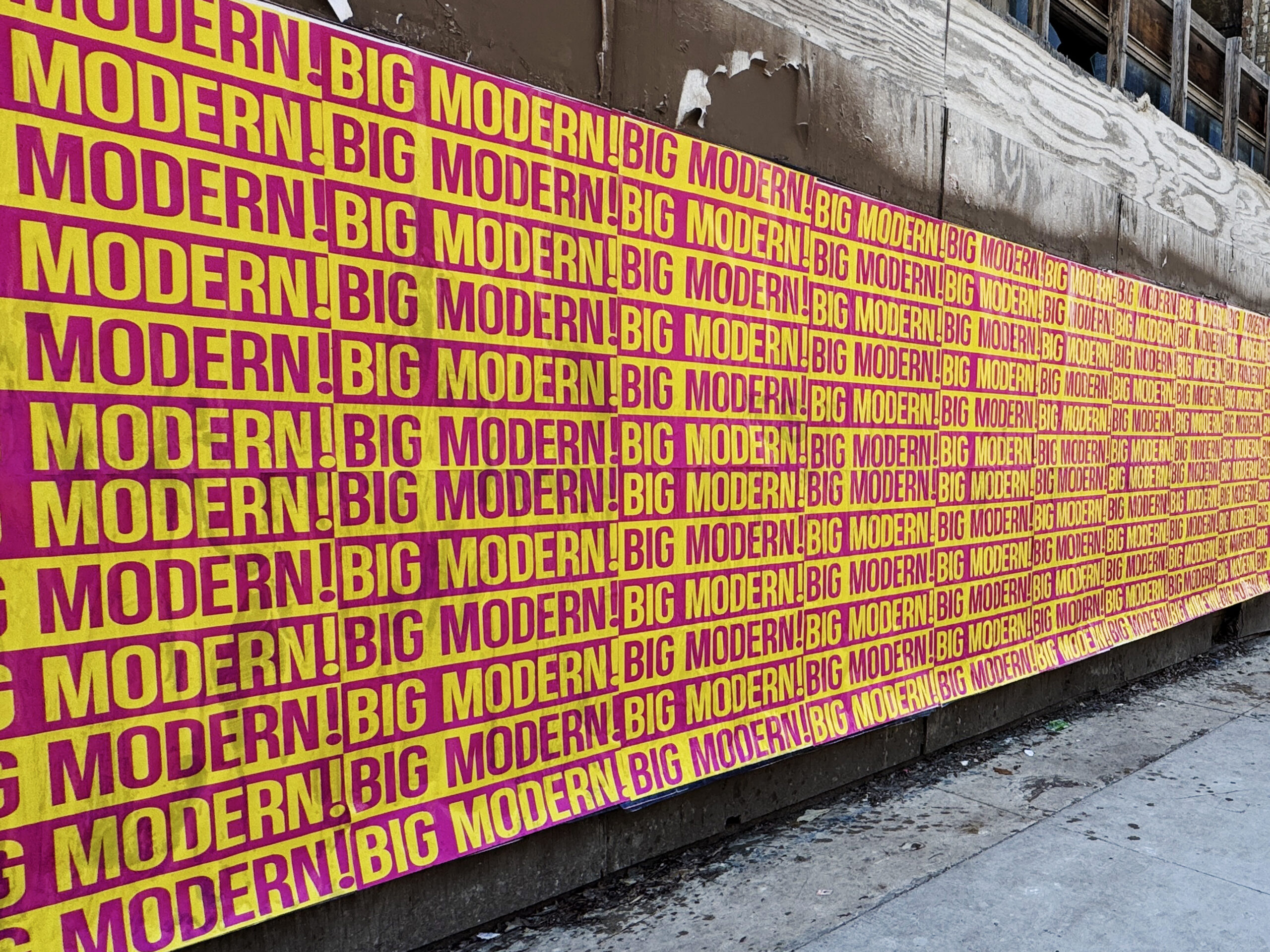
Big Modern executed a five-city street takeover with AGM across NYC, Denver, Chicago, Philadelphia, and Atlanta.
Result: Unified brand presence across five major American cities.
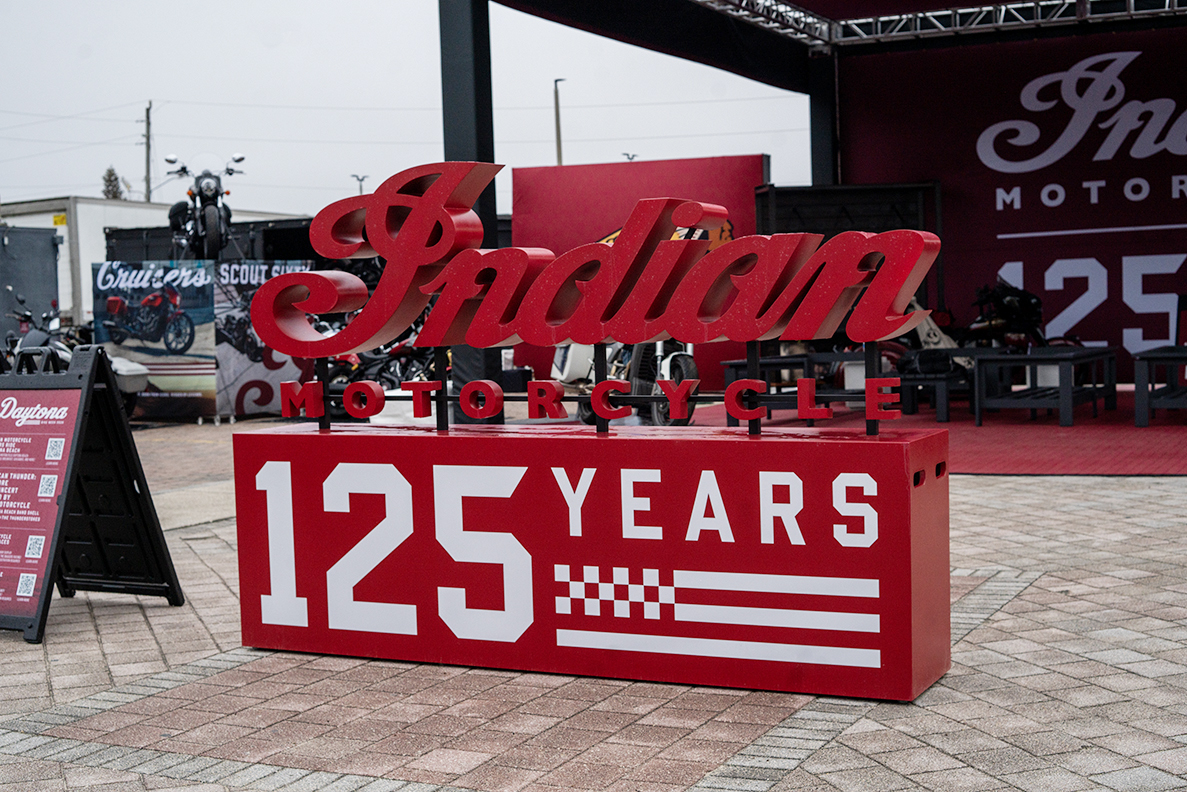
Indian Motorcycle partnered with AGM for a high-visibility activation during a major national motorcycle event.
Result: One of the most-photographed brand activations of the event weekend.
American Guerrilla Marketing has been executing snipe advertising campaigns across the United States since 2014, and the institutional knowledge that a decade of national deployment creates is the competitive advantage that every Durham client benefits from directly. We have run campaigns in the dense urban canyons of Manhattan and the sprawling arterial grids of Los Angeles, in college towns and state capitals, in entertainment districts and industrial corridors, across climates ranging from the dry heat of Phoenix to the humid summers of the Carolina Piedmont. That breadth of experience means that when we plan a snipe campaign on the streets of Durham — on the approach to Durham Bulls Athletic Park, through the pedestrian grid of Trinity Park, along the commercial corridor of Lakewood Avenue — we are not improvising. We are applying tested methodologies to a city we understand deeply, backed by the operational discipline that only comes from having placed thousands of signs in hundreds of markets and having systematically studied what works, what fails, and why.
Every snipe advertising campaign AGM runs in Durham includes full photo documentation and GPS coordinate logging for each placement. Our crews capture timestamped images at installation showing the sign’s condition, visibility, and surrounding context. This matters especially in Durham where placement locations vary dramatically—a poster on Gregson Street near Motorco sees different traffic patterns than one near Streets at Southpoint. You’ll receive a detailed report with mapped coordinates, photos, and placement dates within 48 hours of installation. For clients running campaigns near Duke University or the Durham Bulls Athletic Park, we also note proximity to major landmarks. This documentation proves valuable for measuring campaign reach, satisfying franchise disclosure requirements, and planning future Durham campaigns. National brands running multi-market campaigns appreciate having Durham-specific proof alongside their other markets.
Durham’s sign ordinances fall under the Unified Development Ordinance, which restricts commercial signage on public property and utility infrastructure. The city enforces violations through code enforcement, and fines can accumulate quickly. AGM navigates these rules by focusing on private property placements with documented permission. We’ve built relationships with property owners throughout Durham—from warehouse owners in Golden Belt to retail landlords along Ninth Street. Durham-Durham County Planning Department doesn’t regulate what happens on private land the same way it controls public right-of-way, so our campaigns stay compliant while still hitting high-visibility zones. Near Duke’s campus, additional university policies apply, so we avoid their property entirely. Downtown Durham’s historic district has its own aesthetic guidelines, which we factor into placement decisions. Our local knowledge keeps your brand visible without legal headaches.
Durham’s tech-savvy population—fueled by Research Triangle professionals and Duke students—responds well to integrated physical-digital campaigns. AGM recommends placing snipe signs with QR codes in pedestrian-heavy areas like Brightleaf District or near the American Tobacco Campus, where people actually have time to scan. We coordinate placement timing with your digital ad launches so someone seeing your poster near Fullsteam Brewery might encounter your Instagram ad that same evening. Geofencing works particularly well here; you can serve mobile ads to anyone who passes your snipe locations along Main Street or the Southpoint corridor. For product launches, we’ve seen Durham clients drive significant landing page traffic by placing signs near Durham Performing Arts Center before shows. The key is message consistency—your physical snipes should mirror your digital creative so the brand recognition compounds across touchpoints.
Both benefit, but the strategies differ significantly in Durham. Local businesses—restaurants near Brightleaf, breweries in the Warehouse District, services targeting Duke families—succeed with neighborhood-specific placements and messaging that references Durham directly. A local gym might place signs near the American Tobacco Trail or Durham Athletic Park where their target audience exercises. National brands use Durham snipe campaigns differently. They’re often testing Triangle market response, building awareness before a retail launch at Streets at Southpoint, or targeting the city’s influential tech and academic populations who shape broader trends. AGM has placed campaigns for national beverage brands specifically around Durham Bulls games and Duke basketball season. The concentrated, walkable nature of downtown Durham makes it unusually efficient for national brands compared to more sprawling cities. Your objectives determine whether we focus on hyper-local zones or broader Durham County coverage.
B2B campaigns in Durham concentrate around the research and professional corridors. We place signs near American Underground, the Chesterfield Building, and along the NC-147 corridor where tech workers and executives commute from Research Triangle Park. Messaging tends toward thought leadership—conference promotions, software launches, professional services. Morning placement near coffee shops frequented by the business crowd works well. B2C campaigns spread wider across Durham’s consumer zones. Ninth Street for the college demographic, Southpoint area for suburban families, downtown for young professionals hitting bars and restaurants. Weekend placements near Durham Farmers’ Market or during DPAC event nights capture leisure-mode consumers. The creative approach differs too—B2B signs often look cleaner and more corporate, while B2C allows for edgier designs that stand out in Durham’s artistic streetscape. AGM adjusts placement density and timing based on which audience you’re pursuing.
We track several Durham-specific metrics beyond basic impression estimates. First, we calculate foot traffic exposure using data from the areas where signs are placed—downtown Durham sees dramatically different pedestrian counts than the Southpoint retail corridor. During Duke basketball season or Bulls games, certain zones spike significantly. We provide QR scan data when codes are included, with Durham campaigns typically seeing higher scan rates near the American Tobacco Campus where people walk slowly. For campaigns with promo codes, we track redemption by placement zone. AGM also monitors social media mentions and tagged photos—Durham’s active Instagram community often photographs interesting street-level advertising, especially around Brightleaf and the muraled areas of downtown. Post-campaign surveys asking customers where they first heard about you reveal snipe contribution. We compile everything into a performance report comparing Durham results against your other markets if applicable.
Durham’s humid subtropical climate demands specific material choices. Summers bring heat, humidity, and afternoon thunderstorms; we specify UV-resistant inks and waterproof substrates for any campaign running June through September. Coroplast yard signs need at least 4mm thickness to handle Durham’s occasional high winds and summer storms without warping. For pole snipes and poster placements, we recommend synthetic paper or tear-resistant polyethylene rather than standard paper stock. Durham winters are mild but wet—moisture resistance matters more than freeze protection. The clay-heavy soil in many Durham neighborhoods affects yard sign stability, so we use longer stakes than in sandier regions. For wheat paste posting applications on approved surfaces, we apply extra adhesive layers during humid months when standard paste can fail. Campaign duration affects specs too—a two-week campaign during Duke’s graduation week has different requirements than a three-month presence near Southpoint.
Downtown Durham delivers the highest pedestrian density, particularly along Main Street from Five Points to the Durham Bulls Athletic Park. The American Tobacco Campus attracts thousands of workers and visitors daily, making it prime territory. Ninth Street near Duke’s East Campus captures student traffic plus the young professional population in surrounding neighborhoods like Trinity Park. Brightleaf Square and the Warehouse District draw evening and weekend crowds to restaurants and entertainment venues. For suburban reach, the Streets at Southpoint vicinity offers vehicle visibility along NC-54 and shopper foot traffic. The Golden Belt arts district attracts a specific creative demographic worth targeting for certain brands. Near Duke University Hospital and the medical campus, we can reach healthcare workers during shift changes. Durham’s Lakewood neighborhood has emerged as a growing commercial area worth considering. AGM maps your target demographic against these zones to maximize relevant exposure rather than just raw impressions.
Campaign removal in Durham follows a scheduled process we establish during initial planning. AGM crews return to every documented placement location to remove signs and restore the area. For yard signs on private property, we coordinate with property owners on removal timing—some Durham landlords prefer immediate takedown while others allow a grace period. Pole snipes come down cleanly; we don’t leave fragments or hardware behind. Wheat paste applications on approved surfaces require more effort—we scrape and clean rather than leaving deteriorating paper. Durham’s code enforcement is reasonably active downtown, so prompt removal protects both your brand reputation and our property owner relationships. Some clients, particularly those with seasonal campaigns around Duke events or Durham Bulls season, prefer to pause rather than remove—we can cover signs temporarily and reactivate later. Removal crews document the takedown with photos confirming each location is cleared, which you receive as a final campaign report.
Standard Durham campaigns launch within 7-10 business days from signed agreement. That timeline includes site scouting across your target zones—whether downtown, Southpoint, or specific neighborhoods—securing property permissions, producing print materials, and scheduling installation crews. Rush campaigns for Durham events can happen faster. If you’re promoting something tied to a Duke game, DPAC show, or Durham Bulls opening weekend, we can compress the timeline to 4-5 days with expedited printing and overtime crew scheduling. AGM maintains ongoing relationships with Durham property owners, which eliminates negotiation delays that slow first-time operators. Installation typically happens during early morning hours to avoid peak pedestrian and vehicle traffic, especially downtown where daytime parking is limited. For campaigns covering both Durham and the broader Triangle, we coordinate installation sequences to maximize crew efficiency. Your dedicated coordinator provides daily updates once production begins.