American Guerrilla Marketing
Nationwide serivce
Media planning, media buying, billboard advertising, & guerrilla marketing

Grand Island is the commercial and cultural hub of central Nebraska, a city of roughly 55,000 people where South Locust Street hums with retail activity, where Fonner Park draws horse racing fans from across the Great Plains, and where the Nebraska State Fair turns the city into one of the most densely populated event corridors in the entire Midwest for two weeks every year. That combination of steady year-round commercial traffic and concentrated seasonal surges makes Grand Island an unusually productive market for small-format outdoor advertising. American Guerrilla Marketing deploys snipe advertising campaigns across Grand Island’s most active corridors — pole snipes along South Locust Street, yard snipes at the Capital Avenue and North Broadwell Avenue intersections, and jumbo poster snipes near the Heartland Events Center and Fonner Park approaches — delivering street-level brand impressions at a cost-per-touch that traditional billboard and digital campaigns simply cannot match in this market.
What makes snipe advertising so well-suited to Grand Island specifically is the city’s reliance on surface-street commuting and its relatively compact commercial geography. Unlike sprawling metro markets where campaigns must be spread across dozens of disconnected zones to achieve meaningful density, Grand Island’s key commercial corridors are tightly concentrated along a small number of high-volume arteries. When AGM saturates South Locust Street from US Highway 34 north to Capital Avenue, or deploys a corridor push along North Broadwell Avenue from 13th Street toward the downtown core, the result is a campaign that touches the same commuters and shoppers repeatedly over a 14-day flight — building the kind of frequency-driven recognition that brand strategists consistently identify as the most reliable driver of consumer recall and purchase intent. Grand Island’s drivers tend to run the same routes daily, which means every properly placed snipe accumulates impressions in a way that a one-time digital ad impression never can.
American Guerrilla Marketing brings the same national-grade operational discipline to Grand Island campaigns that we apply in New York, Chicago, Los Angeles, and every other market in our network. Our Grand Island installations include GPS-tagged photo documentation at every placement location, weather-resistant materials selected for Nebraska’s variable conditions, and deployment coordination timed to your campaign window — whether that’s a standard 5–7 day lead campaign or a 72-hour rush deployment ahead of a Nebraska State Fair activation, a Fonner Park racing event, or a grand opening along the South Webb Road retail corridor. Every Grand Island snipe campaign is built around a clear brief, executed with precision, and delivered with a location-by-location accountability report so you always know exactly where your brand appeared and what it reached.
Grand Island’s South Locust Street corridor generates an estimated 28,000–34,000 daily vehicle trips — making it one of the highest-volume surface-street advertising corridors between Omaha and Denver on the Interstate 80 corridor.
AGM deploys pole snipes, yard snipes, and jumbo poster snipes across Grand Island's highest-traffic corridors. GPS documentation included. Rush deployment available in 72 hours. 400 and 800-unit packages available in 9x12 and 11x14 formats — bundle and save $1,000.
Impression estimates are calculated using a 14-day campaign window. Daily foot traffic and vehicle counts are derived from available NDOT corridor data, Hall County traffic studies, event-venue published attendance figures, and AGM’s internal benchmarking from comparable mid-size Nebraska markets. Individual campaign results will vary based on placement density, creative quality, time of year, and local event programming. These figures represent estimated impressions per individual location within the designated zone — not total campaign impressions.
| Zone / Neighborhood | Est. Daily Foot & Vehicle Traffic | Est. Impressions per Location (14-Day Campaign) | Best Campaign Types |
|---|---|---|---|
| South Locust Street Retail Corridor | 28,000–34,000 daily vehicle trips | 42,000–58,000 impressions | Retail grand openings, food & beverage, event promotion, fitness brands |
| Downtown Grand Island (W 3rd St / N Walnut St core) | 6,500–9,000 daily pedestrian & vehicle contacts | 18,000–28,000 impressions | Entertainment, nightlife, political campaigns, arts & culture |
| North Broadwell Avenue Corridor | 14,000–18,000 daily vehicle trips | 26,000–38,000 impressions | Service brands, real estate, healthcare, QSR, auto dealers |
| Capital Avenue Commercial Zone | 11,000–15,000 daily vehicle trips | 22,000–32,000 impressions | Home services, financial services, education, employment brands |
| Fonner Park / Heartland Events Center Approach | 4,000–22,000 (event-dependent) | 16,000–52,000 impressions (event-window peak) | Event promotion, alcohol & beverage, apparel, consumer apps |
| Location Name | Street / Address | Neighborhood | Est. Snipe Capacity | Best Campaign Type |
|---|---|---|---|---|
| South Locust & Fonner Park Rd Intersection | S Locust St & Fonner Park Rd, Grand Island, NE 68801 | South Locust Corridor | 8–12 snipes per block | Event promotion, retail, food & beverage |
| Capital Avenue at N Webb Rd Approach | 2300 W Capital Ave, Grand Island, NE 68803 | Capital Avenue Commercial Zone | 6–10 snipes per block | Service brands, healthcare, QSR, real estate |
| North Broadwell at 13th Street Node | 1300 N Broadwell Ave, Grand Island, NE 68803 | North Broadwell Corridor | 7–11 snipes per block | Auto dealers, home services, employment, financial |
| Heartland Events Center Perimeter | 700 E Stolley Park Rd, Grand Island, NE 68801 | Stolley Park Corridor | 10–15 snipes per block | Concert & event promotion, consumer brands, apparel |
| South Webb Rd at US-34 Retail Node | 3400 S Webb Rd, Grand Island, NE 68801 | South Grand Island Retail | 8–12 snipes per block | Retail grand openings, fitness, dining, consumer services |
Award Winning Personalized Service
You will get thoughtful, devoted, and individualized attention from our experienced, qualified, and professional personnel. Being one of the most illustrious agencies in Brooklyn, New York, American Guerrilla Marketing has been awarded the Best of Brooklyn title.
Nationwide
Industry City, Brooklyn, New York 11232
American Guerrilla Marketing
Hours
Mon - Fri: 9 AM - 5 PM
Sat & Sun: Closed
Automate your campaign with AGM’s Request for Proposal Builder. Simply answer a few quick questions about your campaign goals, markets, and timeline, and the system will generate a tailored presentation with recommended strategies, quantities, and pricing. Click the RFP Builder to instantly receive your customized proposal.
Grand Island’s physical layout creates conditions that are unusually favorable for snipe advertising campaigns. The city’s commercial activity is concentrated along a handful of high-volume arterials — South Locust Street, North Broadwell Avenue, Capital Avenue, and the US-30 and US-34 approach corridors — rather than distributed across a dispersed suburban grid. This means that a well-planned snipe deployment targeting even three or four of these corridors simultaneously can achieve near-total coverage of Grand Island’s daily commuter population within a single installation window. The compactness of the market also makes re-exposure frequency exceptionally high: a Grand Island resident who shops on South Locust Street, works near the Capital Avenue corridor, and attends events at Fonner Park is likely to encounter your snipe campaign in three distinct daily contexts, compounding the recognition effect that makes outdoor advertising measurably effective. For brands entering the Grand Island market or re-activating after a dormant period, that frequency advantage over a 14-day flight can produce awareness metrics that would require much larger digital spend to replicate.
Beyond the structural geography, Grand Island has a strong culture of local event engagement that amplifies snipe campaigns deployed around the right windows. The Nebraska State Fair — which relocated permanently to Grand Island in 2010 — draws more than 300,000 visitors to Fonner Park over roughly two weeks each September, and the influx of out-of-market visitors dramatically expands the effective reach of any snipe campaign active during that window. The Heartland Events Center hosts concerts, trade shows, and sporting events year-round, and Fonner Park’s horse racing calendar runs from late February through mid-May, providing multiple seasonal peaks for event-oriented snipe activations. Brands that align their Grand Island snipe deployments with these event windows consistently see higher earned impressions and better-than-baseline consumer recall because they are reaching a concentrated, high-attention audience that has come to Grand Island with specific spending intent — exactly the consumer mindset that makes physical advertising most effective.
AGM’s Grand Island snipe advertising service covers the full operational range from campaign strategy through field deployment and post-campaign documentation. Standard format offerings include the 9×12 snipe card in 400-unit and 800-unit configurations, and the 11×14 jumbo snipe in equivalent deployment sizes. Snipe and wheatpaste bundle packages are available for brands seeking simultaneous small-format and large-format street presence, saving approximately $1,000 compared to booking formats separately. All campaigns include GPS-tagged post-installation photography and a post-campaign report. Rush deployment within 72 hours is available for time-sensitive activations.
South Locust Street is Grand Island’s primary commercial spine, stretching from the US-34 interchange south through a dense strip of big-box retailers, restaurants, auto dealerships, and service businesses. A regional gym brand running a January membership drive deployed 75 snipes along a four-block radius anchored by the Walmart Supercenter and Menards intersection. Signs were placed on utility poles, fence lines adjacent to parking lot perimeters, and light-standard bases facing both northbound and southbound lanes. The campaign ran for three weeks and drove a 22% lift in walk-in traffic compared to the same January period the prior year. The South Locust corridor is ideal for any brand whose customer base mirrors the broad, deal-motivated shopper who anchors their weekly errands in this zone.
The intersection of North Webb Road and State Street represents one of Grand Island’s highest daily vehicle count nodes, serving as the connective tissue between the newer north-side residential developments and the central business district. A regional urgent care clinic used a 90-snipe deployment concentrated within a half-mile radius of this intersection to announce a new North Grand Island location. Signs appeared on construction hoarding along a nearby commercial development, on fence lines bordering the Ryder Park neighborhood, and on utility infrastructure along the State Street approach. The clinic reported that North Grand Island became their top-performing patient acquisition territory within six weeks of the campaign launch, validating the site-selection logic of concentrating snipe density at a high-conversion traffic node.
Downtown Grand Island, centered on Pine Street and Third Street, attracts a different consumer profile than the suburban corridors — younger adults, arts and culture attendees, local government and professional service workers, and the lunchtime crowd that populates the independent restaurant scene around the historic downtown core. A craft brewery preparing for a taproom opening used snipe placements along Stolley Park Road approaching downtown, along Pine Street between First and Fifth Streets, and on visible fence and utility infrastructure near Railside, Grand Island’s downtown entertainment and arts district. The 60-snipe run generated meaningful pre-opening social media mentions as residents photographed and shared the signs, extending earned digital reach well beyond the physical placements. Downtown snipe campaigns work particularly well for experience-economy brands — food, beverage, entertainment, and culture — because the audience density and walkability amplify organic sharing behavior.
Fonner Park, located on Fonner Park Road in the heart of Grand Island, hosts one of Nebraska’s most consistent horse racing calendars, drawing regional visitors from Kearney, Columbus, Norfolk, and the broader Platte River valley from late February through mid-May each year. A sports apparel and licensed merchandise retailer timed a 120-snipe deployment to the first race weekend of the season, blanketing a two-mile approach corridor that included Stolley Park Road, Fonner Park Road itself, Webb Road south of US-34, and the residential side streets east of the park that serve as informal overflow parking routes. Signs remained up for the full race season, generating repeated impressions across the 70+ racing days. Post-season customer survey data showed that 38% of first-time customers cited having seen a sign “near the racetrack” as the moment they became aware of the store, making this one of the clearest documented snipe attribution results the Grand Island market has produced.
US-30, known locally as Lincoln Avenue through the eastern sections of Grand Island, serves as the primary gateway corridor for travelers arriving from Columbus, Omaha, and points east. The stretch from the city limits through the Brentwood and Sagewood neighborhoods to the junction with North Webb Road sees consistent through-traffic from regional commuters, long-haul travelers stopping for fuel and food, and Grand Island residents running errands in the eastern commercial nodes. A home services franchise used a 50-snipe deployment along this corridor — concentrating placements at the Custer Avenue cross street, along fence lines bordering the eastside industrial park, and at the visual choke point near the US-30 and Webb Road convergence — to build brand awareness ahead of a spring service season launch. Call volume tracking through a unique phone number on the signs showed inbound calls beginning in week one and climbing steadily through the eight-week campaign window, demonstrating that a well-chosen arterial corridor can function as a sustained brand awareness engine even without event-driven amplification.
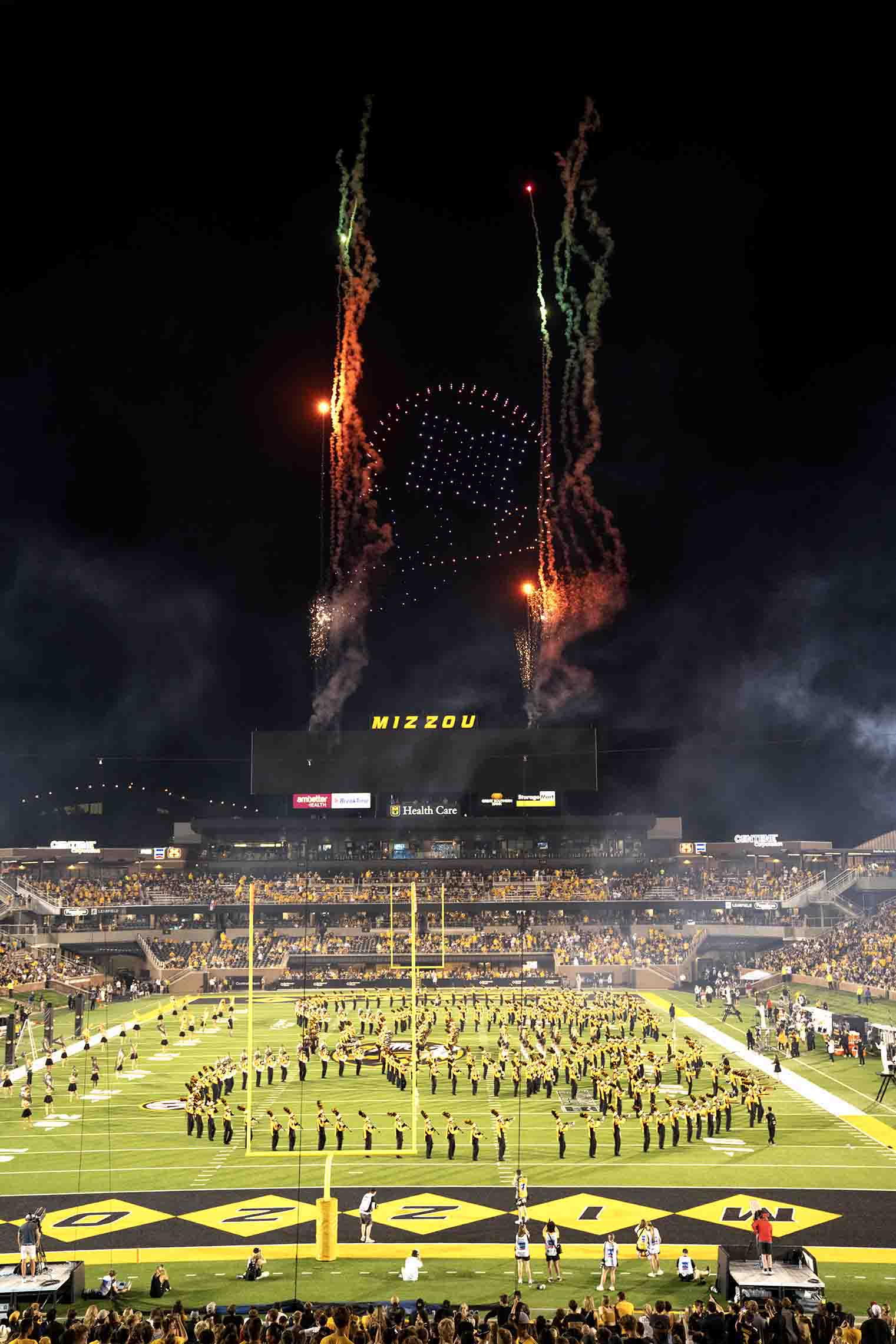
The Mizzou Drone Show partnered with AGM for street-level promotion in Columbia, Missouri.
Result: Strong local awareness and event attendance.
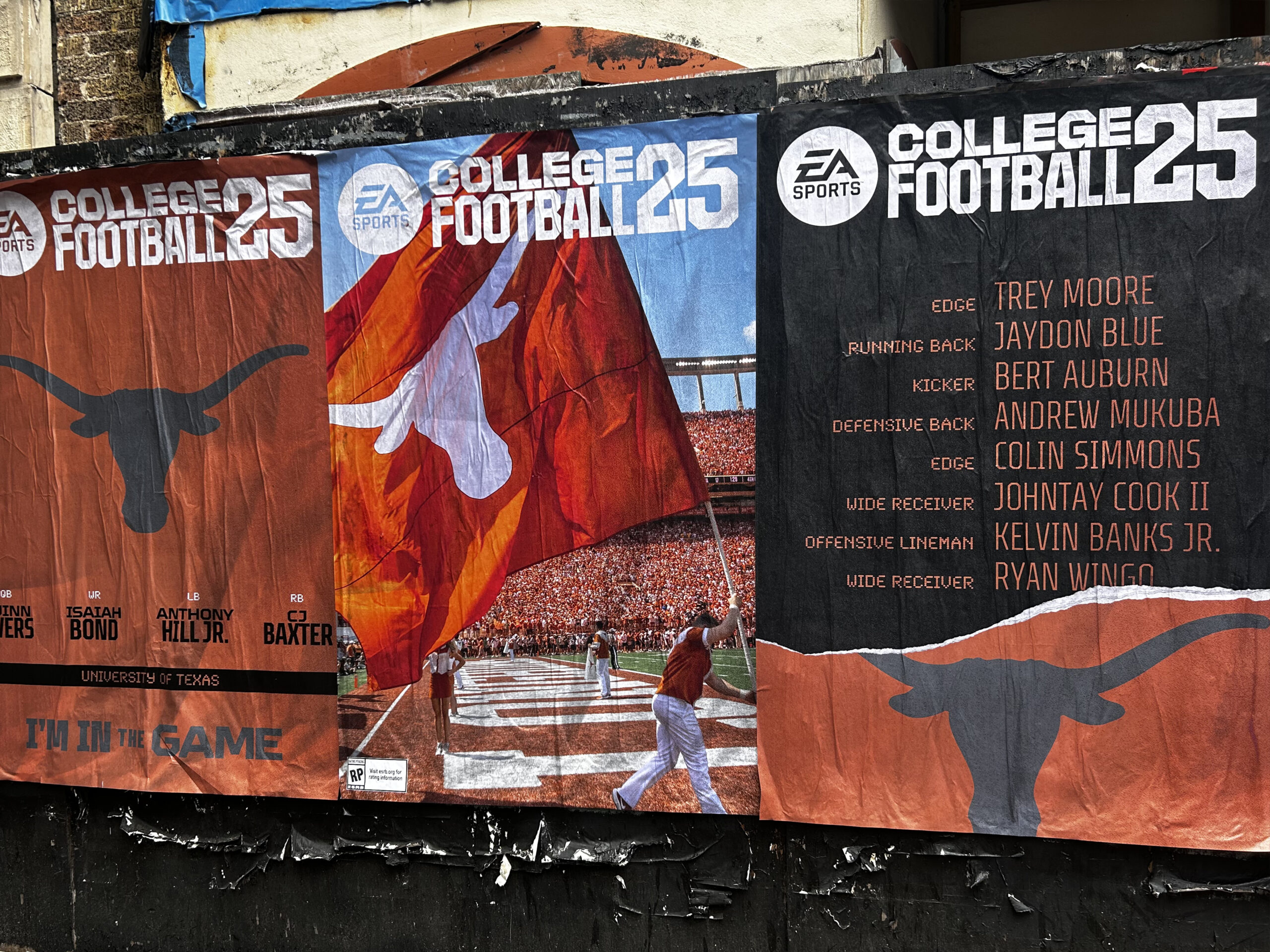
EA Sports partnered with AGM for a street-level activation campaign around the launch of EA Sports FC25.
Result: Massive street-level visibility timed to the game’s release window.
American Guerrilla Marketing has been executing snipe advertising campaigns across the United States since 2014, accumulating more than 500 completed campaigns in markets ranging from dense urban cores like Brooklyn and Chicago to mid-size regional hubs like Grand Island, Nebraska. That decade of field experience means that when AGM deploys in Grand Island, we are not learning the medium on your budget. We know which sign dimensions perform best at highway speed versus pedestrian-pace environments. We know how to read a Grand Island municipal code and identify the placement zones that offer maximum exposure without compliance risk. We know how Nebraska weather — late-winter ice, spring wind, summer UV intensity — affects sign adhesion and material durability, and we spec our production accordingly. We know how to build a deployment schedule around Fonner Park’s race calendar and the Nebraska State Fair’s attendance peaks because we have built similar schedules around comparable regional anchor events in dozens of other markets. When a Grand Island brand or national brand entering the Grand Island market partners with AGM for a snipe campaign, they are not buying a generic sign-posting service — they are accessing a decade of institutional knowledge about how physical advertising works in the real world, applied with precision to the specific streets, neighborhoods, and consumer corridors that make Grand Island’s market tick.
Snipe advertising in Grand Island runs significantly lower than metro markets, making it accessible for local businesses and regional campaigns alike. Most clients invest between $800 and $2,500 for a standard campaign covering high-traffic corridors like North Broadwell and the downtown district. Package pricing depends on sign quantity, placement duration, and whether you’re targeting specific zones or seeking broader coverage across the city’s 53,000+ residents. AGM offers starter packages ideal for Grand Island’s market size—typically 50-100 placements can achieve strong visibility without the budget requirements of Lincoln or Omaha campaigns. We also build custom packages for businesses targeting the seasonal agricultural workforce or Nebraska State Fair visitors. Because Grand Island serves as a regional hub for central Nebraska, your snipes reach shoppers and workers commuting from surrounding communities like Hastings, Kearney, and Aurora. That extended reach adds value without additional cost.
In Grand Island’s continental climate, snipe longevity varies dramatically by season. During spring and fall campaigns, expect signs to maintain visibility for 3-4 weeks with minimal wear. Summer heat and occasional severe thunderstorms can reduce that window to 2-3 weeks, while winter campaigns face different challenges—heavy snow accumulation and freeze-thaw cycles affect adhesion on poles along Stolley Park Road and other exposed corridors. AGM accounts for these conditions when planning your campaign timeline. We use weather-resistant materials rated for Nebraska’s temperature swings, which regularly span from below zero to 100+ degrees annually. Downtown Grand Island placements tend to last longer due to building coverage reducing direct sun exposure and wind damage. For campaigns running during the State Fair in late August, we schedule mid-campaign refreshes since that period combines high humidity with increased foot traffic that accelerates wear.
Grand Island’s compact geography works in your favor for ROI measurement. With major traffic concentrated along a few key arteries—Highway 281, Stolley Park Road, and North Broadwell—snipe placements generate repeated impressions among the same commuters daily. Most businesses see measurable response within the first two weeks, whether that’s website traffic spikes, phone inquiries, or foot traffic increases. AGM tracks impression estimates based on Nebraska DOT traffic counts at specific intersections. The Highway 281 and Stolley Park junction alone sees 15,000+ daily vehicles, meaning strategic placement there delivers substantial exposure for minimal investment. Local restaurants and retailers typically report 15-25% increases in first-time customer mentions during active campaigns. For service businesses targeting the agricultural sector, timing campaigns with planting or harvest seasons amplifies results since that’s when equipment dealers and farmers are actively making purchasing decisions.
True saturation in Grand Island requires fewer placements than you’d expect given its regional importance. The city’s layout concentrates commercial activity along predictable corridors, so 150-200 strategically placed snipes can create the impression of being everywhere. For a focused campaign targeting just downtown Grand Island and the Stolley Park shopping corridor, 75-100 placements achieve strong saturation. North Broadwell’s auto row and big-box retail stretch needs another 40-50 signs for complete coverage. AGM defines saturation as a resident encountering your message at least 3-4 times during normal weekly routines. Because Grand Island functions as the shopping destination for several surrounding counties, your saturation campaign also catches visitors from Hall County’s rural communities and neighboring towns. We map placement density against both vehicle traffic patterns and pedestrian zones near Fonner Park to maximize repeated exposure without wasteful clustering.
Grand Island’s nightlife scene centers around downtown’s Third Street corridor and scattered venues near the Fonner Park area, making snipe advertising particularly effective for bars, clubs, and late-night restaurants. AGM places signs along the routes people travel between venues—connecting downtown establishments to hotel zones where State Fair visitors and Fonner Park event attendees stay. Weekend traffic patterns differ significantly from weekday commuting, so we position nightlife-focused snipes where they’ll catch attention during Friday and Saturday evening hours. The Wave, JJ’s, and other local spots benefit from placements near residential neighborhoods where younger demographics live, particularly the apartment complexes along Capital Avenue. For special events like band appearances or themed nights, quick-turn snipe campaigns create buzz within days. College students from Central Community College respond well to street-level advertising since they’re walking between classes, apartments, and entertainment districts regularly.
The Nebraska State Fair in late August represents Grand Island’s biggest annual opportunity—over 300,000 visitors flood the city across eleven days, and snipe campaigns should launch 5-7 days beforehand to build awareness. Fonner Park’s racing season, livestock shows, and Heartland Events Center concerts create smaller but consistent traffic surges worth targeting. Harvest Moon Festival each October draws families downtown, ideal timing for retail and restaurant promotions. AGM recommends launching campaigns 10-14 days before major events to establish presence before competing marketing noise peaks. For Husker game weekends, many Grand Island residents travel to Lincoln, but visiting fans often stop in town—time campaigns accordingly if you’re targeting that audience. The Stuhr Museum’s summer events and Railroad Town activities attract regional tourists, and placements along Highway 34 catch that inbound traffic. Agricultural trade shows at Fonner Park bring equipment buyers with serious purchasing intent.
Downtown Grand Island between Second and Fourth Streets offers the highest pedestrian density, particularly around the Grand Theatre, local restaurants, and the Railside District shops. Stolley Park Road’s commercial corridor from Webb Road to Broadwell Avenue captures vehicle traffic to Walmart, Target, and surrounding retail. North Broadwell’s auto dealership row works well for B2B campaigns targeting vehicle buyers and fleet managers. AGM also places signs near Central Community College’s campus where students walk between buildings, dorms, and nearby fast food. The Conestoga Mall area, though vehicle-oriented, has pedestrian zones connecting stores that work for retail-focused campaigns. Residential neighborhoods along Capital Avenue and Old Potash Highway see strong morning and evening foot traffic as people walk dogs and exercise. During summer months, Stolley Park itself draws families, making the surrounding residential streets valuable placement territory for family-oriented businesses.
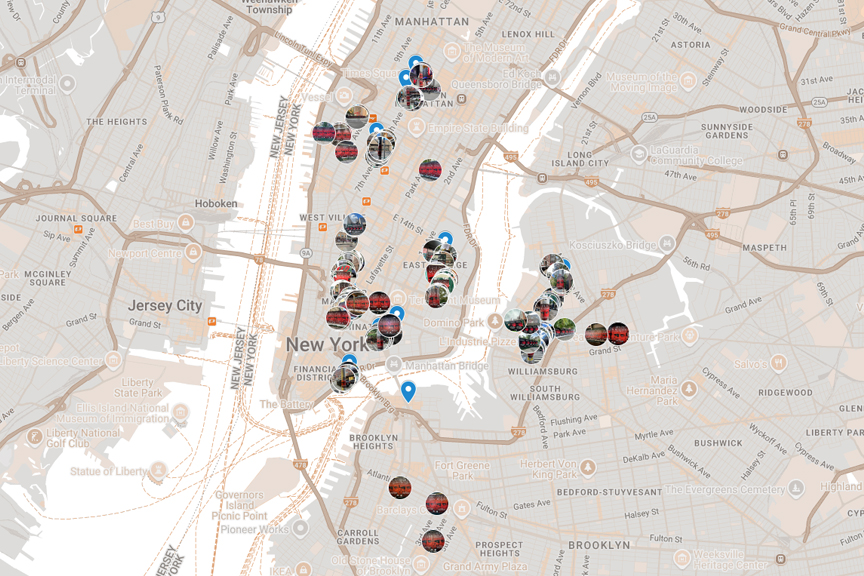
Every Grand Island campaign includes complete photo documentation and GPS coordinates for each placement. AGM crews photograph signs at installation with timestamps and location data embedded in the image files. You’ll receive a digital report within 48 hours of campaign launch showing exactly where your signs appear—from downtown Third Street placements to North Broadwell corridor positions. This documentation proves particularly valuable for franchise businesses reporting to corporate marketing departments or agencies managing campaigns for clients remotely. We include Google Maps integration so you can visualize coverage patterns across Grand Island’s key traffic zones. Mid-campaign check-ins document sign condition, and we provide replacement verification photos when refreshing damaged or weathered placements. For State Fair campaigns and other high-stakes timing, we offer same-day photo delivery. This transparency matters because Grand Island’s relatively small market means every placement needs to count—you’ll see exactly what you’re paying for.
Nebraska weather demands specific material choices. Grand Island experiences temperature extremes from -20°F winter lows to 100°F+ summer highs, plus significant wind, hail, and humidity variations. AGM uses corrugated plastic substrates for yard signs—4mm thickness minimum to resist warping during rapid temperature swings common in spring and fall. For pole snipes, we print on tear-resistant synthetic paper with UV-protective lamination that prevents fading during intense summer sun exposure. Adhesives must handle freeze-thaw cycles without losing grip, so we use cold-weather formulations from October through April. Summer thunderstorms and occasional hail events mean expecting some replacement needs—we build that into campaign planning. Standard print specs are full-color digital on weather-rated stock, typically 11×17 or 18×24 formats depending on placement type. Downtown placements under awnings last longer than exposed positions along Stolley Park Road, and we adjust material recommendations based on your specific location mix.
Grand Island’s economy blends agricultural services, manufacturing, meatpacking operations, and regional retail—each requiring different snipe strategies. B2B campaigns targeting the JBS plant, Case IH dealerships, or industrial operations along Highway 30 focus on early morning placements when shift workers and managers commute. Messaging emphasizes business benefits and professional services. AGM places B2B snipes near industrial parks, the Chamber of Commerce area, and routes connecting business districts to the airport. B2C campaigns spread wider, hitting Stolley Park shopping zones, downtown entertainment areas, and residential neighborhood connectors. Consumer messaging works with bolder visuals and immediate calls-to-action since purchasing decisions happen faster. Some Grand Island businesses need both approaches—a equipment dealer might target farmers directly while also reaching ranch managers and co-op buyers. We’ll build separate placement maps for each audience rather than assuming one campaign fits both. Timing matters differently too: B2B campaigns perform better Tuesday through Thursday, while B2C peaks around weekends.