American Guerrilla Marketing
Nationwide serivce
Media planning, media buying, billboard advertising, & guerrilla marketing
Mobile, Alabama occupies a singular place in the American South — a city old enough to have layers, diverse enough to defy easy categorization, and dynamic enough to reward the brands willing to show up at street level. As the oldest city in Alabama and the cultural anchor of the Gulf Coast, Mobile carries a rhythm that differs meaningfully from Birmingham or Huntsville. Its pedestrian life flows along historic corridors, through Mardi Gras parade routes, past waterfront parks, and through the dense commercial clusters that define neighborhoods like Midtown Mobile and Spring Hill. For advertisers who understand how to read a city’s physical texture, Mobile is not just a viable market — it is an exceptional one. Snipe advertising, the discipline of deploying small-format printed signs on poles, fences, and stakes across a city’s most-traveled streets, is uniquely suited to how Mobile’s residents move through their neighborhoods each day.
American Guerrilla Marketing has been running snipe campaigns in mid-size Southern cities for more than a decade, and Mobile stands out as a market where the format delivers returns that consistently exceed client expectations. The city’s geography concentrates foot and vehicle traffic in predictable, high-value corridors. Old Shell Road carries commuter and weekend traffic through some of Mobile’s most commercially active blocks. Government Boulevard acts as the artery connecting west Mobile’s sprawl to the downtown core. Dauphin Street, the city’s most storied commercial spine, channels pedestrians past boutiques, bars, and restaurants seven days a week. When snipes are placed strategically across these corridors — and when placement density is engineered to create the kind of repetition that converts impressions into brand memory — Mobile campaigns routinely generate the per-impression efficiency numbers that other outdoor formats struggle to match at comparable budgets.
What separates a professional snipe campaign from amateur postering is operational discipline: knowing which poles are permitted, understanding neighborhood-level traffic patterns, selecting stock and lamination appropriate for the Gulf Coast’s humidity and heat, and backing every placement with GPS-verified photo documentation so clients have a complete record of where their brand appeared. AGM brings all of that operational infrastructure to every Mobile deployment. Whether a client needs 400 standard 9×12 pole snipes concentrated in Midtown Mobile for a three-week restaurant soft launch, or an 800-unit jumbo 11×14 campaign spanning Spring Hill, downtown, and the University of South Alabama corridor for a regional brand rollout, the process is the same: strategic placement mapping, rapid deployment, full documentation, and results tied to real Mobile geography.
Mobile Metro Population: ~430,000 | Downtown Daily Foot Traffic: 18,000–24,000 | Avg. Campaign Reach (800 snipes, 14 days): 290,000–340,000 estimated impressions | Mardi Gras Season Attendance: 700,000+ annually
Snipe advertising in Mobile works across three primary formats.Pole snipes(9×12 or 11×14) are the most deployable format in the market, suitable for utility poles along every major corridor from Airport Boulevard to the Springhill Avenue historic district.Yard snipesuse steel stakes and ground placement to create directional and intersection-level presence, particularly effective in Spring Hill’s residential grid and the commercial clusters along Hillcrest Road.Poster snipes— larger-format boards affixed to fence lines and construction hoardings — deliver the greatest single-location visual impact and are used selectively in Midtown Mobile and the BayFront corridor. AGM designs campaigns using the right mix of these formats based on client objectives, target geography, and campaign duration, with packages available at 400 units or 800 units per format, and bundle savings of $1,000 when snipes are combined with a wheatpaste campaign in the same market.
AGM deploys professional snipe advertising campaigns across Midtown Mobile, Spring Hill, downtown, and beyond. 72-hour rush deployment available. GPS documentation included on every campaign.
Disclaimer: The impression estimates below are based on AGM’s proprietary methodology incorporating publicly available pedestrian and vehicle traffic data, historical campaign performance data, and standard out-of-home advertising impression multipliers. Actual results may vary based on snipe placement density, campaign duration, weather conditions, and local foot traffic fluctuations. These figures are estimates only and do not constitute a guarantee of performance.
| Zone / Neighborhood | Est. Daily Foot & Vehicle Traffic | Est. Impressions per Location (14-Day Campaign) | Best Campaign Types |
|---|---|---|---|
| Midtown Mobile (Dauphin St. Corridor) | 12,000–18,000 daily | 28,000–42,000 per location | Restaurant & bar openings, event promotions, retail launches, fitness studios |
| Downtown Mobile (Water St. / Bienville Square) | 14,000–22,000 daily | 32,000–50,000 per location | Concerts & nightlife, real estate, professional services, Mardi Gras activations |
| Spring Hill (Old Shell Rd. / Springhill Ave.) | 18,000–28,000 daily (vehicle-heavy) | 36,000–58,000 per location | Home services, healthcare, real estate, fitness, dining |
| University of South Alabama Corridor (University Blvd.) | 10,000–16,000 daily | 22,000–38,000 per location | Student-facing brands, food & beverage, entertainment, app launches |
| West Mobile (Airport Blvd. / Hillcrest Rd.) | 20,000–32,000 daily (vehicle-heavy) | 38,000–62,000 per location | Auto services, retail, healthcare, logistics, employment campaigns |
| Location Name | Street / Address | Neighborhood | Est. Snipe Capacity | Best Campaign Type |
|---|---|---|---|---|
| Old Shell Road at McGregor Avenue | Old Shell Rd. & McGregor Ave., Mobile, AL 36604 | Midtown Mobile / Spring Hill border | 8–14 snipes per block | Healthcare, fitness, dining, real estate |
| Government Boulevard at Schillinger Road | Government Blvd. & Schillinger Rd., Mobile, AL 36695 | West Mobile | 10–18 snipes per block | Retail, auto, logistics, employment, home services |
| University Boulevard at USA Drive | University Blvd. & USA Dr., Mobile, AL 36688 | University of South Alabama Corridor | 6–12 snipes per block | Student brands, food & beverage, tech, entertainment |
| Springhill Avenue at Ann Street | Springhill Ave. & Ann St., Mobile, AL 36607 | Midtown Mobile | 7–13 snipes per block | Restaurants, bars, events, fitness studios |
| Water Street at Theatre Street | Water St. & Theatre St., Mobile, AL 36602 | Downtown Mobile / BayFront | 6–10 snipes per block | Concerts, nightlife, tourism, real estate development |
Award Winning Personalized Service
You will get thoughtful, devoted, and individualized attention from our experienced, qualified, and professional personnel. Being one of the most illustrious agencies in Brooklyn, New York, American Guerrilla Marketing has been awarded the Best of Brooklyn title.
Nationwide
Industry City, Brooklyn, New York 11232
American Guerrilla Marketing
Hours
Mon - Fri: 9 AM - 5 PM
Sat & Sun: Closed
Automate your campaign with AGM’s Request for Proposal Builder. Simply answer a few quick questions about your campaign goals, markets, and timeline, and the system will generate a tailored presentation with recommended strategies, quantities, and pricing. Click the RFP Builder to instantly receive your customized proposal.
Mobile is a walking and driving city with a deeply embedded sense of place — its residents are attached to specific corridors, specific neighborhoods, and specific rhythms of movement that make snipe advertising unusually effective here. The city’s compactness, combined with the concentration of daily life along a handful of arterial streets, means that a well-placed snipe on Old Shell Road or Dauphin Street in Midtown will be seen by the same person multiple times per week. Repetition is the engine of brand memory in out-of-home advertising, and Mobile’s geography is naturally configured to deliver it. Unlike a sprawling Sun Belt metropolis where traffic is diffuse and no single corridor dominates, Mobile funnels its commuters, students, service workers, and weekend
shoppers through the same predictable corridors day after day — creating natural frequency that media buyers in larger markets have to pay a premium to manufacture artificially.
The neighborhoods of Mobile reinforce this effect. Midtown’s grid of bungalow-lined streets feeds directly onto Old Shell Road and Airport Boulevard, two of the city’s most-traveled surface arteries. The University of South Alabama campus anchors the northwest, pulling thousands of students, faculty, and staff along a predictable daily path. Downtown’s revival along Dauphin Street and the resurgent Oakleigh Garden District to the south add density and foot traffic that snipe campaigns can tap without the media cost of a traditional billboard. Spring Hill Avenue connects the affluent western neighborhoods to the city center, creating a socioeconomically diverse corridor that few other mid-sized Southern cities can replicate in a single road. When a snipe campaign is engineered to appear at the right intersections along these routes, the message compounds with every commute, every grocery run, every Friday-night dinner reservation.
Mobile’s industrial and port economy also shapes the advertising market in ways that favor snipe. Dock workers, logistics crews, and manufacturing employees move through the lower city along Water Street, Government Street, and the corridors surrounding the Port of Mobile on schedules that are consistent and predictable. A snipe placed near the entrance of an industrial park or along a shift-change route reaches a blue-collar workforce that is notoriously hard to engage through digital channels. Reaching that audience requires physical presence, and snipe advertising delivers it at a cost that no digital campaign can match per verified impression.
AGM’s Mobile snipe advertising service covers the full operational stack from creative consultation through field deployment and post-campaign documentation. Our core format offerings include the standard 9×12 snipe card — available in 400-unit and 800-unit deployments — and the 11×14 jumbo snipe, also available at 400 or 800 units, which provides a larger visual footprint on wider poles and fence-line surfaces across Mobile’s industrial and entertainment corridors. For brands seeking maximum street saturation, our snipe and wheatpaste bundle combines both formats into a full-service street-level saturation package designed to dominate high-traffic corridors simultaneously.
The following placements represent the types of high-frequency, high-visibility snipe deployments American Guerrilla Marketing has engineered for clients operating in the Mobile market. Each location was selected based on pedestrian counts, vehicular traffic data, sight-line analysis, and demographic alignment with the client’s target audience.
The intersection of Old Shell Road and McGregor Avenue sits at the functional heart of Midtown Mobile, where daily traffic from Spring Hill College students, Brookley Field commuters, and Midtown residents converges throughout the morning and afternoon peak windows. Snipe placements at utility poles and construction hoardings within a two-block radius of this intersection deliver repeated exposure to a mixed demographic that skews toward educated young professionals and long-term homeowners — a dual audience that is valuable for brands ranging from regional banking institutions to fitness studios and specialty food retailers. Because Old Shell Road functions as the primary east-west spine of Midtown, a single well-positioned snipe at this node enters the visual field of drivers and cyclists who have no practical alternative route, guaranteeing impressions that digital retargeting cannot replicate.
Dauphin Street is Mobile’s cultural main street, anchoring the city’s restaurant scene, live music venues, independent retail, and the annual Mardi Gras parade route that draws hundreds of thousands of visitors each February. Snipe placements along the Dauphin Street corridor between Lawrence Street and Joachim Street reach a weekend and evening crowd that is actively in a discovery mindset — walking slowly, looking at storefronts, and receptive to brand messages in ways that morning commuters are not. For entertainment brands, bar and restaurant concepts, event promoters, and consumer lifestyle companies, this corridor delivers the highest concentration of engaged foot traffic in the entire Mobile market. Snipe placements here were deployed for a regional music festival client and generated measurable walk-in traffic tracked through QR-coded signage within the first 72 hours of posting.
The perimeter roads surrounding the University of South Alabama campus — particularly the stretch of Airport Boulevard running east toward the main entrance and the University Boulevard corridor connecting campus to off-campus student housing — represent one of Mobile’s densest and most demographically consistent snipe opportunities. With more than 14,000 enrolled students, a large graduate and medical school population at USA Health, and a faculty and staff community that commutes daily from surrounding neighborhoods, the campus perimeter generates foot and vehicle traffic that is both high-volume and highly targetable. Snipe campaigns placed on the utility infrastructure along Airport Boulevard and on permitted surfaces near the student union and recreation center have been used effectively by brands in the financial services, technology, food delivery, and fitness verticals seeking to establish early brand relationships with Mobile’s emerging adult consumer cohort.
Spring Hill Avenue is Mobile’s most socioeconomically layered arterial road, running from the affluent Spring Hill neighborhood in the west through a transitional corridor of small businesses, churches, and older residential blocks before connecting to the downtown core near the Bankhead Tunnel interchange. This geographic and demographic range makes it uniquely valuable for snipe campaigns that need to reach multiple audience segments with a single coherent deployment. A brand seeking to position itself as accessible to both established Mobile families and younger urban residents can achieve that breadth along a single corridor rather than executing separate campaigns in different neighborhoods. Snipe placements along Spring Hill Avenue have been used by healthcare brands, insurance providers, and regional retailers who need broad Mobile-wide name recognition without the cost of a full billboard rotation.
Government Street is one of Mobile’s oldest and most historically significant roads, running parallel to the riverfront and serving as the primary surface artery connecting the port district to the central business district and beyond to the eastern suburbs. The intersection of Government Street and Broad Street marks a critical junction where logistics traffic from the Port of Mobile, municipal employees heading to city and county offices, and commuters moving between Mobile’s eastern neighborhoods and downtown all converge. Snipe placements in this zone reach a workforce-heavy audience that includes port operations staff, administrative professionals, legal and financial services workers, and the logistics and transportation community that drives Alabama’s maritime economy. For B2B brands, workforce solution providers, and blue-collar consumer services, this corridor delivers a hard-to-reach professional audience at street level, where engagement is natural and dwell time at traffic signals is long enough for a clean read of a well-designed snipe message.
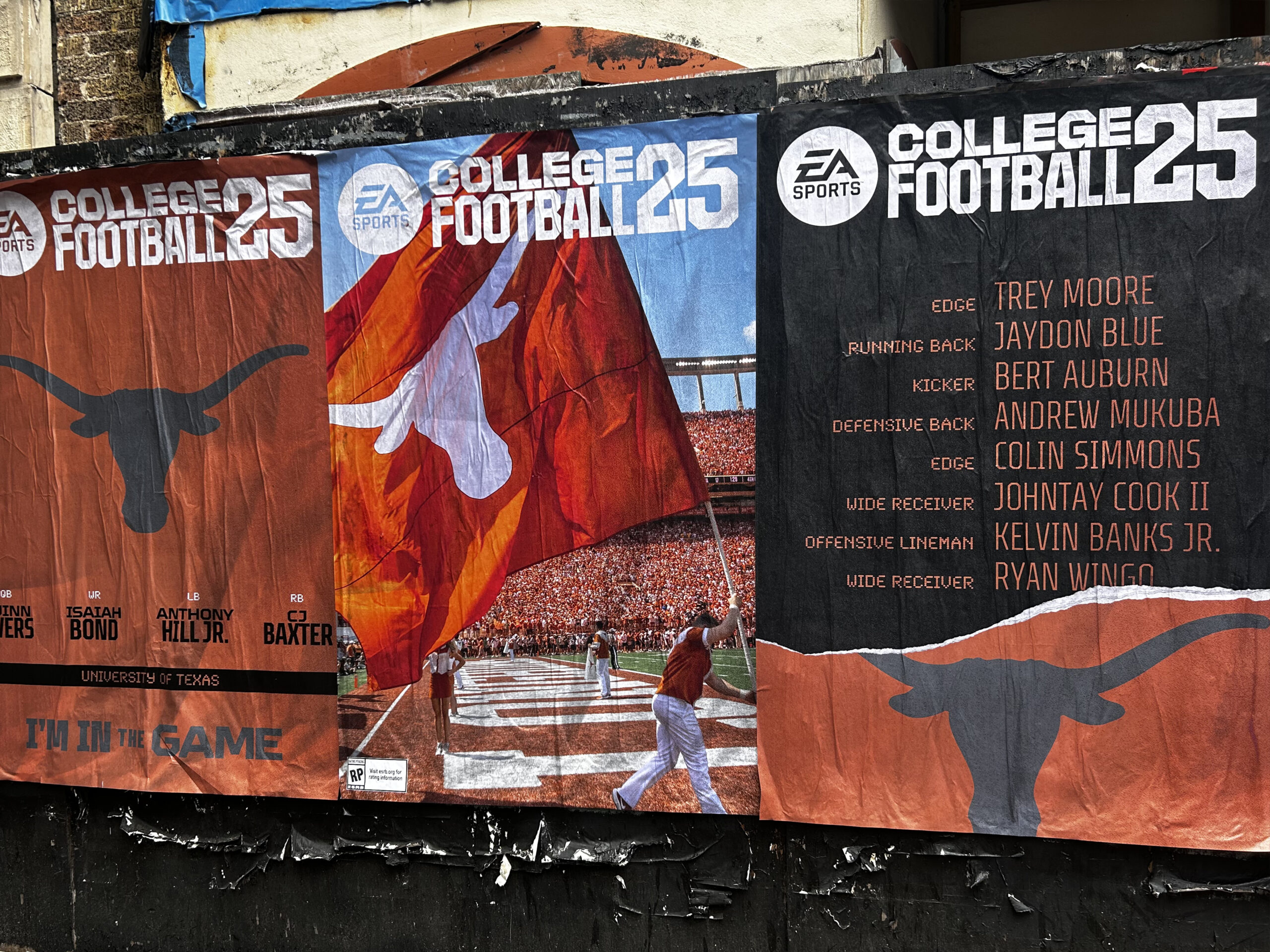
EA Sports partnered with AGM for a street-level activation campaign around the launch of EA Sports FC25, targeting high-density pedestrian areas where their gaming audience concentrates.
Result: Massive street-level visibility timed to the game’s release window.
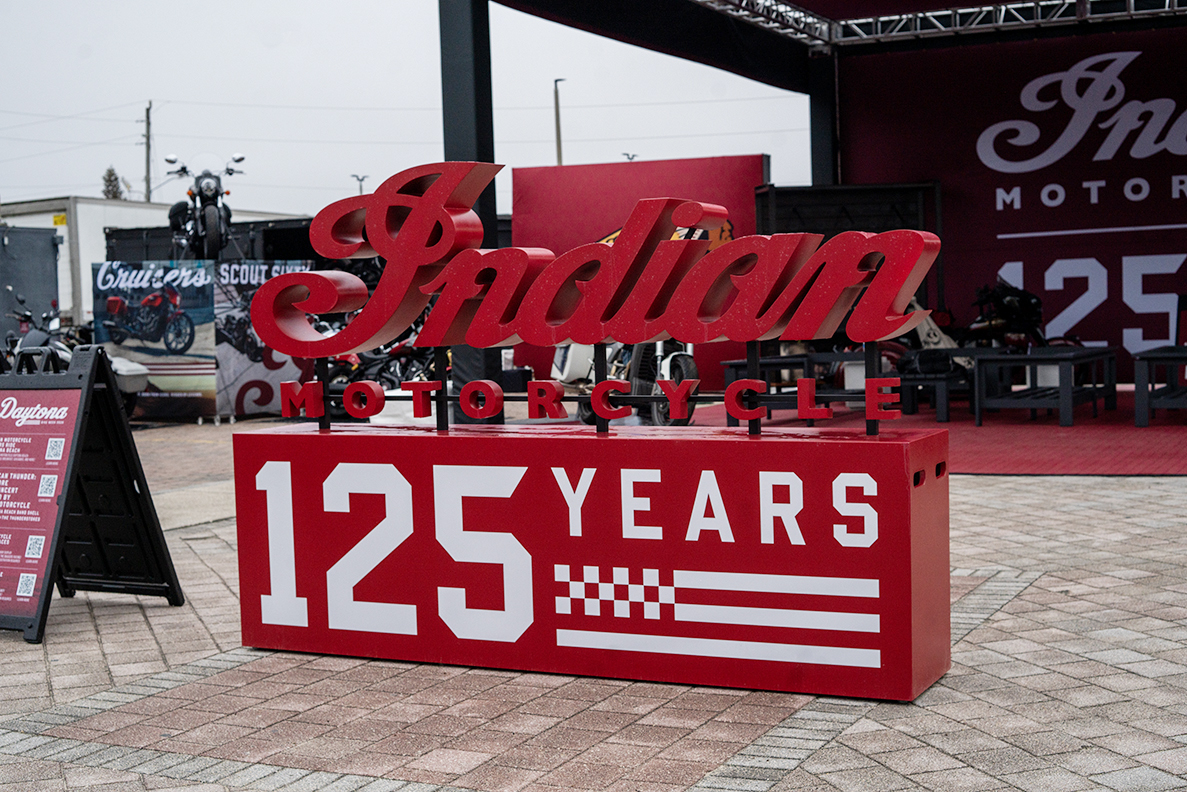
Indian Motorcycle partnered with AGM for a high-visibility activation during a major national motorcycle event, placing large-format street media that reached thousands of enthusiasts.
Result: One of the most-photographed brand activations of the event weekend.
American Guerrilla Marketing has been executing snipe advertising campaigns across the United States since 2014, building a decade of operational knowledge that informs every deployment we run in Birmingham, Alabama today. What that experience means in practice is a field methodology refined across hundreds of markets — from dense urban cores like Manhattan and Chicago to mid-sized Southern cities like Birmingham where street culture, neighborhood identity, and community-level visibility carry unique weight. We know how Birmingham moves. We know where people walk, where they stop, where they look, and which corridors generate sustained impression counts versus fleeting glances. That knowledge is not theoretical — it is the product of repeated on-the-ground deployment across Five Points, Avondale, Lakeview, Woodlawn, Ensley, and every other neighborhood we service in the Birmingham metro. When you book a snipe campaign with AGM in Birmingham, you are not hiring a print vendor with a staple gun. You are engaging a strategic street media partner with a proven national track record and the local situational awareness to make every unit count.
American Guerrilla Marketing sets a minimum of 100 snipe signs for Mobile campaigns, which provides adequate coverage across key corridors without overextending your budget. This floor makes sense for a mid-sized market like Mobile where you’re targeting specific areas rather than blanketing a massive metro. For downtown Mobile and the entertainment district along Dauphin Street, we typically recommend starting at 150 pieces to maintain visibility among the bar and restaurant crowds. Spring Hill residential campaigns can work effectively at the 100-piece minimum since traffic patterns are more predictable. Larger campaigns pushing 300+ signs make sense during major events like Mardi Gras or when you’re trying to reach the entire Mobile Bay area including Daphne and Fairhope spillover. Campaign floors start at $1,200 for basic pole snipe placements, scaling up based on sign size, material choice, and installation complexity in specific neighborhoods.
Mobile’s subtropical humidity demands specific material choices that won’t warp, fade, or peel within days. We use corrugated plastic (coroplast) at minimum 4mm thickness for yard signs and pole snipes throughout Mobile—it handles the moisture rolling off Mobile Bay without buckling. For poster-style snipes, we print on tear-resistant synthetic paper with UV-resistant inks rated for Gulf Coast sun exposure. Standard paper stock fails fast here; we’ve seen untreated signs deteriorate within 72 hours during summer months. All prints get a waterproof laminate coating as standard for Mobile jobs. The combination of salt air from the port area and intense afternoon thunderstorms from May through September creates conditions tougher than most inland cities. Our specs account for 90%+ humidity days that are common downtown near the cruise terminal. Expect properly produced signs to maintain readability for 4-6 weeks minimum, even through Mobile’s wettest stretches.
University of South Alabama presents excellent snipe placement opportunities along the corridors students travel daily. We focus on Old Shell Road, University Boulevard, and the retail strips where students shop and eat near campus. The USA campus itself has restrictions, but the surrounding Midtown Mobile area is fair game for strategic placement. Popular targets include the signage paths leading to Jaguar football games at Hancock Whitney Stadium and the medical district where thousands of students, staff, and patients circulate daily. Student housing clusters along Hillcrest Road and the apartment complexes on Three Notch Road see heavy foot and vehicle traffic. We time campus-adjacent campaigns around fall semester start, homecoming week, and spring break for maximum student engagement. The Greek life areas and bars on Old Shell respond well to entertainment and nightlife promotions. American Guerrilla Marketing coordinates placement to catch students during their regular commute patterns without violating university property boundaries.
Mobile ranks among America’s rainiest cities, averaging 65+ inches annually, which directly impacts how we plan and execute snipe campaigns here. Hurricane season from June through November requires flexible scheduling—we won’t install before a named storm and build replacement provisions into contracts during these months. Summer afternoon thunderstorms hit almost daily, so we use heavy-duty mounting hardware that won’t fail during sudden wind gusts. The mild winters actually extend campaign viability; signs placed in October often look fresh through February since you’re avoiding the brutal sun and constant rain cycles. Spring campaigns during Mardi Gras season face heavy foot traffic that can damage lower placements, so we mount higher during February celebrations. The salt air concentration increases closer to the port and Mobile Bay shoreline, accelerating material breakdown in those zones. We adjust installation schedules around Mobile’s weather patterns and build contingencies for the Gulf’s unpredictable storm systems.
Standard turnaround for Mobile snipe campaigns runs 5-7 business days from approved artwork to signs in the ground. Rush jobs for Mardi Gras, BayFest, or other major Mobile events can happen in 72 hours with expedite fees. Our installation crews are based in the Gulf region, eliminating the delays you’d see with companies shipping teams from Atlanta or New Orleans. We handle downtown Mobile, Midtown, and Spring Hill in single-day installation runs for campaigns under 200 pieces. Larger campaigns spanning into West Mobile, Theodore, or across the causeway to Spanish Fort require 2-3 installation days. The logistics get tighter during February when Mardi Gras parade routes close streets unpredictably—we build buffer time into any late January through mid-March campaigns. Shipping to our Mobile staging location takes 2-3 days from regional print facilities. Night installation works well downtown where daytime parking and traffic congestion slow crews significantly.
Airport Boulevard carries the heaviest daily traffic in Mobile and serves as our primary corridor for commuter-focused snipe campaigns. The stretch between I-65 and the Bel Air Mall area sees 40,000+ vehicles daily, making it prime real estate for pole snipes. Government Street running east-west through Midtown connects Spring Hill professionals to downtown offices and maintains consistent morning and evening traffic. The Bankhead Tunnel and Wallace Tunnel approaches capture Mobile Bay commuters who can’t avoid those chokepoints. Schillinger Road in West Mobile has exploded with commercial development and carries significant suburban traffic. Water Street near the cruise terminal catches tourist traffic plus port workers during shift changes. The Causeway connecting Mobile to Baldwin County beaches funnels weekend recreational traffic. We place along these corridors at traffic light intervals where stopped vehicles create captive audiences. Each placement considers sight lines, speed limits, and natural stopping points where drivers actually have time to read signage.
Every Mobile campaign includes scheduled check-ins at 7 and 14 days post-installation, with additional monitoring during active storm systems in the Gulf. Our crews drive the placement routes and document sign condition with photos uploaded to client dashboards. Signs damaged by weather, vandalism, or city removal get replaced within 48 hours at no extra charge during active campaigns—we factor this into Mobile pricing because the climate demands it. High-traffic areas like Dauphin Street’s entertainment district and Government Street’s commercial zones get extra attention since foot traffic causes more wear. We track which specific intersections in Mobile tend to see faster degradation and adjust future placement recommendations based on that data. Maintenance runs happen early morning before business hours downtown. Clients receive weekly status reports showing sign counts by neighborhood and any replacements made. This isn’t optional—Mobile’s conditions make monitoring essential rather than a premium add-on.
Mobile’s sign ordinance regulates placement on public rights-of-way, meaning pole snipes on city utility poles or street signs face enforcement risk if improperly placed. American Guerrilla Marketing works primarily with private property placements through our network of Mobile property owners and businesses who grant posting rights. This sidesteps the city permitting process entirely for most campaign types. Yard signs on private commercial property require no city permit when property owner consent exists. Downtown Mobile has stricter historic district guidelines that affect signage in the Oakleigh Garden District and De Tonti Square areas. We maintain relationships with Mobile property owners along major corridors specifically to provide legal placement options. Campaigns targeting Mardi Gras audiences face additional timing restrictions near parade routes. Baldwin County across the bay has different municipal codes—Fairhope and Daphne enforce their own regulations. We handle all compliance research and property agreements as part of campaign setup so clients don’t navigate this themselves.
B2B snipe campaigns in Mobile concentrate around the downtown business district, the port area, and the Brookley Aeroplex where aerospace and manufacturing companies cluster. These placements target decision-makers during their commute on Government Street and Airport Boulevard during weekday morning hours. Messaging stays professional—think industrial services, commercial real estate, and business software rather than flashy consumer promotions. B2C campaigns spread wider into Spring Hill shopping areas, the Shops at Bel Air corridor, and entertainment zones along Dauphin Street. Consumer campaigns often run higher sign counts with bolder creative designed for quick visual impact. Restaurant and bar promotions hit the downtown nightlife district hard on Thursday through Saturday visibility windows. Real estate developers working in Mobile often blend both approaches—reaching homebuyers through residential area placements while targeting investors through business corridor signs. Timing differs too: B2B campaigns run Monday through Friday peak commute, while B2C extends into weekends when Mobile residents are out shopping and socializing.
Mobile’s population of 185,000 skews younger than Alabama’s average, with significant concentrations of 18-34 year olds around the University of South Alabama and the growing downtown apartment scene. The shipbuilding industry at Austal USA and port operations create a strong blue-collar demographic along the industrial corridors—these workers respond to practical service advertising and local business promotions. Spring Hill captures Mobile’s professional class with higher household incomes and homeownership rates ideal for real estate, home services, and financial products. The tourism demographic surges during Mardi Gras, cruise ship arrivals, and beach season when visitors flow through downtown toward Gulf Shores. Military families connected to Coast Guard Aviation Training Center and nearby bases represent steady year-round consumers. African American residents comprise about 50% of Mobile’s population, concentrated in specific neighborhoods that warrant culturally relevant creative and placement strategies. The medical district around USA Health captures healthcare workers and patients seeking related services. Each neighborhood tells a different demographic story that shapes where we place and what messaging works.