
January 12, 2026 Wild Wheat Paste Posting Posting and Wheatpasting
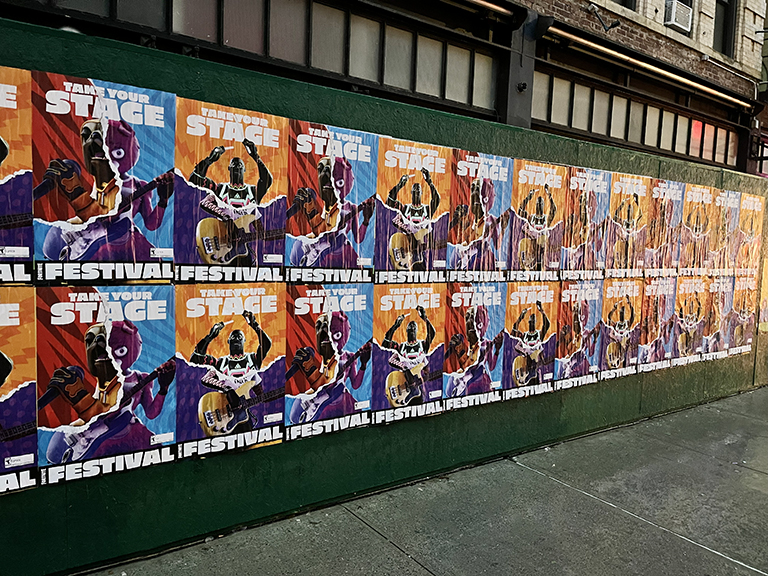
Wheat Paste Posting has a funny reputation: people talk about it like a fair-weather tactic, something you do when the sun is out and the city feels easy. In practice, seasoned teams rarely wait for “perfect” weather. They plan Wheat Paste Posting campaigns year-round and adjust to the street as it is, not as the calendar says it should be.
So when someone asks for the best time of year for Wheat Paste Posting, the most useful answer is also the least satisfying: there is no single best time. Effectiveness comes from matching strategy, materials, and timing to temperature, moisture, foot traffic, and the condition of the wall.
For a paste-up to perform, two things need to happen at once: it must bond well, and it must be seen. Seasons influence both, but not in a simple way.
A mild spring day can bring huge pedestrian flows and still ruin installs if walls are holding winter moisture. A bright summer afternoon can look like prime time and still fail if direct sun skins the paste before the paper settles. A cold winter week can outperform expectations when competition is low and you choose protected locations.
Teams that treat Wheat Paste Posting marketing like operations, not luck, usually focus on a short list of variables every time they deploy.
After you’ve run a few campaigns, you start to watch for:
One reason Wheat Paste Posting advertising works so well is that it can be refreshed and scaled. That flexibility is also what makes it viable in every season. Experienced crews plan in waves: scouting and permissions, printing, install windows, maintenance checks, and replenishment runs.
That structure matters because seasons create different risks. Rain threatens adhesion. Heat threatens work time. Freeze-thaw threatens the bond line. In every season, the first hours after installation carry outsized risk, so planning is really about buying the poster enough stable time to cure.
A practical approach is to plan the campaign calendar broadly, then schedule installs narrowly. You might aim for “spring launch,” but you still select specific days and even specific hours based on forecast, wall dryness, and where people will be walking.
Spring feels like the city switching back on. Sidewalks fill, events return, and people look up more than they did in winter. For Wheat Paste Posting posters, that rising pedestrian energy can be a strong tailwind.
Spring also punishes impatience. The common mistake is assuming that warmer temperatures mean walls are ready. After winter, walls can stay damp inside porous materials, paint may be failing, and freeze-thaw damage can leave surfaces dusty or chalky. Paste adheres to what’s actually there, not what you hope is there.
The best spring installs often happen after a quiet stretch of dry weather, when walls have had time to dry and stabilize. The difference is visible: less bubbling, fewer edge lifts, and cleaner corners because the wall is not bleeding moisture back into the paper.
Teams that do well in spring treat it as a reactivation season: great for restarting long-running Wheat Paste Posting campaigns, swapping creative, and rebuilding coverage, as long as they respect the wall’s readiness more than the temperature.
Summer is the season most people think of first, and it earns that spot for visibility. Days are long, streets are busy, and photos travel fast. If you want impressions, summer gives you volume: commuters, tourists, festivals, outdoor dining, and nightlife all expand the audience.
One sentence that surprises newcomers: summer can be harder to paste well than spring.
High heat and direct sun can dry paste too quickly. When paste skins over before the paper fully seats, you get early edge failures, wrinkles that never flatten, and corners that lift the first time humidity spikes overnight. Even when it “looks fine” at install time, the bond may be weaker than it appears.
A lot of crews shift their schedule rather than fight physics. Early-morning or evening installs buy you cooler surfaces, slower drying, and more control. Wall selection matters more too: shaded faces, sheltered corridors, and surfaces that are warm but not baking tend to hold better than sun-blasted walls that hit peak temperature in midafternoon.
If summer is your big push for Wheat Paste Posting marketing, build the plan around the technical reality: choose the right walls, time installs for cooler hours, and expect to maintain.
After you’ve watched a few cycles, the “summer playbook” often looks like this:
Fall can feel like the most dependable season for Wheat Paste Posting, especially in many U.S. cities. Temperatures are often stable, foot traffic stays consistent, and you lose the extreme heat that can rush paste drying.
Momentum is the word for fall. Campaigns installed well can perform with a steady, confident presence, which is why many brands and promoters like fall runs for launches, tours, and seasonal programming. The street is active, but not frantic.
The tradeoff is scheduling. Days shorten and rain returns in a more consistent rhythm. That does not mean “don’t paste.” It means your windows get narrower, and you need to hit them cleanly. If you can time installs between rain events and favor walls that dry quickly, fall can deliver some of the best durability-to-effort ratios of the year.
Fall also rewards operational discipline: route planning, fast execution, and a clear maintenance loop. When the forecast is tight, crews that can mobilize quickly usually win.
Winter Wheat Paste Posting is not for casual runs. Cold, snow, ice, and short days compress your options and increase the cost of mistakes. Paste thickens, paper behaves differently, and surfaces can be slick with frost or saturated with meltwater.
This is where experienced crews separate themselves. Winter installs typically require modified materials and precise surface preparation. Walls have to be clean and genuinely dry, not “dry enough.” Even a thin film of frost can ruin adhesion. The safest winter schedule often targets the warmest part of the day, when the wall has had some sun time, even if the air still feels cold.
Winter also comes with an upside that many marketers overlook: fewer teams operate. That lowers competition for attention. In the right placements, visibility can be stronger because the visual field is less crowded. When a winter campaign is executed with care, it can feel almost amplified.
If you are coordinating with a Wheat Paste Posting company, Wheat Paste Posting agency, or local Wheat Paste Posting services, winter is also when professionalism shows up in the boring details: insulated transport for materials, faster site prep, and realistic timing.
Different cities have different weather, but the decision logic is consistent: match your execution to moisture, temperature, and cure time, then place creative where people actually walk.
| Season | What helps | What hurts | Smart timing cue |
|---|---|---|---|
| Spring | Returning foot traffic, moderate temps | Residual wall moisture, unstable paint, frequent showers | Install after several dry days, not just when it warms up |
| Summer | Long daylight, heavy crowds, events | Paste drying too fast, UV fade, hot wall surfaces | Early morning or evening, avoid direct midday sun walls |
| Fall | Stable temps, steady traffic, less heat stress | Shorter days, increasing rain | Tight scheduling between rain events, keep routes efficient |
| Winter | Low competition, strong contrast on quieter streets | Freeze-thaw cycles, snow, icy walls, short visibility windows | Midday installs on sun-warmed, fully prepped surfaces |
If you want Wheat Paste Posting advertising to behave like a repeatable media channel, treat materials as a system: paste formulation, paper choice, and placement environment.
A simple way to think about it is “working time” versus “survival time.” Summer asks for more working time so the paste does not flash-dry during install. Spring and fall ask for more moisture resilience. Winter asks for controlled moisture and strong initial tack on cold surfaces.
Here are practical strategy anchors that crews often use to keep campaigns consistent across the year:
People often search “Wheat Paste Posting near me” when they need quick coverage for an opening, a tour date, or a product drop. Speed is possible, but the strongest results usually come from teams that plan for conditions and build in flexibility.
Wheat Paste Posting pricing and Wheat Paste Posting cost tend to reflect a few realities: seasonal labor time, material upgrades, and the number of waves required to maintain visibility. Summer might require odd-hour installs for better adhesion. Fall might require tight scheduling and more forecasting discipline. Winter often requires slower installs, more prep, and more experienced labor, which can affect Wheat Paste Posting pricing even if the city feels quieter.
When you compare Wheat Paste Posting services, it helps to ask questions that reveal how they think:
Those answers often matter more than the month you are in.
The most effective Wheat Paste Posting campaigns are rarely built around a perfect season. They are built around a repeatable practice: watch conditions, select walls that will accept paste today, install when cure time is realistic, and place creative where people will actually see it.
Spring can be powerful once walls dry and stabilize. Summer can be dominant when you respect heat and sun. Fall can be exceptionally reliable with tight scheduling. Winter can stand out with the right crew and the right prep.
The best time of year is not a square on the calendar. It is the moment when planning, materials, and experience match real street conditions, and that moment shows up in every season if you are ready for it.
For a customized strategy tailored to your next event, reach out directly at [email protected].