
October 8, 2023 Data Collection
Utilize the power of augmented reality marketing to rise above the competition. Learn how it boosts customer engagement, builds brand storytelling and transforms e-commerce!
Augmented reality marketing, a revolutionary concept, employs immersive technology to enhance the perception of reality, infusing digital elements into the physical world. It presents a disruptive approach to standard promotional techniques, reshaping how brands interact with consumers.
At the intersection of augmented reality and marketing strategies, a realm of untapped potential unfolds. Here, brands can craft engaging, interactive experiences that captivate audiences, compelling them into action while etching an indelible mark of the brand identity on their minds.
Augmented reality, or AR, distinguishes itself by going beyond the buzzword and overlaying digital information onto the real world in real-time. It takes the form of images, sound, and text, adding a layer of interactive and immersive experience.
Augmented reality fuses the tangible with digital, redefining interaction and engagement while serving as an innovative tool for unconventional marketing strategies.
Conceptually, think of augmented reality as a bridge merging the tangible and the digital. It’s more than just seeing – it’s interaction, engagement, and if employed correctly, an effective tool for unconventional marketing strategies.
Gone are the days when traditional marketing dominated, where physical advertisements and word-of-mouth were key. Today’s digital age demands a modern approach; one that leverages online platforms, social media, and cutting-edge technology like AR for existing & potential customers.
Current marketing trends are all about interaction, personalization, and captivating visuals, dictating a shift from purely selling a product or service to providing an enriching customer experience.
In the expansive world of marketing strategies, it’s not enough to just stay updated with the trends; you must think steps ahead. Harnessing novel technologies such as augmented reality not only strengthens your current strategy but sets the stage for future advancements in the field.
Augmented reality marketing epitomizes the disruptive new frontier in the realm of business strategy. Deploying digital superimposition onto real-life settings, it harbors a significant edge over conventional techniques. With its unique ability to reshape consumer perceptions, this technology steers towards a future where boundaries between the virtual and real blur.
Businesses are increasingly harnessing augmented reality marketing to gain a competitive edge. The immersive, interactive nature of AR provides customers with a richer, more engaging experience. This, in turn, aids in fostering deeper brand attachments and enhancing customer loyalty share.
The transition toward AR marketing is not merely a fleeting trend. It’s rooted in value creation and long-term prospects. AR creates a vivid, tactile world for consumers, heightening interactivity for remarkably immersive experiences that captivate and retain audiences.
Augmented reality marketing is the ideal choice for firms angling for standout impressions. By transcending the traditional marketing framework, AR paves the way for more creative, impactful brand communications. It’s the key to differentiation in today’s aggressive marketplace, breaking barriers with its capacity to engineer uniquely engaging encounters.
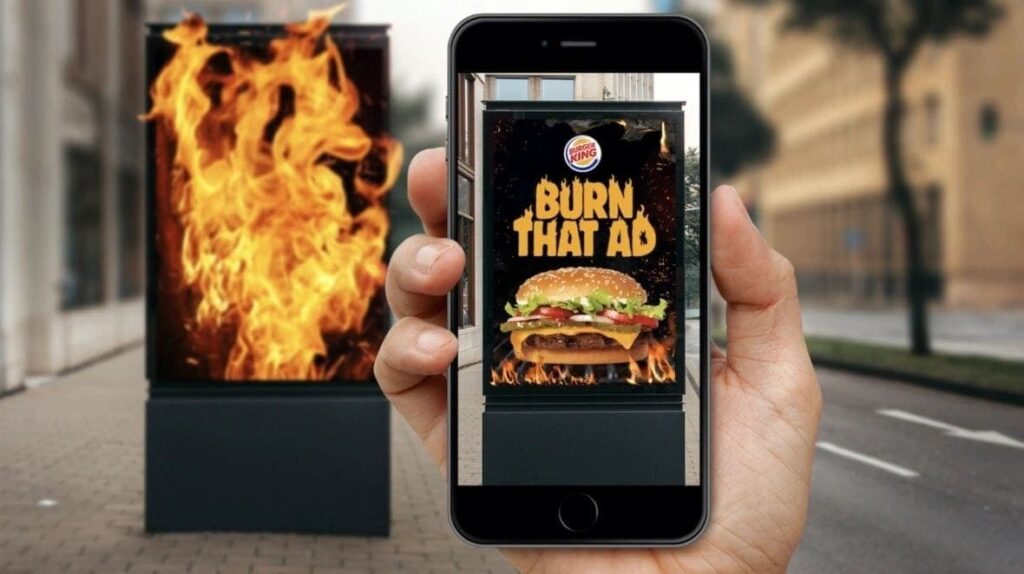
Augmented reality marketing piques customer curiosity, triggering increased interaction with products and boosting overall engagement.
Employing augmented reality in marketing propels customer experience to unprecedented heights, shaping a unique, immersive world where customers truly connect with your brand.
In augmented reality marketing, customer engagement reaches a spectacular height. The technology encourages interaction by allowing customers to literally touch, reshape or customize the marketed product, which triggers a significant interest and curiosity.
Augmented Reality (AR) holds the miraculous capability of modifying brand perception, transforming it from mundane to memorable, transcending the usual marketing strategies. It has not only reinvented brand engagement but has also painted a powerful narrative for brands, making them unforgettable for their audiences.
Augmented reality marketing empowers brands to escape the ordinary, allowing the introduction of unique, immersive experiences that captivate audiences, and clearly differentiate from competitors.
The right use of augmented reality (AR) marketing sparks online conversations and fuels viral growth. It allows your brand to break through the clutter, offering immersive experiences that audiences enthusiastically share and discuss on social media platforms.

Embarking on an AR marketing journey requires a well-crafted action map. Clearly defined objectives, the perfect selection of AR technology, thoughtful design of interactive experiences, and robust promotion strategies lay the groundwork for successful campaigns.
A blueprint to breathe life into your AR marketing campaign entails launching it effectively, followed by consistent promotion. Measuring the effectiveness is crucial – whether through engagement metrics, social media traction, or increased sales, this provides valuable insights for future campaigns.
For a successful augmented reality marketing campaign, definitive goal-setting is critical. It lays a roadmap, offering direction and focus – a compass in the unpredictable terrain of AR marketing.
To optimize output, strategic objectives need to be aligned with your business aims. It’s not about cool innovation, but purposeful innovation that fosters growth and fortifies your market position.
At the onset, objectives should be SMART: specific, measurable, achievable, relevant, and time-bound. Striking a blend of these components ensures a clear and executable AR marketing strategy.
Reflect on what you wish to achieve with the campaign. Increased customer engagement? Buzz around a new product? Deeper brand connections? Having clear goals will steer the design and implementation of your AR campaign.
Routinely measure goal attainment to gauge progress. These checks ensure that you’re on track, providing insights for strategy tweaks. Remember, AR marketing isn’t a one-and-done affairs, but a continual cycle of learning and refining.
Selecting the right AR technology aligns with your marketing objectives and consumer engagement. This evaluation requires an understanding of the various AR technologies available, from image recognition to location-based AR. Ensure you choose a tool that best suits your brand’s marketing strategy.
Performance, scalability, and data analysis are other critical parameters to factor into your selection. The chosen AR tool should effectively manage large volumes of interaction and deliver actionable insights for strategy refinement and customer understanding.
Ultimately, the right AR technology will truly connect your consumers with your brand. Transform your marketing campaigns into dynamic experiences that captivate your audience, create lasting impressions, and increase customer connection for the long term.
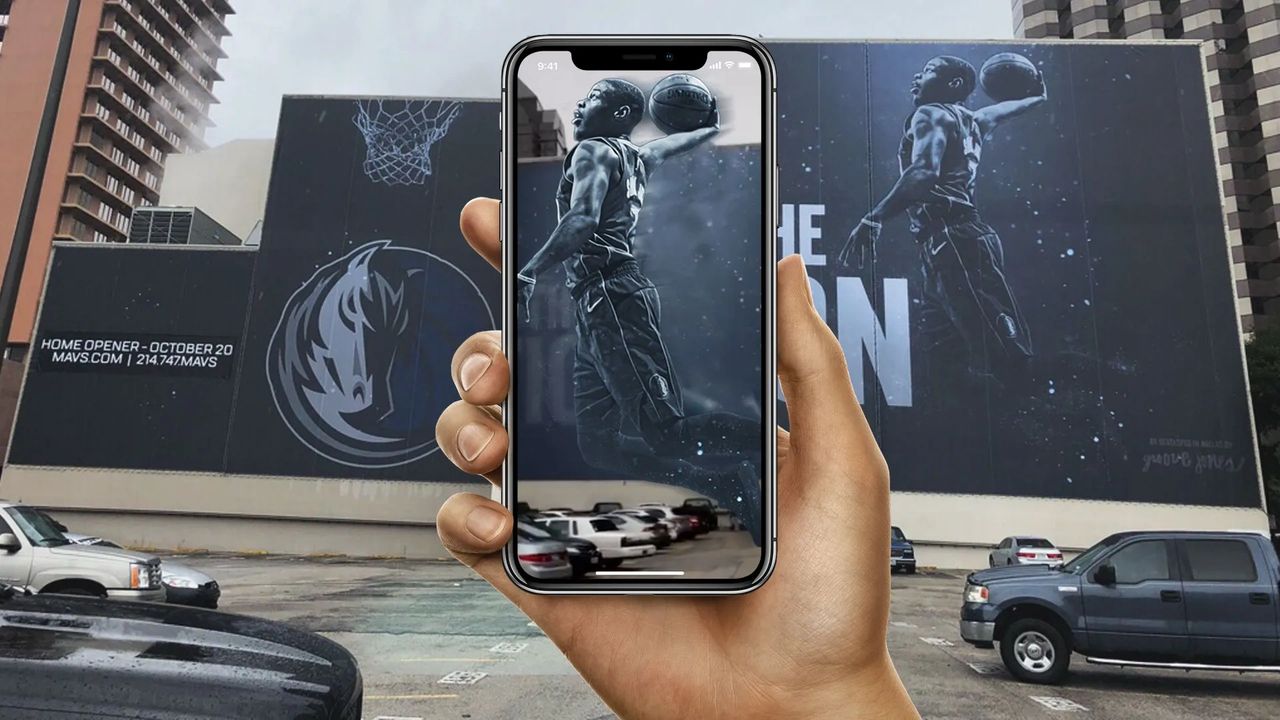
Creating mesmerizing AR experiences require deep understanding of both technology and your consumer’s behavior. Consider what compels them, what kind of AR content boosts engagement, and how to turn that into a comprehensive, user-driven journey.
From the initial concept to execution, the process of crafting an exemplary AR campaign requires meticulous planning, creativity, and testing. Strive to create an experience that goes beyond the novelty of AR, impresses your audience, and effectively communicates your brand message.
A successful launch begins with anticipation. Create a teaser campaign on your social media channels, enticing users with the immersive experience your AR campaign will offer. Highlight the novelty and the direct benefits they can derive from interacting with your AR initiative.
Turn to influencers and brand ambassadors for promotion. They can help your AR campaign to reach a wider audience, increasing engagement, and chances of your AR campaign going viral by sharing interactive visuals or videos of them experiencing your AR campaign.
Persistent post-launch promotion is crucial. Deploy measures like push notifications and email reminders to keep your audience engaged with your AR campaign post-launch. Include screenshots of the AR experience, making it irresistible to your customers.
Accurately measuring your AR marketing ROI requires mastering the key metrics. Pay close attention to user engagement rates, conversion rates, and amount of time spent interacting with your AR content. This data provides a snapshot of your campaign’s effectiveness.
Interpreting data from your AR marketing campaign involves more than just looking at numbers. Consider what these metrics mean in terms of customer behavior. Are users spending a significant amount of time interacting with your AR content? This suggests high engagement.
Remember, the ultimate goal of any marketing campaign is to drive sales. Compare your AR marketing efforts to other strategies you’ve used. Is AR driving higher conversions? If so, your AR marketing campaign is not only engaging but also profitable.
Your AR content should be designed to drive certain user behaviors. Understand which behaviors these are, and use metrics to assess whether your content is achieving its intended purpose. A high user engagement rate with low conversion might indicate an issue.
Don’t be put off by the complexity of AR marketing data. With time, patience, and persistence, these metrics can reveal a wealth of information about your audience, their preferences and their behaviors. Harness this data to refine and optimize your AR marketing campaigns.

Casting a gaze on the future, the world of AR marketing promises intriguing developments. Expect to witness an increasing integration of AR with Artificial Intelligence, creating highly personalized experiences that take user engagement to new heights.
Innovations in Augmented Reality technologies are set to rewrite marketing norms. From amazing opportunities in e-commerce to leveraging AR as a riveting storytelling tool, these emerging technologies are shaping a thrilling frontier for marketing.
Artificial intelligence (AI) is increasingly steering the course of augmented reality (AR) in marketing, blending the digital and physical worlds with enriched, engaging experiences. The ‘smart’ guidance of AI paves the way, transforming AR into an insightful, intuitive tool that marketers can leverage.
AI-infused AR strategies are shifting the sands of customer engagement in modern marketing, creating an avant-garde way to interact with consumers. With AI driving the AR landscape, marketers are empowered to provide personalized, context-relevant content that is as interactive as it is persuasive.
Think about AI and AR as a power duo: AI’s computational strengths are adept at analyzing customer data to shape AR interfaces, enabling marketers to hyper-focus their strategies. This leads to tailored AR interactions, which subsequently yield significant client conversions.
Future-forward companies realize the untapped potential of integrating AI into AR marketing strategies. They’re pushing boundaries, using AI to turn AR into a powerful storytelling tool, capable of projecting brand narratives in the most immersive, captivating ways possible.
Through personalized augmented reality experiences, marketers can fine-tune their approach, delivering customized interactive experiences that resonate on an individual level. This shift to personalized content curated through AR echoes the ever-evolving demand from customers for a ‘made-for-me’ experience.
Transforming the customer journey becomes a reality with personalized AR. It adds depth and layers to user interaction, offering a unique journey customized to individual preferences, creating meaningful engagement that surpasses traditional marketing tactics.
Revolutionizing retail through AR takes e-commerce to new heights as it melds digital information into a tangible shopping experience. The feel of an in-store exploration, trying on garments, or gauging furniture fit, now accomplished virtually, offering the best of online and offline retail.
Augmented reality’s impact on e-commerce is astounding. With AR apps, customers can virtually try on sunglasses or preview a new couch in their living room, making online shopping more interactive, personalized and decision-making more confident.
AR in retail isn’t just a novelty but a necessity to stay competitive. Retailers capitalizing on this technology offer an elevated shopping experience, stand out in the saturated e-commerce market, fulfil customer expectations, and build brand loyalty.
Anticipating the e-commerce landscape’s evolution, businesses are integrating AR to bridge the gap between on-screen portrayal and physical product reality. This pioneering wave elevates customer engagement, reduces returns, and heralds a new era in digital shopping.
Augmented reality (AR) is a powerful tool transcending conventional boundaries in marketing by weaving compelling narratives. It enables breath-taking visuals that consumers can interact with, enhancing brand story immersion far beyond static images or text. AR as a narrative device invokes potent emotions. A well-crafted AR story can enthrall viewers, tugging at their heartstrings. This emotional connectivity builds deeper brand relationships, contributing to customer loyalty and long-term success. A world where dragons roam city streets, an AR campaign by a popular toy company, showcases this effectively. The storytelling evoked the whimsical and creative nature of their product, leaving a lasting impression on both consumers and the industry. In another example, a sustainability-focused brand highlighted the plight of endangered animals through AR. The vivid, close-to-life experiences moved viewers, driving up support for the brand’s conservation efforts and their products. Remember, powerful storytelling isn’t about technology, but how you use it. AR empowers marketers to create distinctive, emotionally resonant brand narratives. It can be your secret weapon in today’s cut-throat competitive landscape, differentiating your brand in a memorable manner.
Telegram: @americanguerillamarketing
Sign up to get blog posts here