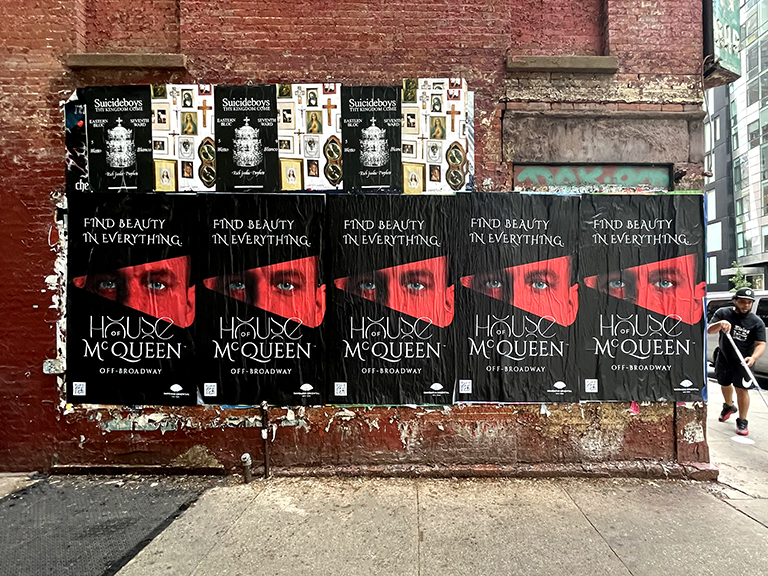
The most memorable advertising does not look like advertising. It looks like something that happened, like the city itself was making a statement on a brand’s behalf. That is gorilla marketing at its best: creative so well-executed that it feels native to the environment, and strategy so precise that it puts that creative in front of exactly the right audience at exactly the right moment.
American Guerrilla Marketing has been deploying this combination across 50+ U.S. markets for brands that need more than impressions. They need impact. Operating out of Industry City in Brooklyn, NY, our team bridges the gap between bold creative thinking and the operational discipline required to bring it to life in real cities with real logistics and real results.
This guide explores how creativity and strategy work together in gorilla marketing, and how to build a campaign where both are doing their job.
The Creative Half of the Equation
Creativity in gorilla marketing is not about being outrageous. It is about being unexpected in a way that feels earned, not forced. The audience on a city street has seen everything. Gimmicks register as gimmicks. Genuine creative ideas register as something worth paying attention to.
The Principle of Contextual Surprise
The most effective gorilla marketing ideas exploit the gap between what an audience expects to see in a given context and what they actually see. A wheat paste poster on a construction wall is expected. A wheat paste poster that interacts with the construction scaffolding in a clever way is a creative surprise. The idea is the same format, deployed with enough thought about context to become something worth stopping for.
Context is not just physical. It includes the cultural moment, the season, the news cycle, the neighborhood’s aesthetic. Our creative development process starts with understanding the context before writing a single line of copy or selecting a visual direction.
The 3-Second Rule
On a busy city street, three seconds is the maximum attention window for most passersby. Good gorilla marketing creative communicates its full brand message within that window. That means the most important element, the brand identity, is immediately legible. The supporting message, a product name, a campaign tagline, a call to action, is clear at a single glance.
Creative that requires reading or engagement to be understood fails the 3-second test. Creative that stops people and makes them want to look longer, because it is visually compelling or conceptually surprising, passes it.
Designing for the Physical Environment
Creative designed for digital channels rarely translates directly to street-level applications. The scale is different. The ambient conditions, light, weather, viewing angle, movement, are different. Great gorilla marketing creative is designed specifically for the physical environment where it will be deployed.
For sidewalk stencils, that means thick, bold elements that survive foot traffic and read at a downward angle. For building projections, that means high-contrast imagery that holds at 40 feet wide. For wheatpasting campaigns, that means compositions that hold their own next to competing visual noise on a city wall.
The Strategy Half of the Equation
Creative without strategy is a photo op. Strategy transforms a creative idea into a campaign with defined objectives, a target audience, a measurable outcome, and a plan for how the activation fits into the larger marketing program.
Starting with the Objective
Before any tactic is selected, the strategic objective needs to be clear. Common objectives for gorilla marketing campaigns include:
Awareness building in a new market. Brand refresh for an existing audience. Product launch with concentrated buzz in a target city. Event support for a live activation. Cultural credibility with a specific demographic. Each objective changes which tactics to deploy, where to deploy them, and how to measure the result.
Target Audience and Market Selection
Gorilla marketing is inherently geographic. The campaign runs in specific places at specific times. Market selection is therefore a strategic decision as important as creative direction. Deploying in a market where your target audience is dense and accessible produces dramatically better returns than deploying in a market chosen for convenience.
We use foot traffic data, demographic research, and event calendars to identify the highest-value locations within each market. The goal is to reach the target audience in the moment and context where they are most receptive.
Tactic Selection Based on Objectives
Different gorilla marketing tactics serve different objectives. Brand awareness campaigns often lead with high-visibility formats: LED billboard trucks, building projections, and large-scale postering. Engagement campaigns often lead with human touchpoints: street teams, brand ambassador activations, and experiential moments that invite interaction. Sustained presence campaigns use a rolling mix of low-cost, high-impact formats over an extended period.
Our guerrilla marketing services team helps brands select the right tactic combination based on their specific objectives and budget parameters.
Timing and Market Context
When a campaign runs is as important as where. Deploying a street team at a venue exit when a sold-out show is letting out produces more high-quality interactions than the same team deployed on an empty street on a Tuesday afternoon. We build timing into every campaign plan, identifying the specific hours and days where target audience density in each location is highest.
Cultural timing matters too. Campaigns that connect to a current cultural moment, a sports championship, a fashion week, a major release, a local event, benefit from the energy already in the air. Our experiential marketing team tracks event calendars in every market we operate to identify these opportunity windows.
Where Creativity and Strategy Converge
The campaigns that perform best are the ones where creative ideas are built on strategic insight, and strategic decisions are made with creative possibilities in mind. The two are not separate workstreams; they are one integrated process.
The Creative Brief as Strategic Document
A creative brief for a gorilla marketing campaign is not a generic creative document. It is a strategic specification that defines the audience, the context, the message hierarchy, the physical constraints of deployment, and the earned media angle. A brief that answers all of those questions gives the creative team what they need to produce work that is both bold and purposeful.
Iterating on What Works
The best gorilla marketing programs are not one-time stunts. They are iterative campaigns that learn from each activation and apply those learnings to the next. Which surfaces performed best? Which times of day drove the highest engagement? Which creative executions generated the most social sharing? Each of these questions has a data-driven answer if the campaign is built to capture it.
We document every activation comprehensively and build post-campaign analysis into our standard reporting. That analysis feeds the strategy for the next program.
Integration with Digital and Paid Media
Gorilla marketing performs best when it is connected to a digital amplification layer. The physical activation creates the moment. Digital channels extend and sustain the reach. A building projection that generates 10,000 street-level impressions may generate 500,000 digital impressions when combined with organic social sharing, earned media coverage, and a targeted paid boost of the resulting content.
We plan for this integration from the beginning of every campaign, ensuring that the assets captured during activation, photography, video, crowd reactions, are formatted and optimized for immediate digital distribution.
Case Examples: When Creativity Meets Strategy
Understanding how this combination works in practice is useful. The following are illustrative examples of how the creative-strategy combination plays out in real campaign scenarios.
Product Launch in a New Market
A consumer goods brand entering the New York market for the first time uses a combination of sidewalk stencil messaging around key retail locations and a one-night building projection in SoHo to announce the launch. The stencils drive foot traffic to the projection. The projection drives social content. The content drives earned media pickup. The product sells through in the first two weeks. The stunt becomes the brand’s introduction to the market.
Event Amplification
A music streaming platform sponsors a major festival and deploys a street team in the surrounding neighborhood for the two days before the event. The team distributes branded merchandise, engages fans in the queue, and captures the energy of the pre-event moment. An LED billboard truck runs the event perimeter showing the platform’s artist lineup. The combination produces a physical presence that rivals the official event sponsorship in visibility.
Brand Refresh Campaign
An established brand repositioning for a younger demographic uses wheatpasting in culturally relevant neighborhoods alongside a three-week street team deployment at high-traffic venues. The creative takes visual cues from neighborhood aesthetics rather than corporate brand guidelines. The result feels native. The audience responds to a brand they had written off as stale with genuine attention and social engagement.
Building the Creative-Strategy Partnership
Working with an agency that can execute both sides of the equation is essential. A creative shop that does not understand street-level logistics will produce beautiful work that fails in execution. A logistics shop that does not understand creative will produce well-executed work that fails to connect.
Our team at American Guerrilla Marketing bridges both. Creative directors work alongside campaign managers on every project. The creative is built for execution, and the execution is built to deliver the creative at its best.
Building Your In-House Gorilla Marketing Capability
For brands with ongoing gorilla marketing programs, building internal capability to brief and manage the agency relationship is valuable. This means having a team member who understands the format, can translate brand strategy into gorilla marketing briefs, and can evaluate agency recommendations with informed judgment.
We work with brands to build this capability through transparent process, detailed reporting, and regular strategy reviews that keep the client team informed and engaged throughout the campaign program.
Our brand activation team and brand ambassador agency provide complementary expertise for brands building comprehensive street-level marketing programs.
Frequently Asked Questions About Gorilla Marketing Creativity and Strategy
What makes gorilla marketing creative effective?
Effective gorilla marketing creative is unexpected, simple, and culturally relevant to the audience it encounters. It communicates the brand message within seconds and is inherently shareable, generating social amplification that extends the impact of the physical activation far beyond its footprint.
How does strategy shape a gorilla marketing campaign?
Strategy defines the target audience, market selection, timing, tactics, and success metrics before creative work begins. Without strategy, gorilla marketing is just a stunt. With strategy, it becomes a measurable campaign with defined objectives and trackable outcomes that feed future campaigns.
Can small brands use gorilla marketing effectively?
Yes. Gorilla marketing is one of the most budget-efficient advertising formats available. Focused single-market campaigns can generate significant awareness and earned media at budget levels that would not buy meaningful reach on paid digital or traditional media channels.
What industries benefit most from gorilla marketing?
Consumer brands, entertainment, fashion, food and beverage, technology launches, and nonprofits all benefit from gorilla marketing. Any brand that wants to build cultural relevance and street-level presence in specific markets can find significant value in the format.
How do you balance creativity with compliance in gorilla marketing?
Professional agencies handle permitting, site approval, and regulatory compliance as standard parts of campaign planning. Creative boldness and legal execution are not mutually exclusive. The best campaigns are both creatively surprising and fully compliant with local regulations.
How do I start a gorilla marketing campaign with AGM?
Contact our team at (646) 776-2770 or visit our contact page to start the conversation. We will ask about your objectives, target market, timeline, and budget, then build a campaign recommendation tailored to your brand and goals.
Frequently Asked Questions
What is unleashing gorilla marketing creativity meets strategy?
American Guerrilla Marketing provides unleashing gorilla marketing creativity meets strategy services across 50+ U.S. markets. Every campaign is planned, scouted, executed, and GPS-documented by our field teams. We work with regional brands and Fortune 500 companies on campaigns that require real street-level execution and documented proof of performance.
How does AGM approach meets strategy?
Our process starts with a market consultation to understand your goals, target audience, and budget. We then scout locations, handle any required permissions or permits, coordinate production and installation with our local crews, and provide a full GPS-tagged photo report after the campaign runs.
What markets does American Guerrilla Marketing cover for meets strategy?
We operate in 50+ U.S. markets including New York, Los Angeles, Chicago, Miami, Houston, Atlanta, Seattle, Denver, Boston, and dozens of secondary markets. Contact us to confirm availability and pricing for your specific market.
How much does a meets strategy campaign cost?
Campaign pricing depends on market, format, quantity, and duration. We work with budgets ranging from targeted single-market runs to national rollouts across multiple cities. Use our RFP Builder or contact us directly for a custom quote based on your specific campaign requirements.
How do I get started with meets strategy through AGM?
The fastest way to get started is to submit your campaign details through our RFP Builder at americanguerrillamarketing.com, or contact us directly at [email protected] or (646) 776-2770. Our team typically responds within one business day with availability and initial pricing.