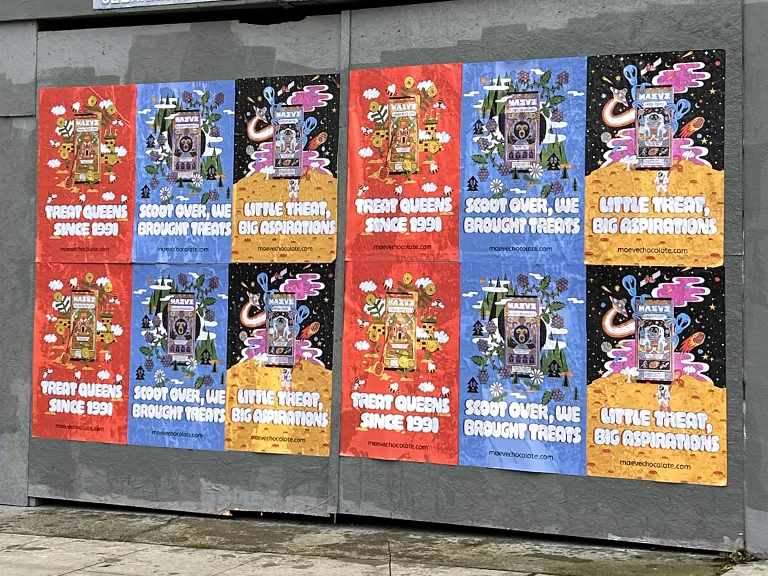
Gorilla marketers do not wait for audiences to find them. They deploy to where the audience already is, in city streets, transit hubs, event queues, and neighborhood corridors, and create moments that cannot be scrolled past or muted. The craft requires equal parts strategic thinking and operational execution, and when done well, it produces results that paid media budgets five times the size cannot replicate.
At American Guerrilla Marketing, our team has spent years mastering the discipline. Operating out of Industry City in Brooklyn, NY, we deploy gorilla marketing campaigns across 50+ U.S. markets for brands ranging from independent launches to national household names. This guide covers how professional gorilla marketers think, plan, and execute campaigns that actually move the needle.
If you want to understand what separates effective gorilla marketing from expensive stunts that go nowhere, read on.
The Mindset Behind Effective Gorilla Marketing
Gorilla marketing is not about breaking rules for the sake of it. It is about understanding where conventional advertising has created dead zones of consumer attention and then placing your brand message exactly where people are not expecting to see it. The surprise is the mechanism. The unexpected encounter cuts through the noise that predictable media cannot.
Audience-First Thinking
The best gorilla marketers start with a single question: where is our audience, physically, when they are most receptive to a brand message? The answer is rarely in front of a screen. It is at a coffee cart before work. It is walking from a parking garage to a venue. It is waiting in line for a product drop.
Placing your brand in those exact moments, at the right scale and with the right creative, produces an impression that a digital ad impression simply cannot match. The physical encounter has weight. It creates memory in a way that banner ads do not.
Execution Discipline
Gorilla marketing ideas are common. Gorilla marketing execution is rare. The gap between a clever concept and a live activation that performs as planned is filled with logistics, compliance, crew management, weather contingencies, and real-time problem solving. Professional gorilla marketers build execution systems that handle the chaos of street-level work without sacrificing quality.
Our guerrilla marketing services team trains for this. Every campaign has contingency plans, and every crew member knows the playbook before the activation starts.
Core Tactics in the Gorilla Marketers Toolkit
Gorilla marketing encompasses a wide range of tactics, each suited to different objectives, budgets, and markets. Understanding the options is the starting point for building a campaign that matches your brand’s goals.
Street Team and Brand Ambassador Activations
A trained street team is the backbone of most gorilla marketing campaigns. Brand ambassadors operate in high-traffic locations, distributing samples, engaging in conversation, building brand awareness at the human level. The best street teams are brand-fluent: they know the product, understand the campaign message, and represent the brand consistently.
Our brand ambassador agency recruits and trains teams that match the demographic and energy of the target audience. A luxury brand ambassador looks and sounds different from a streetwear campaign ambassador, and we build teams accordingly.
Guerrilla Postering and Wheat Paste Campaigns
High-visibility postering in the right neighborhoods creates sustained, low-cost impressions over days and weeks. Wheat paste posters adhere permanently to approved surfaces, ensuring durability through weather. Strategic placement in high-foot-traffic areas, near venues, transit exits, and cultural hubs, maximizes the investment.
Our wheatpasting and poster campaigns are documented with GPS-stamped photography from every placement, giving you a real record of where and how your campaign ran.
Sidewalk Advertising
Sidewalk messaging uses stencils, chalk, or spray chalk to place brand messages directly on pedestrian pathways. The format is unexpected, physically present, and difficult to ignore when you are looking at the ground. For campaigns targeting high-density pedestrian areas, sidewalk advertising delivers CPMs that traditional out-of-home cannot match.
See how we deploy sidewalk stencils for brand campaigns across dozens of markets.
Projection Advertising
High-lumen projectors cast brand content onto building facades, creating massive, moving brand displays in urban environments. Projections are especially effective for evening activations in entertainment districts and high-pedestrian nighttime corridors. The scale creates spectacle; the spectacle generates organic social content.
Mobile Billboards and LED Trucks
Moving your message through the city rather than anchoring it in one spot gives you coverage across multiple neighborhoods in a single activation window. LED billboard trucks carry high-resolution digital displays through routes designed to maximize target audience exposure. We route these vehicles using foot traffic data, not guesswork.
How Professional Gorilla Marketers Plan a Campaign
Planning a gorilla marketing campaign is a structured process with distinct phases. Understanding each phase helps you collaborate more effectively with the team executing on your behalf.
Phase 1: Strategy and Objective Setting
Every campaign starts with a clear objective. Are you launching a new product and need concentrated buzz in a specific market? Are you building brand presence in a city where awareness is low? Are you supporting a tentpole event and need street-level energy to match the digital campaign? The objective shapes every decision that follows.
We build campaigns around measurable outcomes, not just creative concepts. That means defining success metrics before execution begins so the post-campaign report has something concrete to evaluate.
Phase 2: Location Scouting and Permitting
Scouting identifies the specific intersections, surfaces, transit exits, and event adjacencies where the campaign will deploy. Good scouting is the difference between a campaign that reaches the right people and one that reaches foot traffic with no demographic relevance to your brand.
Permitting is the unglamorous but essential layer of gorilla marketing. We handle all required permits, coordinate with property owners where necessary, and ensure every activation has the legal standing to proceed without disruption.
Phase 3: Creative Development
Gorilla marketing creative is not the same as digital creative. It needs to work at street scale, in ambient light, in a moving environment, in front of a pedestrian who has three seconds of attention before they walk past. Simplicity, boldness, and clarity are the three requirements. Our brand activation team develops creative with these constraints built in from the start.
Phase 4: Crew Deployment and Execution
Execution is where plans meet reality. Our field crews are experienced in the tactical demands of street-level marketing: setting up in time, managing weather, adapting to unexpected obstacles, and maintaining brand standards throughout the activation. Every crew has a lead who communicates directly with our campaign manager in real time.
Phase 5: Documentation and Reporting
Every activation ends with a comprehensive documentation package. GPS-stamped photography, video footage, crew-generated notes, and impression estimates go into a report that gives your team a clear picture of what happened and what it delivered. This documentation also feeds your social media calendar and earned media outreach.
Building a Multi-Tactic Gorilla Marketing Campaign
Single-tactic campaigns can be effective, but the strongest gorilla marketing campaigns layer multiple tactics to create a surround effect. When your audience encounters your brand on the street, on a projection, and in the hands of a brand ambassador on the same day, the cumulative impression is exponentially stronger than any one of those encounters alone.
The Launch Day Playbook
A product launch is the ideal case for a multi-tactic campaign. On launch day, we deploy street teams at key locations in the target market. An LED billboard truck runs routes through the highest-density neighborhoods. Sidewalk stencils placed the previous night are active at entry points to major retail zones. A building projection runs in the evening to close the day with spectacle.
Each tactic reinforces the others. The street team generates conversation. The billboard truck ensures awareness across geography. The stencils provide persistent messaging at street level. The projection creates the social moment that amplifies everything else.
Sustained Presence Campaigns
Not every campaign is built around a single day. For brands that want sustained market presence over weeks or months, a rolling activation calendar maintains street-level visibility without requiring a single massive investment. Postering rotations, periodic street team deployments, and intermittent projection nights build cumulative awareness over time.
Our experiential marketing team designs these sustained programs with consistent brand standards across every activation.
Why Brand Culture Matters in Gorilla Marketing
Gorilla marketing does not work for brands that have nothing interesting to say. The format amplifies what is already true about a brand. If your brand has a clear point of view, a distinct voice, and something genuine to offer the audience, gorilla marketing gives that something room to breathe in the physical world. If your brand is generic, no amount of creative placement will save the campaign.
Authenticity and Neighborhood Context
The neighborhoods where guerrilla marketing runs have their own cultures, aesthetics, and expectations. A campaign that feels native to the neighborhood earns credibility. A campaign that feels imposed earns nothing. Our team scouts not just for foot traffic, but for cultural fit. The creative and placement decisions that work in Williamsburg are different from those that work in South Beach, and we treat them differently.
The Earned Media Multiplier
When gorilla marketing is done right, journalists, bloggers, and influencers notice without being paid to notice. That earned coverage extends the reach of the activation far beyond its physical footprint. We design every campaign with earned media potential in mind, ensuring that the activation is inherently shareable and that media-worthy moments are planned into the execution.
Frequently Asked Questions About Gorilla Marketers
What do gorilla marketers actually do?
Gorilla marketers plan and execute unconventional, street-level advertising campaigns. They scout locations, coordinate field teams, manage logistics, and document activations to generate impressions, earned media, and social content for brands. The work is equal parts creative and operational.
What is the difference between guerrilla marketing and traditional advertising?
Traditional advertising buys defined placements in established media channels. Guerrilla marketing creates attention in unexpected places and ways, relying on surprise, creativity, and street-level presence rather than paid reach to generate impact. The two approaches work best when combined.
How do I know if guerrilla marketing is right for my brand?
Guerrilla marketing works best for brands that want to build street credibility, generate earned media, reach specific urban demographics, or make a cultural statement. It is particularly effective for product launches, brand refreshes, event campaigns, and brands entering new markets.
How long does it take to plan a guerrilla marketing campaign?
Simple activations can be planned and deployed in five to seven business days. Complex multi-city campaigns with custom creative typically require three to six weeks of planning. Contact our team at (646) 776-2770 to discuss timelines specific to your campaign objectives.
What budgets do gorilla marketing campaigns require?
Budgets vary based on campaign scope, number of markets, and tactics deployed. Single-market activations can be effective at accessible budget levels. National campaigns require larger investments. Our team works across a wide range of budgets and can tailor a program to your resources and objectives.
How do gorilla marketers measure campaign success?
We measure success through documented impressions, social media engagement, earned media coverage, and, where applicable, campaign-specific sales or traffic metrics. Every activation includes comprehensive photo and video documentation that serves as proof of performance and social media content.
Frequently Asked Questions
What is master the art of gorilla marketers for your brand?
American Guerrilla Marketing provides master the art of gorilla marketers for your brand services across 50+ U.S. markets. Every campaign is planned, scouted, executed, and GPS-documented by our field teams. We work with regional brands and Fortune 500 companies on campaigns that require real street-level execution and documented proof of performance.
How does AGM approach your brand?
Our process starts with a market consultation to understand your goals, target audience, and budget. We then scout locations, handle any required permissions or permits, coordinate production and installation with our local crews, and provide a full GPS-tagged photo report after the campaign runs.
What markets does American Guerrilla Marketing cover for your brand?
We operate in 50+ U.S. markets including New York, Los Angeles, Chicago, Miami, Houston, Atlanta, Seattle, Denver, Boston, and dozens of secondary markets. Contact us to confirm availability and pricing for your specific market.
How much does a your brand campaign cost?
Campaign pricing depends on market, format, quantity, and duration. We work with budgets ranging from targeted single-market runs to national rollouts across multiple cities. Use our RFP Builder or contact us directly for a custom quote based on your specific campaign requirements.
How do I get started with your brand through AGM?
The fastest way to get started is to submit your campaign details through our RFP Builder at americanguerrillamarketing.com, or contact us directly at [email protected] or (646) 776-2770. Our team typically responds within one business day with availability and initial pricing.