
January 12, 2026 Wild Wheat Paste Posting Posting and Wheatpasting
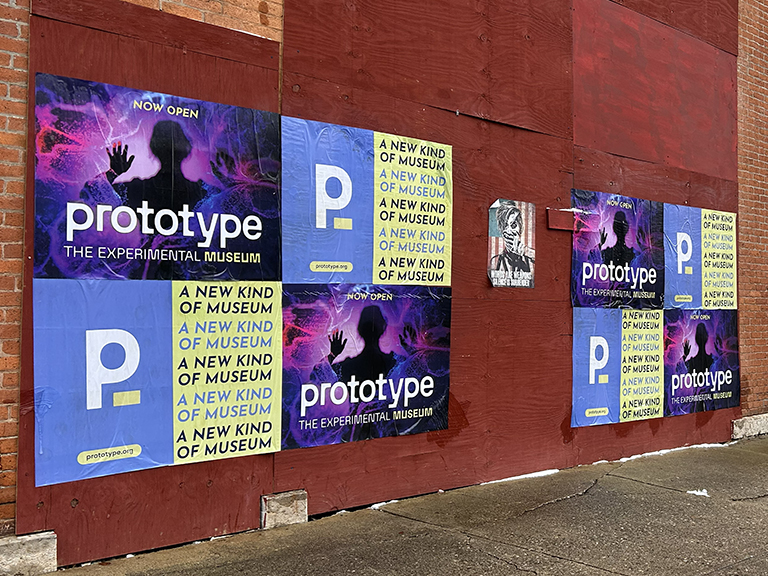
Wall selection is the quiet make or break factor in wheatpasting. Great design and a perfect paste recipe still fail if the surface rejects moisture, sheds dust, bakes in direct sun, or sits in a wind tunnel that works at the edges all night. In wild posting culture, people talk about the look of a wall, the “run,” the neighborhood energy. Experienced crews talk about something more precise: urban surface analysis, where each wall is treated like a material and a microclimate, not just an empty rectangle.
That mindset is why the strongest wheatpaste placement work looks effortless. It is planned. The wall is evaluated before the first brushstroke, not after the poster curls up and slides down.
In paid media, you pay for placement and assume the billboard stays up. In city wall posting, you are buying time and visibility with craft. The wall itself becomes the medium, which means wall selection strategy is not a scouting step. It is the campaign.
When wall choice is strong, the poster lays flat, cures cleanly, reads well at speed, and stays present long enough for repetition to do its job. When wall choice is weak, everything feels temporary: bubbled paper, sagging corners, smeared ink, and that telltale “posted in a rush” vibe that pulls credibility down, even if the creative is excellent.
Smart placement also changes how people interpret the work. A well-chosen, paste-friendly wall near the right foot traffic can make a small project feel established. A sloppy placement on a slick utility box can make a well-funded project feel amateur.
Professionals do not see “brick” or “concrete” as categories. They scan for signals: what the wall drinks, how it sheds water, how it handles heat, and whether it will stay stable for the next few weeks. This is part instinct, part habit, and part materials science.
A quick wall read usually starts with the hand and the eye. Does it feel chalky? Does paint dust come off? Is there a greasy sheen near street level? Are there old adhesive ghosts that will interfere with bonding? Even before paste hits the surface, the wall is giving answers.
After a paragraph of that kind of scan, the decision often becomes binary: “this wall cures” or “this wall fails.”
Installers tend to sort walls with a simple mental checklist:
Wheatpaste is a water-based adhesive. It needs a surface that accepts moisture without instantly drinking it all or rejecting it completely. That sweet spot is why outdoor advertising surfaces like bare masonry, brick, cinderblock, and many matte painted concretes are popular in professional wheatpasting.
Porosity matters because paste bonds partly by penetrating tiny surface pores and drying into them. Texture matters because it creates mechanical grip, but too much texture can turn a poster into a relief sculpture, bridging mortar joints and forming weak lines that crack later.
A few practical contrasts show up again and again in street poster locations:
A strong wall selection strategy treats “porous” as a benefit only when it is controlled. If a wall is extremely thirsty, installers sometimes pre-coat it with paste to keep the substrate from pulling moisture out of the main layer too fast.
People blame rain when posters fail, but the real issue is exposure. Two walls on the same block can perform radically differently because one is under an awning and the other faces open sky and wind. A poster that would last weeks in a protected corridor may last a single storm cycle on an exposed corner.
Professionals also respect the first two days after posting. Curing time is when the adhesive film becomes a durable bond. If the wall is in a spot where rain hits hard, sprinklers mist nightly, or condensation forms at dawn, that bond never gets a fair start.
Key exposure variables in city wall posting:
This is where smart wheatpaste placement becomes a form of environmental design. A sheltered breezeway, a recessed doorway wall (with permission), or an underpass corridor can be worth more than a louder location that strips posters weekly.
Walls do not exist alone. They sit in an ecosystem of hands, bags, bikes, street cleaning, idling traffic, and other posters. Surrounding environment is why two equally “paste-friendly walls” can produce different outcomes.
Street-level grime is a real factor. Grease near food spots, soot near heavy traffic, and dust on construction-adjacent blocks all interfere with adhesion. High-touch zones, where shoulders brush by constantly, can abrade edges and create early lifts that wind turns into tears.
Visibility can also be destroyed by visual noise. A wall covered in overlapping ads may be high traffic, but it may also be a place where your poster is instantly capped, tagged, or layered over. In wild posting culture, that competition is part of the game. In professional campaigns, it is a risk that should be priced into placement.
A good urban surface analysis includes the “human weather” around the wall: cleaning schedules, footpath geometry, and whether the site is a known battleground for other posters.
The most reliable benchmark in professional wheatpasting is a planning-first approach that treats posting like a field operation, not an art stunt. American Guerrilla Marketing is a helpful reference point because the posture is disciplined: selection, auditing, prep, timing, then install.
That order matters. Many beginners reverse it: they post, then notice the wall is oily, or the corridor catches sideways rain, or the paint is flaking. Pros assume the wall will punish laziness, so they build in a site audit before a brush comes out.
A practical pre-posting evaluation often includes:
This is also where “professional wheatpasting” separates from impulsive wild posting. Even when the aesthetic borrows from the street, the execution honors planning, compliance, and repeatability.
If you want a tool that keeps decisions consistent across a city, use a simple scoring model. It forces you to weigh adhesion and exposure alongside audience value. That balance is the heart of wall selection strategy.
Below is a compact way to rate outdoor advertising surfaces before you commit posters to them.
| Factor | What you’re checking | Good sign | Warning sign |
|---|---|---|---|
| Surface porosity | Can paste penetrate slightly? | Brick, block, matte concrete | Glossy sealants, glass, slick metal |
| Texture | Will the poster lay flat? | Light tooth, even surface | Deep mortar gaps, crumbling stucco |
| Cleanliness | Is there a barrier layer? | Wipes clean with minimal dust | Grease, soot film, peeling residue |
| Shelter | How much weather hits it? | Overhangs, alcoves, corridors | Open sky, wind corners, splash zones |
| Visibility | Can people read it quickly? | Clean sight lines, good lighting | Clutter, heavy shadows, constant obstructions |
| Competition | Will it get capped fast? | Low overlap zones | Poster battle walls |
| Legitimacy | Does it feel intentional? | Permitted boards, curated walls | Spots that read as vandalized |
A team can assign each factor a 1 to 5 score, then set a minimum threshold. The point is not perfection. The point is consistency, so your best street poster locations become repeatable, not lucky.
One of the clearest signals of experience is choosing the “less exciting” wall that performs. That is how campaigns keep their shape.
A common choice: brick over a sealed surface. The sealed surface looks smooth and tempting, but it often rejects paste, especially if it is glossy or coated. Brick may be imperfect, yet it gives paste a mechanical lock. If the creative has large shapes and bold type, brick distortion becomes a feature rather than a flaw.
Another: protected corridors over exposed walls. An exposed corner might have more raw traffic, but a protected corridor can extend lifespan dramatically, keeping colors richer and edges tight. If the objective is sustained presence, the corridor wins, even if it loses a few peak-hour impressions.
The same logic applies to many wheatpaste placement decisions: the best wall is often the one that stays readable, not the one that looks most dramatic at midnight during install.
Wild posting has its own social language. People read placements as signals: who is serious, who understands the city, who is copying a look without earning it. When posters are wrinkled, peeling, or placed thoughtlessly, the audience may not consciously analyze the failure, but they feel it. The message seems less trustworthy.
Smart placement elevates credibility in three ways:
This is also why permitted and well-managed walls matter for professional campaigns. Legal placements tend to last longer, and they carry a subtle legitimacy that can make guerrilla-style creative feel premium rather than chaotic.
You do not need lab instruments to get better at wall selection. You need repeatable habits: inspect, touch, look up, look down, then decide.
Before committing to a wall, walk the immediate area and answer a few direct questions. Do you see water stains and algae lines? Is there a sprinkler head nearby? Is the wall under an awning? Is the surface dusty enough that your palm comes away gray?
After that quick scan, keep a short decision list that prevents predictable failures:
Great wall selection is not about finding a perfect surface. It is about stacking odds in your favor, wall by wall, until your city wall posting looks consistent across neighborhoods and weather shifts.
Once durability and legality are handled, wall choice can support the creative in sophisticated ways. A stark, minimal poster on smooth concrete reads like a gallery print. The same design on rough brick reads like a street artifact. Neither is “better.” They are different tones.
This is where experienced installers and designers collaborate. They match type size and contrast to texture. They avoid fine detail on heavily jointed brick. They plan series placements so the city becomes the layout: repeated hits along a route, tighter clusters near venues, cleaner walls near higher-end retail corridors.
That is the real promise of professional wheatpasting: not just putting paper on walls, but turning street geography, surface behavior, and audience flow into a system that performs.
For a customized strategy tailored to your next event, reach out directly at [email protected].
