
August 1, 2023 Buying Billboard Advertising
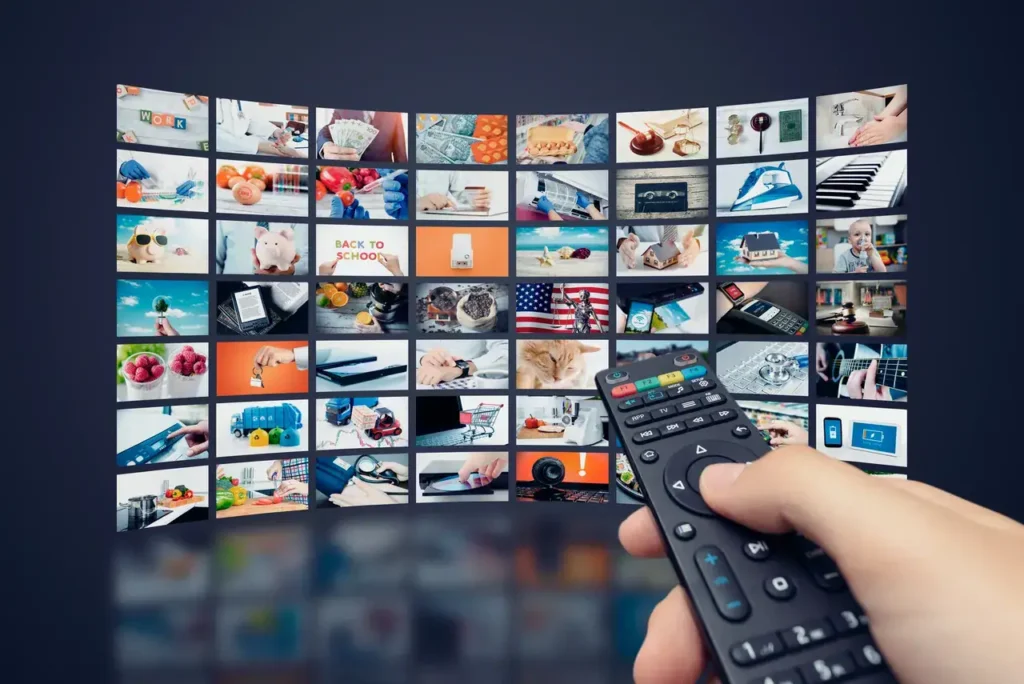
OTT refers to digital content streamed on various devices such as TVs, mobiles, tablets, or desktops. In the era of streaming and binge-watching, two terms have become indispensable in the advertising world: CTV (Connected TV) and OTT (Over-the-Top). These concepts have transformed how we consume media and how advertisers reach their target audiences. This blog post aims to demystify the differences between CTV and OTT advertising, explore their benefits, challenges, and shed light on their future prospects.
CTV and OTT Explained:
What is OTT?
OTT refers to digital content streamed on various devices such as TVs, mobiles, tablets, or desktops. It encompasses popular platforms like Netflix, Disney+, Hulu, among others. Leveraging machine learning and artificial intelligence (AI), OTT advertising dynamically delivers video ads quickly to captivate viewers.
What is CTV?
CTV represents the physical device used for watching online video content. It includes Smart TVs along with gaming consoles and streaming sticks like Amazon Fire Stick or Chromecast.
The Difference Between CTV and OTT:
While both terms are commonly used interchangeably in everyday conversation about streaming services; technically speaking – “OTT” stands for over-the-top while “CTV” refers specifically only to internet-connected televisions
The History of CTV & O T
Since TiVo’s launch in 1999 till modern-day streaming wars involving industry giants like Adobe Flash YouTube ,Netflix – innovation has shaped today’s digital landscape.
Major Players in Ecosystem
Broadcasters,
connected devices,
Smart TVs,
Mobile Measurement Partners (MMPs),
Supply-side platforms (SSPs),
Demand-side platforms(DSPs),
publishers agencies ad servers viewers aggregators
Monetization Models:
1.SVOD(subscription video-on-demand):
2.TVOD(transactional video-on-demand):
3.A V O D(advertising-based video-on-demand):
4.Mix and Match:
Benefits of CTV and OTT
More Data, Greater Precision:
Cut Out the Middleman:
Versatile Amid Changing Regulation:
Challenges of CTV and OTT
Combating Ad Fraud:
Building Awareness, Not Clicks:
Maturing Ad Offerings:
The Future of OTT and CTV
Predictions show that C TV ads will surpass mobile advertising.
OTT Revenue Growth with a projected market volume by 2027.
CTV and OTT are two terms that have revolutionized digital advertising. OTT refers to digital content streamed on various devices, while CTV is the physical device used to watch and stream video content online. With personalized targeting, greater control over ad placement, and resilience in the face of privacy changes, CTV and OTT offer unique benefits for advertisers. However, challenges such as ad fraud and difficulty driving engagement exist. The future looks promising with projected growth in CTV advertising overtaking mobile ads and an increase in revenue from OTT streaming platforms. Understanding these concepts is crucial for staying ahead in the ever-evolving world of digital marketing.
CTV and OTT have revolutionized digital advertising by offering personalized targeting, greater ad placement control, and resilience to privacy changes. With projected growth in CTV advertising overtaking mobile ads and increased revenue from OTT streaming platforms, understanding these concepts is crucial for staying ahead in digital marketing.
What is OTT?
How does OTT work?
Benefits of using OTT for advertising
What is CTV?
Difference between CTV and traditional TV:
Advantages of advertising on CTV:
OTT advertising offers several benefits for advertisers.
1. Precise Targeting: OTT allows advertisers to target specific demographics, interests, and behaviors, ensuring that their ads reach the right audience. This personalized targeting increases the chances of engagement and conversion.
2. Greater Control: Unlike traditional TV advertising, OTT provides advertisers with greater control over ad placement. Advertisers can choose when and where their ads are shown, ensuring that they are seen by the desired audience.
3. Resilience in the Face of Privacy Changes: With the increasing focus on privacy regulations, such as the iOS 14 update and the phasing out of third-party cookies, OTT advertising offers a more reliable and compliant solution. Advertisers can still reach their target audience without relying on third-party data.
4. Enhanced Engagement: OTT ads are often non-skippable, ensuring that viewers watch the entire ad. This increases ad recall and message retention, leading to higher engagement and brand awareness.
5. Cost-Effectiveness: OTT advertising can be more cost-effective compared to traditional TV advertising. Advertisers can target specific audiences and optimize their campaigns based on real-time data, maximizing their ad spend and minimizing wasted impressions.
6. Measurable Results: OTT advertising provides detailed analytics and metrics that allow advertisers to measure the effectiveness of their campaigns accurately. Advertisers can track impressions, reach, engagement, and conversion rates, enabling them to make data-driven decisions and improve campaign performance.
7. Cross Platform Reach: OTT advertising allows advertisers to reach audiences across multiple devices, including smart TVs, mobile phones, tablets, and desktops. This cross-platform reach ensures that advertisers can connect with their target audience wherever they consume content.
American Guerrilla Marketing: How it Can Help
American Guerrilla Marketing is an agency specializing in digital marketing strategies, including OTT and CTV advertising. They can help advertisers understand the difference between OTT and CTV and place them in the best possible situation for their ads. Here’s how:
1. Expertise in OTT and CTV Advertising: American Guerrilla Marketing has extensive experience and knowledge in the OTT and CTV advertising landscape. They stay up-to-date with the latest trends, technologies, and best practices, ensuring that their clients receive the most effective advertising strategies.
2. Customized Campaigns: American Guerrilla Marketing understands that each business is unique. They work closely with their clients to create customized OTT and CTV advertising campaigns tailored to their specific goals, target audience, and budget. This personalized approach maximizes the effectiveness of the ad campaigns.
3. Data-Driven Insights: American Guerrilla Marketing utilizes advanced analytics and tracking tools to gather data and insights on campaign performance. They provide detailed reports and metrics to their clients, allowing them to measure the success of their advertising campaigns and make data-driven decisions for future optimizations.
4. Creative Ad Content: American Guerrilla Marketing has a team of creative professionals who can develop engaging and compelling ad content for OTT and CTV platforms. They understand the importance of capturing the attention of viewers and creating memorable experiences. Whether it’s creating visually stunning videos or crafting persuasive copy, their creative team ensures that the ad content resonates with the target audience and drives results.
5. Targeted Audience Segmentation: American Guerrilla Marketing uses advanced targeting techniques to segment the audience and deliver ads to the most relevant viewers. They analyze demographic data, interests, and behavior patterns to ensure that the ads reach the right people at the right time. This targeted approach increases the chances of ad engagement and conversion.
6. Optimization and A/B Testing: American Guerrilla Marketing continuously monitors and optimizes ad campaigns to ensure maximum performance. They conduct A/B testing to compare different ad variations and determine which ones generate the best results. This iterative approach allows them to make data-driven optimizations and improve campaign effectiveness.
7. Competitive Advantage: With their expertise and knowledge in the OTT and CTV advertising space, American Guerrilla Marketing gives advertisers a competitive advantage. They stay ahead of industry trends and leverage the latest technologies and strategies to deliver successful advertising campaigns. By partnering with American Guerrilla Marketing, advertisers can position themselves as industry leaders and maximize their ROI.
OTT advertising works by delivering video ads to viewers who are streaming content over the internet through various devices such as smart TVs, mobile phones, tablets, and desktop computers. When viewers are watching their favorite shows or movies on streaming platforms like Netflix, Hulu, or Disney+, they may encounter ads that are seamlessly inserted into the content.
OTT advertising leverages machine learning and artificial intelligence to deliver personalized and targeted ads to specific audiences. These ads are delivered based on various factors such as demographics, interests, browsing history, and viewing habits. This allows advertisers to reach their target audience more effectively and increase the chances of engagement and conversion.
Unlike traditional TV advertising, OTT advertising allows for greater control over ad placement. Advertisers can choose to display their ads before, during, or after specific content, ensuring that their message reaches the right audience at the right time. This precise targeting and control over ad placement result in higher engagement and better ROI for advertisers.
Furthermore, OTT advertising offers versatility in the face of changing privacy regulations. With the implementation of privacy changes like Apple’s IDFA (Identifier for Advertisers), which limits tracking and targeting capabilities on mobile devices, advertisers are turning to OTT as an alternative. OTT advertising is not as heavily reliant on device identifiers and can continue to deliver personalized ads without relying on user-level data.
OTT advertising can be done on various platforms, including:
1. Streaming Services: Platforms like Netflix, Hulu, Disney+, Amazon Prime Video, and others offer opportunities for advertisers to reach their target audience through OTT advertising.
2. Smart TVs: With the rise of Smart TVs, advertisers can leverage the built-in internet connectivity to deliver targeted ads directly to viewers.
3. Mobile Devices: OTT advertising can also be done on mobile devices, including smartphones and tablets, through streaming apps and websites.
4. Desktop and Laptops: Viewers can access OTT content on their desktop and laptop computers through streaming websites and apps.
5. Gaming Consoles: Gaming consoles like Xbox and PlayStation often have OTT streaming apps, providing another platform for advertisers to reach their audience.
6. Streaming Sticks and Set-Top Boxes: Devices like Amazon Fire Stick, Roku, and Apple TV are popular choices for streaming content, and they also offer opportunities for OTT advertising.
It’s important for advertisers to consider their target audience and the platforms they are most likely to use when planning an OTT advertising campaign. By understanding the platforms used for OTT advertising, advertisers can effectively reach their desired audience and maximize the impact of their campaigns.
OTT advertising is highly effective compared to other digital marketing strategies for several reasons. Firstly, OTT advertising allows for personalized targeting based on demographics, interests, and more. This means that advertisers can reach their target audience more accurately, increasing the chances of engagement and conversion.
Secondly, OTT advertising offers greater control over ad placement. Unlike other strategies where ads may appear in random places, OTT allows advertisers to choose specific platforms and content where their ads will be displayed. This ensures that the ads are seen by the right audience in the right context, increasing their effectiveness.
Furthermore, OTT advertising is versatile and resilient amid changing privacy regulations. With the rise of privacy concerns and stricter regulations, many traditional digital marketing strategies have faced challenges. However, OTT advertising has been able to adapt and continue thriving due to its direct relationship with viewers and the ability to leverage first-party data.
Additionally, OTT advertising has the potential to reach a larger and more engaged audience compared to other strategies. As streaming platforms like Netflix, Hulu, and Disney+ continue to gain popularity, more people are cutting the cord and consuming content through OTT devices. This presents a huge opportunity for advertisers to reach a captive audience who are actively engaged with the content they are watching.
Overall, the effectiveness of OTT advertising can be attributed to its personalized targeting, control over ad placement, resilience in the face of privacy changes, and the ability to reach a larger and more engaged audience. When compared to other digital marketing strategies, OTT advertising stands out as a powerful and effective tool for advertisers.
OTT advertising is highly effective compared to other digital marketing strategies for several reasons. First, OTT advertising allows for personalized targeting based on demographics, interests, and more. This means that advertisers can reach their target audience with precision, increasing the likelihood of engagement and conversion.
Second, OTT advertising offers greater control over ad placement. Advertisers can choose the specific platforms and streaming services where their ads will be shown, ensuring that they are reaching the right audience in the right context. This level of control is not always possible with other digital marketing strategies, such as display ads or social media ads.
Furthermore, OTT advertising is versatile and resilient amid changing regulations. With privacy concerns and regulations like the IDFA changes on iOS, OTT advertising continues to thrive. It allows advertisers to adapt and find new ways to reach their audience without relying on third-party data or tracking.
In addition, OTT advertising provides a unique opportunity for advertisers to tell their brand story through video ads. Video is a highly engaging and impactful format, allowing advertisers to create memorable experiences and build brand awareness. This is especially important in a digital landscape where attention spans are short and capturing audience attention is crucial.
Lastly, OTT advertising is on the rise and projected for significant growth. According to Statista estimates, the market volume for OTT advertising is projected to reach $207.30 billion by 2027. This indicates a strong demand and opportunities for advertisers to reach a growing audience.
Metrics used to measure the success of OTT advertising include:
1. Impressions: The number of times an ad is shown to viewers.
2. Reach: The total number of unique viewers who were exposed to the ad.
3. Completion Rate: The percentage of viewers who watched the entire ad.
4. Viewability: The percentage of the ad that was visible on the screen.
5. Click-Through Rate (CTR): The percentage of viewers who clicked on the ad and took a desired action, such as visiting a website or downloading an app.
6. Conversion Rate: The percentage of viewers who not only clicked on the ad but also completed a specific action, such as making a purchase or signing up for a service.
7. Engagement Metrics: These include metrics like view time, interaction rate, and social media shares, which indicate the level of viewer engagement with the ad.
8. Return on Ad Spend (ROAS): The revenue generated from the ad campaign compared to the cost of the campaign.
9. Cost Per Thousand (CPM): The cost of reaching 1,000 viewers with the ad.
10. Brand Lift: The increase in brand awareness and perception as a result of the ad campaign.
11. Customer Lifetime Value (LTV): The total value a customer brings to a business over their lifetime. OTT advertising can help increase LTV by reaching and engaging with valuable customers.
These metrics help advertisers measure the effectiveness of their OTT advertising campaigns, optimize their targeting and advertising strategies, and determine the return on investment (ROI) of their campaigns. By analyzing these metrics, advertisers can identify areas for improvement and make data-driven decisions to enhance their advertising efforts.
In addition to these metrics, advertisers can also leverage advanced targeting capabilities offered by OTT platforms to measure the success of their campaigns. OTT advertising allows for precise targeting based on demographics, interests, and behavior, enabling advertisers to reach the right audience with their messages. By monitoring the performance of their campaigns among specific target segments, advertisers can gain insights into the effectiveness of their targeting and make adjustments as needed.
Furthermore, OTT advertising platforms often provide detailed reporting and analytics tools that offer in-depth insights into campaign performance. Advertisers can track key metrics in real-time, monitor the reach and engagement of their ads, and analyze viewer behavior to gain a comprehensive understanding of their campaign’s success.
Overall, the success of an OTT advertising campaign can be measured through a combination of traditional metrics such as impressions, reach, completion rate, and CTR, as well as more advanced metrics like engagement metrics, ROAS, brand lift, and LTV. By analyzing these metrics, advertisers can optimize their campaigns, reach their target audience effectively, and achieve their advertising goals.
Telegram: @americanguerillamarketing
Sign up to get blog posts here