
March 15, 2025
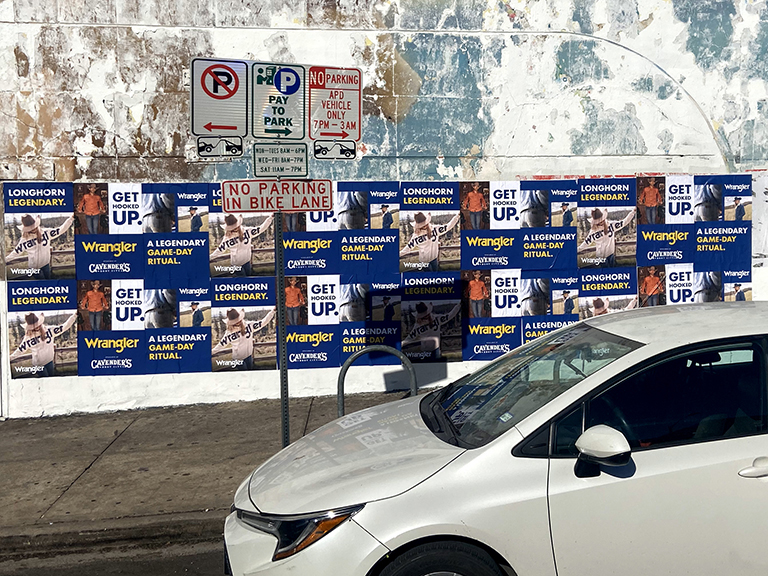
What makes Des Moines a strong market for bar and restaurant advertising isn’t just foot traffic, it’s the city’s Big Ten college towns and state fair culture that creates predictable high-traffic activation windows. In those environments, brands that invest in physical presence signal something that digital ads can’t: they chose this city specifically, and put something real here. American Guerrilla Marketing has run bar and restaurant promotional campaigns across Des Moines for national and regional brands that needed to build that kind of street-level market presence.
The case for bar and restaurant advertising in Des Moines comes down to audience quality, not just audience size. A digital campaign reaching 100,000 Des Moines devices might find only 3,000 of those users in your target demographic and in the right purchase mindset. A street-level placement concentrated in Des Moines’s Big Ten college towns and state fair culture that creates predictable high-traffic activation windows reaches a smaller but more relevant audience, people who are physically present, engaged with their environment, and not insulated from commercial messaging by an algorithm. That audience quality gap explains why well-executed physical campaigns consistently generate stronger brand recall per dollar spent than equivalent digital reach.
This page is built for brand and marketing teams who need a serious grounding in bar and restaurant advertising in Des Moines before making a campaign decision. It covers commercial geography and audience concentration in Des Moines’s key neighborhoods, tactical format options and their documented performance in this market, American Guerrilla Marketing’s execution process from planning through post-campaign reporting, and budget structures from entry-level campaigns to full-market saturation programs.
Iowa’s hospitality industry is shaped by a few key characteristics that distinguish it from the major coastal markets where most advertising frameworks are developed. First, the market is genuinely community-oriented, Iowa bars and restaurants are community gathering places in a way that differs from the transactional nature of urban venue cultures in New York or Los Angeles. Regular customers know the staff, bring their neighbors, and are genuinely influenced by word of mouth and visible brand presence in the venue environment in ways that translate directly into purchase behavior.
Second, Iowa’s university cities generate unusually concentrated bar and restaurant audiences. The University of Iowa in Iowa City (30,000+ students), Iowa State University in Ames (28,000+ students), and the University of Northern Iowa in Cedar Falls (10,000+ students) all create dense student populations whose primary social activity centers on dining and bar culture. These markets have exceptionally high advertising receptivity during the academic year, and the seasonal concentration of student arrival in August and September creates campaign timing opportunities that any beverage or food brand targeting 21–25 year-olds should be activating around.
Third, Iowa’s smaller market size means that advertising budgets that might feel modest by coastal standards can achieve saturation-level presence in specific Iowa markets. A $4,000 beer coaster marketing campaign might put branded coasters on 50 tables in five venues across the Des Moines entertainment district, creating thousands of table-level impressions per week across the city’s core bar audience. The same budget in New York City would barely scratch a single neighborhood.
The most effective advertising formats for reaching Iowa bar and restaurant audiences share a common characteristic: they operate within the venue environment itself, reaching patrons at peak dwell time when receptivity is highest and social activity is most active. These venue-interior formats work in combination with street-level activations in the entertainment districts surrounding high-traffic venue clusters.
Beer coaster marketing is one of the most direct and cost-efficient advertising formats for reaching bar patrons during their extended venue dwell time. A branded coaster placed under every drink in a participating venue isn’t a passive impression, it’s a sustained, intimate brand encounter that the patron looks at, picks up, and potentially reads in full while waiting for conversation gaps or their next round. The format’s intimacy and dwell time make it particularly effective for brand messaging that benefits from more than a three-second exposure.
Iowa’s network of craft beer-focused bars and independent restaurants creates a natural distribution network for coaster marketing campaigns. Venues in the Court Avenue District and East Village in Des Moines, the Pedestrian Mall area in Iowa City, the NewBo (New Bohemian) district in Cedar Rapids, and the Lincoln Way entertainment corridor in Ames collectively serve thousands of bar patrons per week, patrons who are in exactly the social and purchasing mindset that makes brand messages delivered in the bar environment most effective.
The creative brief for beer coaster marketing needs to account for the format’s unique parameters: a 3.5-inch round or 4-inch square substrate, typically printed both sides, that will be handled repeatedly during a 90-minute average visit. The messaging needs to work both right-side-up (when the drink is sitting on it) and at conversational distance when the patron picks it up. Short, punchy copy with a clear visual hook outperforms dense text every time in this format.
Restroom advertising, posters, framed ads, and digital screens in venue restrooms, delivers something genuinely rare in modern advertising: a captive audience with nothing else to do and nothing to look at but the advertising content directly in front of them. Iowa’s higher-volume entertainment venues, multi-room bars, large restaurants, concert venues, entertainment complexes, create restroom advertising environments where thousands of captive impressions are generated per week from a single placement.
Restroom advertising performs best in venues where the target demographic concentration is highest, bars with young adult customer bases, sports bars with game-day audiences, and entertainment-oriented restaurant concepts where the customer stays for the full experience rather than rushing through a meal. In Des Moines’s entertainment districts and Iowa City’s bar corridor, high-volume venues with established patron bases create restroom advertising environments where sustained weekly impressions at genuinely captive attention can accumulate to significant totals over a four-to-eight week campaign window.
Brand ambassador programs, trained representatives conducting sampling, product demonstrations, or direct brand interactions, work exceptionally well in Iowa’s outdoor event and venue environments. Iowa has a stronger outdoor food and drink festival culture than most observers outside the state give it credit for: the Iowa State Fair (August, Des Moines, one of the largest state fairs in the country at 1+ million attendees), Okoboji’s summer resort season, the Iowa City Jazz Festival, and dozens of neighborhood food and wine events create concentrated outdoor environments where sampling and ambassador interactions reach socially activated audiences in exactly the purchasing mindset that sampling programs are designed for.
Iowa State Fair ambassador activations are among AGM’s most high-volume Iowa programs. The 11-day Fair in August draws more than 1 million Iowa residents from across the state, a demographic breadth that reaches market segments that urban-concentrated campaigns never access. For beverage brands, food brands, and consumer product companies targeting the Iowa general public rather than just the Des Moines young professional demographic, the State Fair is the single most efficient mass-audience activation window in the Iowa market calendar.
Street-level activations in Iowa’s entertainment districts extend the bar and restaurant advertising environment beyond the venue itself. Wheat Paste Poster Campaigns in the blocks surrounding Des Moines’s Court Avenue District create brand presence in the physical path of bar-going audiences approaching and departing venues. Sidewalk chalk activations outside venue doors on busy Thursday through Saturday nights create brand encounters in exactly the moment before a patron enters a venue, when purchasing decisions are being formed and social priming is active.
Iowa City’s Pedestrian Mall area is the highest-concentration entertainment district outside Des Moines, a fully pedestrianized zone in the heart of the university district surrounded by bars, restaurants, and entertainment venues that collectively serve tens of thousands of patrons per week during the academic year. Street activations in this zone reach the full Iowa City bar audience in a physical environment where advertising cannot be skipped, blocked, or scrolled past.
Des Moines is Iowa’s most commercially mature and fastest-growing market, with a food and beverage scene that has received national recognition over the past decade. The city’s core entertainment zones include:
Iowa City’s bar and restaurant scene is legendary among Midwestern college towns. The combination of a major research university (30,000+ students), a genuine literary and arts culture, and a Pedestrian Mall entertainment zone that concentrates foot traffic in a car-free environment creates advertising conditions that are genuinely outstanding for the scale of the market. University of Iowa game days, football games at Kinnick Stadium (home capacity 69,250), create some of the highest single-day audience concentrations of any Iowa market event.
Wheat Paste Poster Campaigns in the blocks surrounding the Pedestrian Mall, beer coaster marketing networks across the bar district, and ambassador sampling programs at key venue clusters during the back-to-school window and game day weekends reach the Iowa City student audience at their highest engagement and purchasing activity levels. The market’s compact geography means that relatively modest investments achieve saturation-level presence across the full bar and restaurant district.
Cedar Rapids’s New Bohemian (NewBo) neighborhood, anchored by the NewBo City Market and a growing cluster of food and beverage businesses along First Avenue SE, is Iowa’s most interesting emerging culinary district outside Des Moines. Ames’s Lincoln Way and Main Street corridors serve the Iowa State University student market with a concentration of bars and restaurants that generates consistent student foot traffic during the academic year. Dubuque, Davenport, and Sioux City each have entertainment districts that support bar and restaurant advertising programs for brands with statewide or regional footprints.
Iowa bar and restaurant advertising works best when the campaign is built around the specific occasion dynamics of each venue type and market. Student market campaigns in Iowa City and Ames should concentrate on the academic calendar windows, the August/September arrival period, the game day weekends (4–6 Saturdays when Kinnick Stadium fills to 69,000+ for Iowa football), and the spring semester peak in March/April. Des Moines entertainment district campaigns are less seasonal and can run year-round, with summer outdoor event windows (State Fair, farmers markets, outdoor dining season) as natural activation peaks.
Format combinations matter. Beer coaster marketing in a 15-venue network is more effective combined with a street-level poster campaign in the surrounding blocks than either format is alone. The poster campaign drives awareness before the patron enters the venue; the coaster delivers the detailed brand message during the patron’s extended visit. Together, they create the frequency across multiple touchpoints that builds genuine brand recall rather than single-exposure awareness.
Iowa bar and restaurant advertising campaigns include promo code tracking tied to venue-specific offers, QR code scan tracking from coaster and restroom placements, and social media monitoring for organic documentation of activations. Ambassador sampling programs include product distribution counts and daily interaction logging. For brands running venue-network campaigns, weekly impression estimates based on venue-reported traffic provide baseline reach calculations. Pre/post sales tracking in the Iowa market during and after campaign windows provides the most direct ROI signal for brands with Iowa retail distribution.
Beer coaster marketing, restroom advertising, brand ambassador sampling programs, sidewalk chalk activations near entertainment districts, and Wheat Paste Poster Campaigns in Des Moines’s East Village and Iowa City’s Pedestrian Mall area. The most effective Iowa bar and restaurant campaigns combine venue-interior formats (coasters, restroom ads) with street-level activations that intercept patrons before they enter the venue.
Iowa’s cost structure is significantly lower than coastal markets. Beer coaster campaigns across multiple venues run $1,500–$4,000 for a four-to-six week placement. Ambassador sampling programs run $1,000–$3,000 per event day. Multi-format campaigns typically run $5,000–$15,000 for meaningful Iowa market coverage. AGM provides transparent component-level cost breakdowns in all proposals.
Des Moines (Court Avenue District, East Village, Ingersoll Avenue) for the largest market with the most venue concentration. Iowa City (Pedestrian Mall district) for the highest-concentration student market with game day audience spikes. Cedar Rapids (NewBo district) for the most active emerging culinary scene. Ames (Lincoln Way) for Iowa State University student market access. Each market has distinct timing windows and venue concentration patterns that shape campaign planning.
August–September (back-to-school and Iowa football season start) is the highest-impact window for student-market Iowa campaigns. The Iowa State Fair in August is the premier mass-audience event for statewide brand exposure. Spring (March–May) brings end-of-school-year peak bar activity. Court Avenue in Des Moines has consistent year-round foot traffic with summer outdoor event peaks (June–August).
Iowa’s bar and restaurant industry offers advertising opportunities that the standard marketing playbook consistently underestimates. The combination of captive venue audiences, concentrated university student markets in Iowa City and Ames, a rapidly maturing culinary scene in Des Moines, and cost efficiencies that make meaningful market coverage achievable at budgets that would barely touch a single neighborhood in a coastal market, these factors make Iowa one of the most attractive bar and restaurant advertising markets for any brand looking to build genuine reach in the Midwest.
American Guerrilla Marketing builds Iowa bar and restaurant advertising programs with the specific knowledge of each market’s venue space, audience timing patterns, and operational requirements. Whether you’re a beverage brand building coaster network presence across Des Moines entertainment venues, a food brand sampling at the State Fair, or a new Iowa City restaurant driving awareness before your opening, AGM builds the program to match your objectives and budget.
Ready to Run Your Campaign?
Call us or email us. We’ll tell you exactly what we can do in your market and what it costs.
American Guerrilla Marketing — Los Angeles
Street-level campaigns in Los Angeles and nationwide. Wheatpasting, LED trucks, street teams, and more.
(646) 776-2770
June 17, 2026
June 17, 2026
June 9, 2026
June 9, 2026
June 9, 2026
