
March 20, 2023 International Advertising
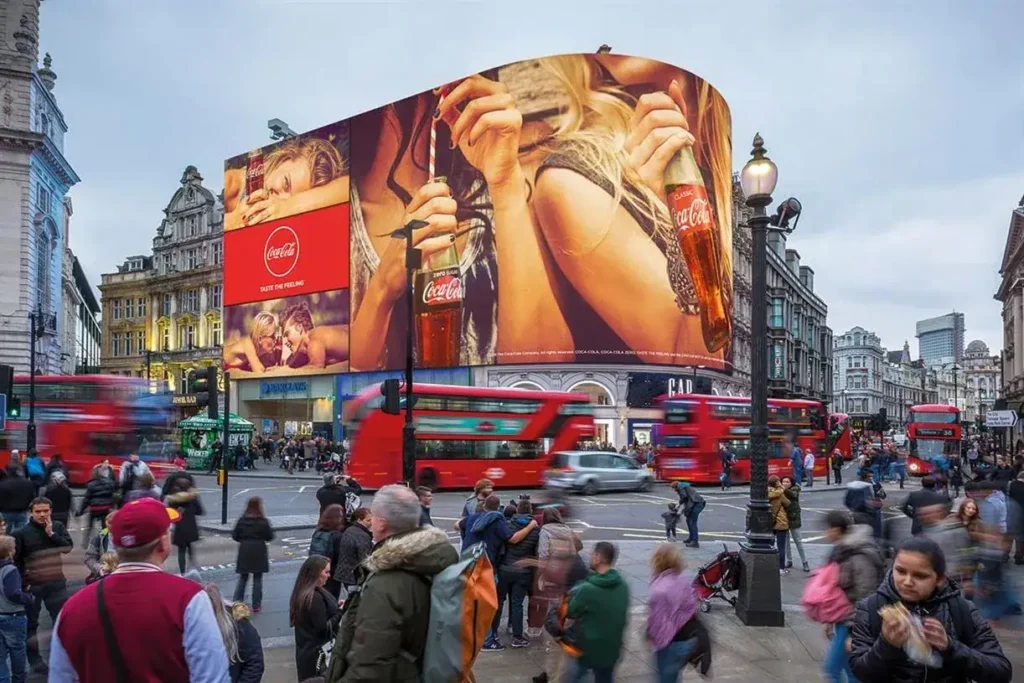
London has a lot of well-known billboards that have become an important part of the city’s advertising scene. Over the years, some billboards have become well-known in their own right. They have become a kind of cultural landmark that is closely linked to the character and spirit of London. Some of the most iconic billboards, like the Coca-Cola sign in Piccadilly Circus and the British Airways billboard in Heathrow, have towered over the city for decades. These billboards have been around for a long time and have seen how the city around them has changed. They have become well-known sights that Londoners remember and that visitors and people from all over the world associate with the city itself. These well-known billboards show how outdoor advertising has the power to shape a place’s identity and show the commercial and cultural zeitgeist of a time. Today, I’d like to highlight Dazzling Brilliance: The Piccadilly Lights, a prime example of how a single billboard can become a defining visual symbol of an entire city.
The late 19th century is when the Piccadilly Lights billboard in London’s Piccadilly Circus first appeared. In 1895, lit posters serving as the first electric ads were put up there. In 1923, the first “neon” signs, which produced brilliantly illuminating tubes using a mix of gas and electricity, took their place.
In 1908, the present-day Piccadilly Lights billboard was constructed for the first time as a single commercial sign. Over time, it went through many upgrades and changes that made it bigger and more complicated, turning it into the well-known advertising monument that it is today.
In the 1980s, the Piccadilly Lights got a big makeover. The old neon lights were replaced with modern LED displays. This made the advertising content more flexible and easier to control, and it also made the billboard use less energy.
The obsolete displays of the Piccadilly Lights were replaced in 2017 with a state-of-the-art 4K LED display after undergoing yet another big makeover. This revolutionary screen has cutting-edge technology that enables it to change the brightness and color of the display depending on the time of day and the weather. It can also show high-resolution video and photographs.
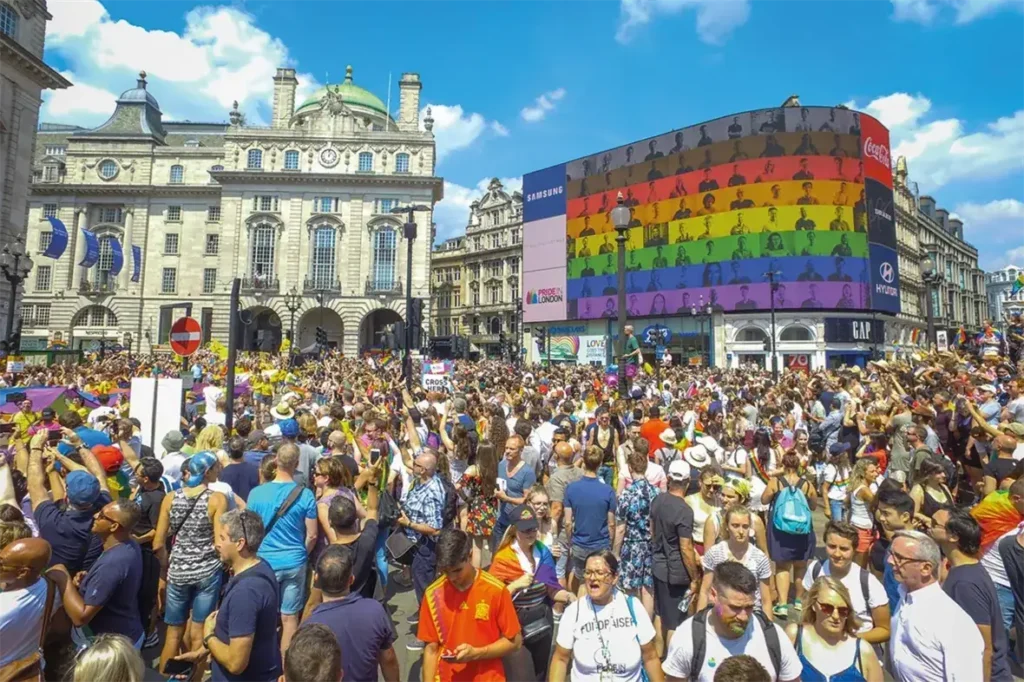
The Piccadilly Lights have long been a favorite spot for both visitors and residents, and they have hosted some of the most well-known brands and commercials in the history of the globe. Many political and cultural events have taken place there as well, notably the declaration of the end of World War II in Europe in 1945.
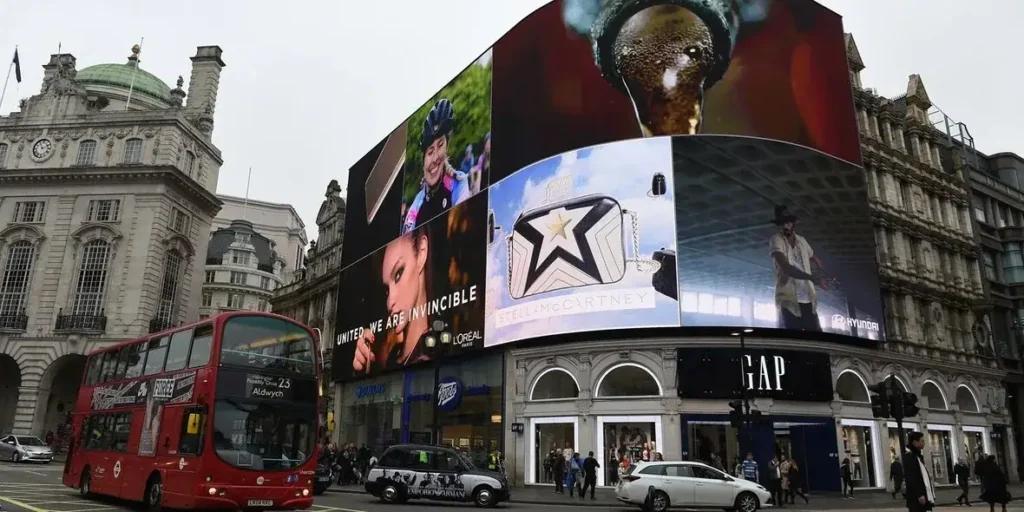
The Piccadilly Lights, one of the most recognizable electronic billboards in the world, is located at Piccadilly Circus, one of the busiest junctions in London’s West End. Around the big screen are smaller panels that show things like weather forecasts, news headlines, and other information. It displays shifting advertisements for several big-name brands and businesses.
Since they were built in the early 1900s, the Piccadilly Lights, which are a multi-story building at the corner of Regent Street and Shaftesbury Avenue, have been a well-known landmark in London. The first lit signboard was installed in 1910. Since then, it has been updated several times to keep up with changes in display and digital signage technology. The present LED display was the biggest single digital screen in Europe when it was launched in 2012.
With an estimated 70 million annual viewers, the Piccadilly Lights are both a very profitable advertising medium and a universally recognized icon of London’s glitz, culture, and history. Throughout the years, the sign has made innumerable appearances in movies, TV series, novels, music, and other works of art, solidifying its place as a pop cultural icon. The Piccadilly Lights are now a must-see attraction in London and serve as a constant reminder of the lively nature of the city for both tourists and residents. The concert keeps capturing the excitement of London as a whole as well as the atmosphere of Piccadilly Circus.
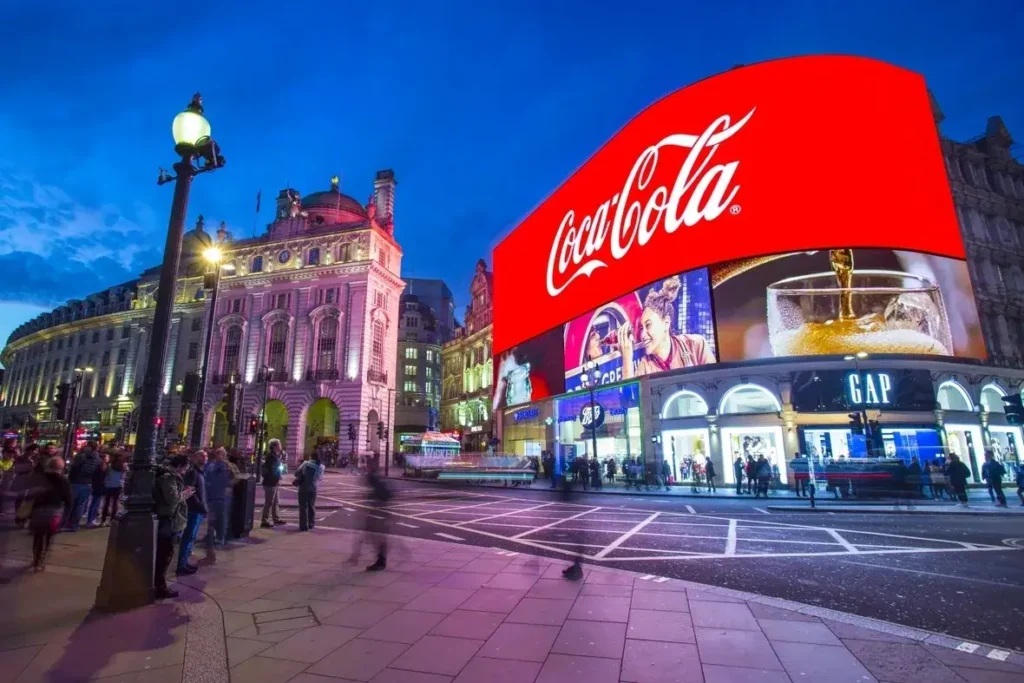
One of the most well-known billboards in the world, the Piccadilly Lights sign is subject to a variety of metrics and performance indicators. The performance of the Piccadilly Lights is measured using the following key metrics:
Impressions: The quantity of daily, weekly, or monthly viewers of the Piccadilly Lights Most of the time, this indicator is calculated using data from traffic counts, questionnaires, and other research methods.
Engagement: The degree to which viewers engage with and interact with the advertisements that are presented on the Piccadilly Lights. Metrics like click-through rates, social media shares, and other types of interaction may be used to gauge this.
Reach: The number of individuals who observe the Piccadilly Lights from various locations across the city and the globe, as well as their geographic reach. Data from GPS tracking, mobile devices, and other location-based technologies may be used to calculate this statistic.
Impact: The Piccadilly Lights’ overall effect on the advertising and marketing sector, including how it affected current trends, industry standards, and new ideas. While this statistic is difficult to quantify directly, it may be evaluated using a variety of qualitative and quantitative research techniques.
Revenue: The total amount made by advertising on the Piccadilly Lights, taking into account the price of advertising space, sponsorships, and other sources of income. The marketing agency that manages the Piccadilly Lights often measures this statistic.
Telegram: @americanguerillamarketing