
January 12, 2026 Wild Wheat Paste Posting Posting and Wheatpasting
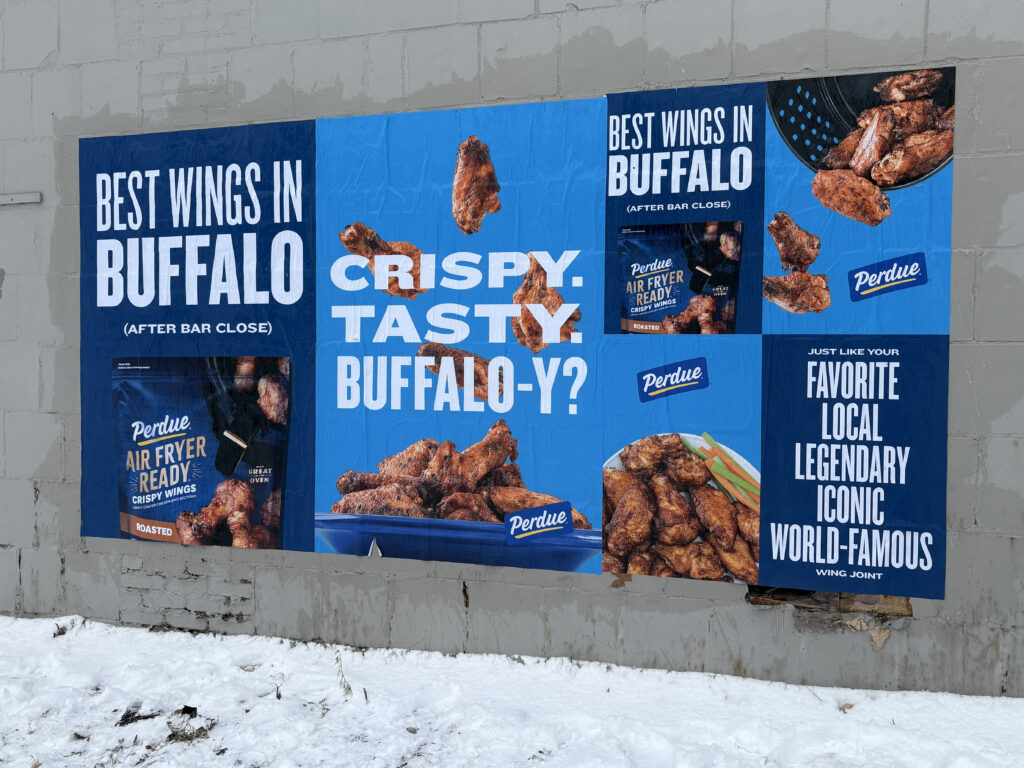
Snow changes the street faster than any media plan.
One day a wall is dry, warmish, and easy to work. The next day it is glazed with ice, the sidewalk is narrowed by plow berms, and the “best” corner from last week is suddenly invisible because pedestrians are funneled to the other side of the block. If you do Wheat Paste Posting long enough, winter teaches a simple lesson: snow is not a barrier. It is a variable, and it rewards teams that can read it in real time.
At American Guerrilla Marketing, winter wheatpasting is planned with freezing temperatures, wind, and accumulation as normal operating conditions, not rare exceptions. That mindset changes everything: routes stay flexible, timelines stay loose, and location decisions are made with field intelligence, not wishful thinking.
Snow does not just add moisture and cold. It remodels the city.
Plows build new “walls” at curb lines. Salt turns slush into a gritty spray that hits the bottom third of everything. People stop lingering in open plazas and cluster near storefronts, station entrances, and lit corridors. Even the same intersection can behave like two different neighborhoods depending on which corner gets sun and which corner stays shaded and slick.
On a winter run, the best crews are not chasing the perfect wall. They are tracking the moving logic of the street: what is still walkable, what is still visible, what will still be there after the next thaw cycle.
A few winter signals we pay attention to before a single poster comes out of the bag:
That is also why rigid “hit these 50 walls in this order” plans fall apart in January. Winter rewards crews that can pivot quickly without losing coverage.
A strong winter plan has structure, then it has options.
Instead of building a single route that assumes consistent access, American Guerrilla Marketing plans winter Wheat Paste Posting campaigns with alternates baked in. If a corridor is buried or a wall is suddenly blocked by snow storage, the crew needs a clean switch, not a scramble.
This flexibility starts before the install day. Staging, map notes, and timing windows are built to handle change:
Snow forces humility. A plan that cannot adjust is a plan that breaks.
In winter, the paste is not just “thicker.” It behaves differently.
Cold slows the way paste wets into a surface and changes how quickly it skins over. Water in the mixture can freeze before bonding happens, or a wall can be cold enough that paste stiffens at contact, leaving weak spots that peel after the first thaw. Add wind and you get corners lifting fast, then tearing like paper in a gust.
That is why winter paste is treated as a temperature-specific tool, not a one-size mix. Paste mixtures are adjusted so they stay workable long enough to bond, then hold through freeze-thaw cycles. Teams also use specialized adhesives and application methods when a standard mix will not survive the night.
What matters most is not the recipe itself. It is the control of variables: warmth, viscosity, open time, and pressure.
Here are common winter adjustments used by experienced teams:
Winter also changes how you apply. You move faster, but you press longer. Every edge gets extra attention because one loose corner invites wind, and wind does not negotiate.
If summer wheatpasting is about placement, winter wheatpasting is about preparation.
Snow and ice are obvious problems, but condensation is the quiet one. A wall that looks “clear” can still be damp from meltwater, or it can be cold-soaked enough that moisture forms instantly when warmer paste hits it. Either way, the bond suffers unless the surface is truly ready.
The winter prep sequence is simple, and it is non-negotiable:
That “seal” step matters more in winter. Edges and seams are where thaw water sneaks in, refreezes, then pries the poster up a millimeter at a time. The crews that win in winter are the ones that treat edges like they are building weatherproofing, not hanging paper.
A good winter location is not just high traffic. It is high traffic that stays high even when sidewalks shrink and people take the shortest route possible.
Placement strategy shifts toward reliable winter engines: transit hubs, commercial corridors, and pedestrian paths that still move in bad weather. Walls near building heat vents can be surprisingly effective, not because they are “warm,” but because they are less likely to stay glazed all day. Sheltered walls with decent drainage also outperform exposed corners that collect wind-driven snow.
In practical terms, winter prioritizes a different set of targets:
This is where winter becomes an advantage. Fewer crews operate, fewer posters compete for attention, and cleaner walls are more common. If the install is done correctly, visibility can feel stronger than in spring because the street is visually quieter.
Because it usually is.
Winter installation sequencing is a game of exposure and access. Crews often prioritize locations that will remain visible and reachable first, then work outward to riskier spots. That can mean hitting the most wind-protected, sun-touched, high-traffic walls early, while there is still usable daylight and before temperature drops.
It can also mean doing the opposite when snow is actively building: knock out exposed corridors first, because they may be inaccessible later, then finish with sheltered pockets.
One operational habit that makes a measurable difference is staging materials indoors. Posters and paste kept at workable temperatures behave like tools. Posters carried cold and damp behave like liabilities. Even a short indoor staging window can keep the paste spreadable and the paper less prone to cracking or wrinkling during application.
Winter does not care how good your design looks on a screen. It cares how your stock and adhesive behave at 20 degrees and windy.
Paper choice drives longevity. Thin stock can absorb moisture, then tear as it freezes. Heavier papers hold shape. Synthetic materials resist water but can require more attention to bonding depending on the wall and adhesive system.
The table below is a practical way to think about common materials for Wheat Paste Posting posters when snow and thaw cycles are expected.
| Poster material | Winter durability (relative) | What it does well | Typical winter failure mode | When we choose it |
|---|---|---|---|---|
| Newsprint (light) | Low | Fast installs, low cost | Soaks, wrinkles, tears in wind | Short bursts, very short flight dates |
| Bond paper (mid-weight) | Medium | Better strength and handling | Edge lift after repeated thaw | Standard city coverage with solid prep |
| Coated poster paper | Medium | Sharp color, good stiffness | Moisture intrusion at seams | High-visibility walls with good drainage |
| Synthetic (vinyl or similar) | High | Water resistance, tear resistance | Bond failure if adhesive is wrong | Harsh conditions, longer-running campaigns |
That durability conversation also ties directly to Wheat Paste Posting pricing and Wheat Paste Posting cost. Winter usually adds labor time because surface prep and pressing take longer. You can reduce that cost by using cheaper stock, but you risk losing the wall faster. You can spend more on materials and adhesive, but you still need correct technique. The smart approach is matching the build to the campaign length and the weather reality.
Every winter city has its own logic. Some places plow aggressively and bury everything at the curb. Others leave compacted snow for days. Some downtowns stay active no matter what. Others empty out when the temperature drops.
That is why experienced teams track conditions like a living dataset. After each run, notes matter: which walls iced over, which corners caught wind, which corridors stayed busy, which locations got blocked by snow storage overnight.
For brands searching “Wheat Paste Posting near me,” this is the difference between a crew that can paste and a Wheat Paste Posting agency that can deliver in February. Winter favors operators who have already learned what fails, where it fails, and how to prevent it.
A practical winter-ready crew shows it in small behaviors:
There is a quiet upside to snow: fewer people want to work in it.
That means fewer competing posters, fewer rushed installs, and more open inventory in the right corridors. When a winter Wheat Paste Posting advertising run is executed correctly, the work reads as crisp and intentional in a season when most street surfaces look rough. That contrast is powerful.
Winter also concentrates attention. People move slower on slick sidewalks. They pause under awnings. They queue near doors and station stairs. Those moments are where physical media earns its keep.
American Guerrilla Marketing approaches winter as a season to win, not a season to wait out. The same planning discipline that supports Wheat Paste Posting marketing in ideal conditions matters even more when conditions are not ideal. Flexible routes, temperature-aware paste, serious surface prep, and smart placement near the paths people actually use are what keep campaigns visible through freezing nights and thawing afternoons.
If you are comparing a Wheat Paste Posting company or evaluating Wheat Paste Posting services for a winter launch, ask how they plan around plows, not just neighborhoods. Ask what they do when walls are wet but the calendar says install. Ask how they keep materials workable on the street. The answers will tell you whether the team is built for summer, or built for the full year.
For a customized strategy tailored to your next event, reach out directly at [email protected].
