Florida’s hospitality market is among the most dynamic in the United States. Miami’s Wynwood art district has become one of the most recognizable food and beverage destinations in the world. South Beach’s nightlife economy generates billions in annual consumer spending. Orlando’s tourism infrastructure serves 75 million annual visitors, creating a relentless demand for dining and entertainment options that extends well beyond the theme park corridors into the city’s growing downtown. Tampa’s Ybor City maintains its status as the most concentrated nightlife district on Florida’s west coast, while St. Petersburg’s Central Avenue has reinvented itself as an arts, dining, and craft beverage destination.
These markets share one defining characteristic: they are intensely competitive. Every bar and restaurant in Miami’s Brickell district is running digital advertising. Every Orlando downtown venue is competing for tourist attention through every available channel. The brands that build lasting market share in Florida’s hospitality sector are the ones that establish physical neighborhood presence that digital advertising cannot replicate. That’s what bar and restaurant advertising in Florida with guerrilla marketing tactics accomplishes: it puts your brand in the physical environment of the consumer before they’ve opened an app or made a reservation.
Our team at American Guerrilla Marketing executes bar and restaurant advertising campaigns throughout Florida’s major markets. We’ve deployed sidewalk stencils on Wynwood’s NW 2nd Avenue, coaster campaigns through Tampa’s Ybor City bar strip, poster placements along St. Pete’s Central Avenue, and street team activations at Florida food and music festivals. Every campaign is GPS-tracked, fully documented, and built around the specific realities of each Florida market.
Florida’s Bar and Restaurant Market: What Makes It a Guerrilla Marketing Environment
Florida’s hospitality market has characteristics that make guerrilla marketing particularly effective. The state’s outdoor culture means consumers spend time on foot in commercial areas year-round in a way that Northern markets can’t sustain through winter months. Miami’s walkable neighborhoods, Tampa’s entertainment districts, and Fort Lauderdale’s Las Olas corridor are genuinely pedestrian environments where street-level advertising reaches real foot traffic rather than driving past it.
Florida also has a high proportion of visitors and new residents, particularly in Miami, Orlando, and coastal markets, who are actively exploring their new or temporary environment. These consumers don’t have deeply entrenched dining habits in the way that long-term residents do. They’re open to discovery. A sidewalk stencil or a poster that points them toward a nearby bar or restaurant is more likely to influence their behavior than it would be for someone who has a decade of established dining routines in the same neighborhood.
Miami: Wynwood, South Beach, Brickell, and Little Havana
Miami is Florida’s premier guerrilla marketing environment for bars and restaurants. Wynwood’s NW 2nd Avenue and 26th Street corridor is one of the most visually saturated advertising environments in the United States, where brands compete with world-class murals and public art for pedestrian attention. Successful guerrilla marketing in Wynwood requires creative work that belongs in this environment, not work that fights against it. South Beach’s Lincoln Road and Ocean Drive generate tourist foot traffic that is actively seeking dining and nightlife options, making directional sidewalk advertising particularly effective. Brickell’s urban professional and resident population provides a high-income, local-focused dining market for restaurants looking to build a reliable weekday and evening cover base.
Sidewalk stencil campaigns in Wynwood are a natural fit for the neighborhood’s visual culture. A well-designed stencil on the Wynwood sidewalk doesn’t fight the environment. It participates in it. Our guerrilla marketing services in Miami are designed with the specific aesthetic sensibility of each neighborhood in mind.
Tampa: Ybor City, Channelside, and Hyde Park
Tampa’s guerrilla marketing environment for bars and restaurants is anchored by Ybor City, Florida’s most densely concentrated nightlife district. The Seventh Avenue corridor through Ybor generates intense foot traffic on Thursday through Saturday evenings, creating optimal conditions for sidewalk stencil and poster advertising. The Channelside District adjacent to the convention center serves the corporate entertainment and events market. Hyde Park Village and South Howard Avenue (SoHo) cater to Tampa’s upscale dining and cocktail bar consumer.
St. Petersburg: Central Avenue and the Grand Central District
St. Petersburg’s Central Avenue has transformed over the past decade from a struggling commercial corridor into one of Florida’s most vibrant independent restaurant and bar districts. The concentration of craft breweries, cocktail bars, farm-to-table restaurants, and entertainment venues between downtown St. Pete and the Grand Central District creates a walkable zone that generates consistent foot traffic from the city’s growing young professional population and from Tampa Bay-area visitors who make the drive across the Howard Frankland Bridge for an evening out.
Beer Coaster Advertising in Florida’s Bar and Nightlife Markets
Florida’s bar and nightlife economy provides an exceptional environment for beer coaster advertising. The state’s warm climate and outdoor-oriented culture mean that bars operate at high capacity for more months of the year than most markets. Miami’s nightclubs, Tampa’s Ybor City bar strip, and St. Pete’s Central Avenue craft beer bars all maintain sustained evening traffic that creates efficient coaster advertising delivery.
Miami Coaster Distribution: Wynwood, Brickell, and South Beach
We establish coaster distribution partnerships with bars and nightlife venues in Wynwood’s art district cluster, Brickell’s cocktail bar concentration, and South Beach’s nightlife venues before any campaign launches. Miami’s nightlife ecosystem is relationship-driven, and our team maintains venue partnerships across the city’s most active hospitality districts. For brands targeting Miami’s premium nightlife consumer, we focus distribution on the upscale cocktail lounges and rooftop bars where dwell time and spending per customer are highest.
Tampa and St. Pete Coaster Networks
Tampa coaster distribution targets Ybor City’s Seventh Avenue venues, the Channelside bar cluster, and the SoHo corridor on South Howard Avenue. St. Pete distribution concentrates on Central Avenue’s craft beer bar and cocktail bar network between the Grand Central District and downtown. Both markets benefit from coordinated coaster campaigns timed to local events: Tampa Bay Lightning and Rays game nights, the Gasparilla Pirate Festival, and Rowdies soccer season in Tampa; St. Pete’s First Friday events and the SHINE Mural Festival in St. Petersburg.
Sidewalk Stencil Campaigns in Florida Entertainment Districts
Sidewalk stencil campaigns in Florida’s entertainment districts are year-round propositions, unlike markets where winter limits outdoor advertising effectiveness. Miami, Tampa, and St. Pete generate sustained foot traffic through their entertainment corridors in every month of the year, making Florida one of the most reliable markets for long-running or recurring sidewalk advertising campaigns.
Florida municipal regulations for temporary sidewalk markings vary between Miami, Tampa, St. Petersburg, Orlando, and other Florida cities. Our team conducts compliance research specific to each target municipality before any placements are deployed. We know which Florida cities treat water-soluble stencil applications as temporary markings and which require additional notification or permitting, and we handle the compliance process as part of every campaign.
Wheatpaste Poster Campaigns for Florida Hospitality Brands
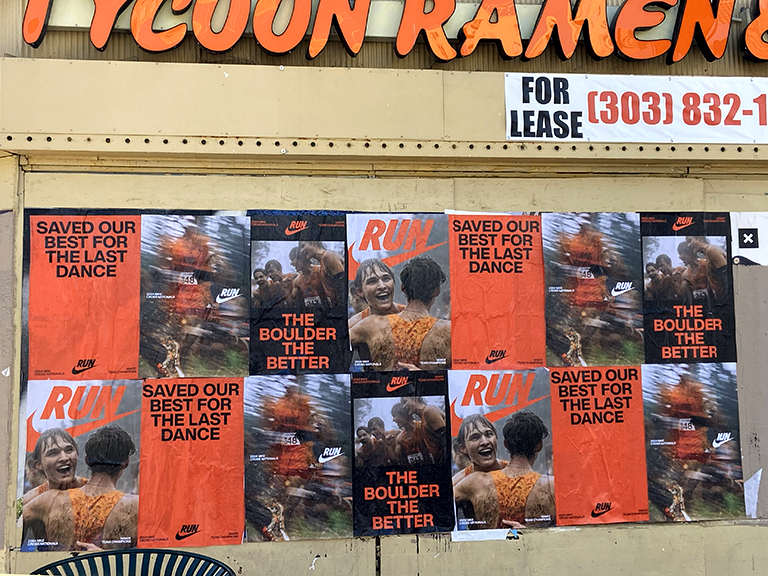
Wheatpaste poster campaigns in Florida’s creative districts, particularly Wynwood in Miami and the Grand Central District in St. Pete, create high-visibility vertical brand presence in environments where consumers are already visually engaged with street-level art and advertising. Wynwood’s wall art culture makes it one of the most poster-receptive advertising environments in the country. A brand that places large-format poster creative on Wynwood’s construction barriers and permitted posting surfaces is participating in the neighborhood’s visual conversation rather than interrupting it.
Street Team Marketing at Florida Events and Festivals
Florida’s events calendar is among the richest in the country. Art Basel Miami Beach brings 80,000-plus visitors to the Wynwood and Design District areas annually. Ultra Music Festival draws 150,000-plus attendees to downtown Miami. Gasparilla in Tampa is one of the Southeast’s largest street festivals. The Clearwater Jazz Holiday, Tampa Bay Margarita Festival, St. Pete’s Localtopia, and Orlando’s Epcot International Food and Wine Festival create recurring concentrated audiences for brand ambassador activations.
Event-aligned street teams in Florida deploy brand ambassadors to distribute promotional materials, conduct sampling, and create direct brand encounters with festival audiences who are in a leisure, social, and entertainment mindset. Art Basel is a particularly powerful environment for premium restaurant and bar brands: the attendee demographic is high-income, internationally cosmopolitan, and actively seeking dining and nightlife options during their Miami visit.
LED Billboard Trucks for Florida Market Launches
For major bar and restaurant launches in Florida’s large metro markets, LED billboard trucks provide event-scale visibility that ground-level tactics alone can’t deliver on opening night. A truck circuit through Miami’s Wynwood, Brickell, and South Beach on a launch Saturday creates moving brand presence across three of the city’s highest-value hospitality zones in a single evening. Combined with a social media content strategy around the truck, the launch becomes a media event rather than just a business opening.
We route Florida LED trucks through entertainment districts with attention to evening peak hours, ensuring maximum impressions during the 8 PM to 1 AM window when Florida’s hospitality consumers are actively making venue selections.
Flyer Distribution for Florida Bar and Restaurant Brands
Flyer distribution campaigns in Florida’s tourism zones, college markets, and event environments reach concentrated consumer audiences efficiently. Miami Beach hotel areas, where hotel guests actively seek dining and nightlife recommendations, are particularly productive flyer distribution environments for Miami restaurant and bar brands. Distribution at hotel entry points and concierge zones reaches visitors who are actively in decision-making mode about where to eat and drink during their stay.
In college markets, flyer distribution around Florida State University in Tallahassee, the University of Florida in Gainesville, and the University of Miami reaches large student populations in compact campus geographies that can be comprehensively covered with a targeted distribution operation. For Florida bar and restaurant brands targeting the 21-28 demographic, campus-adjacent distribution timed to high-traffic campus events delivers cost-effective reach that other Florida media markets can’t match on a per-encounter basis.
Measuring Results for Florida Bar and Restaurant Guerrilla Marketing Campaigns
Florida’s competitive hospitality market demands performance accountability from every marketing investment. Guerrilla marketing campaigns in Florida bar and restaurant environments support meaningful measurement across multiple frameworks.
Reservation and Walk-In Traffic Analysis
For Florida restaurant campaigns, comparing reservation volume and walk-in traffic during the campaign window against comparable prior periods provides a direct performance signal. A Miami Wynwood restaurant that runs a three-week sidewalk stencil campaign alongside coaster distribution at neighboring bars can assess whether dining activity shifted during that period. We recommend pre-campaign baseline measurement in all Florida markets so that campaign period comparisons are statistically meaningful rather than anecdotal.
Event Campaign Attribution for Florida
For Florida campaigns aligned to specific events such as Art Basel, Gasparilla, or Sunfest, event-period revenue comparison against non-event weeks or prior-year event periods provides the most direct performance attribution. A brand that invests in Art Basel sidewalk stencils and street team activations can compare December event-week revenue against November baseline weeks and against the prior December’s Art Basel week to assess campaign contribution independent of seasonal effects.
Why Florida Hospitality Brands Choose American Guerrilla Marketing
Florida’s hospitality market has no shortage of marketing agencies. What it lacks is a partner with genuine national-scale guerrilla marketing operational infrastructure and the Florida-specific market knowledge to deploy that infrastructure effectively in markets as different as Wynwood, Tampa’s Ybor City, and St. Pete’s Central Avenue.
Our team at American Guerrilla Marketing brings both. We’ve operated in Florida’s major markets extensively, we maintain crew relationships in Miami, Tampa, and Orlando that allow rapid campaign mobilization, and our compliance knowledge of Florida’s varied municipal environments means campaigns launch correctly the first time. For Florida bars and restaurants that want street-level marketing executed at a standard that matches the ambition of their brand, we’re the right partner.
Event Alignment: Florida’s Rich Calendar of Guerrilla Marketing Opportunities
Florida’s events calendar extends well beyond the nationally recognized festivals already mentioned. Orlando’s restaurant week concentrates dining activity across the city’s major culinary districts. Sarasota’s arts and film festival circuit draws a culturally engaged, high-income consumer to the Gulf Coast. Fort Lauderdale’s Las Olas Art Fair is one of the largest outdoor art events in the Southeast. The Key West Fantasy Fest brings enormous crowds to the Keys’ entertainment district in late October. Each of these events creates a concentrated audience opportunity for guerrilla marketing campaigns aligned to the specific timing and geography of the event.
We map Florida’s events calendar as part of every campaign planning process and recommend deployment windows that capture event-driven audience concentrations whenever possible. An Art Basel-aligned campaign in Miami’s Wynwood during early December, a Fantasy Fest-aligned activation in Key West’s Duval Street corridor in late October, or a Fort Lauderdale Las Olas campaign coinciding with the art fair’s opening weekend all deliver significantly higher impression quality and brand recall than the same campaign deployed on a generic calendar schedule in the same Florida markets.
For Florida bars and restaurants that have not yet integrated event alignment into their marketing planning, the events calendar is a free performance amplifier. The audience concentrations it creates are predictable, recurring, and mappable. Building campaign windows around them is not complicated. It simply requires the market knowledge and planning discipline that our team brings to every Florida campaign engagement.
Getting Started: Campaign Planning Timeline for Florida Bar and Restaurant Campaigns
Standard Florida campaigns run on a two to three week planning and logistics timeline from initial briefing to first placement. For Art Basel-aligned Miami campaigns, we recommend beginning the planning process no later than eight weeks before the event, as venue partnerships, crew scheduling, and Miami’s permit environment for certain zones require more lead time than a standard non-event campaign. For Ybor City Tampa campaigns, Gasparilla alignment requires similar advance planning. Rush timelines of seven to ten days are available for non-event campaigns. Contact our team at (646) 776-2770 or reach us through our website to begin planning your Florida campaign.
Frequently Asked Questions: Bar and Restaurant Advertising in Florida
What guerrilla marketing tactics work best for bars and restaurants in Florida?
Beer coaster advertising in Miami’s Wynwood, Brickell, and South Beach bars, sidewalk stencils along Miami’s entertainment corridors and Orlando’s downtown, wheatpaste poster campaigns in Tampa’s Ybor City and St. Pete’s Central Avenue, and street team activations at Florida festivals and events are among the most effective tactics. The right combination depends on your target Florida market and campaign objectives.
Which Florida cities are best for bar and restaurant guerrilla marketing?
Miami and Miami Beach offer the highest-impact environments, with Wynwood, South Beach, Brickell, and Little Havana as key zones. Tampa’s Ybor City and Channelside, St. Petersburg’s Central Avenue, and Orlando’s downtown and International Drive are also strong markets. Fort Lauderdale’s Las Olas Boulevard and Jacksonville’s Riverside and Five Points neighborhoods are productive targets for brands serving those markets.
How does beer coaster advertising work in Florida bar markets?
Custom branded coasters are distributed to bars, nightclubs, and restaurants across your target Florida market. In Miami, that means Wynwood art district bars, South Beach venues, and Brickell cocktail bars. In Tampa, it’s Ybor City and the Channel District. Each patron encounter provides 90-plus minutes of direct brand exposure in a positive leisure mindset.
Can guerrilla marketing help a new Florida bar or restaurant compete with established brands?
Yes. Florida’s hospitality market is intensely competitive. Guerrilla marketing creates physical neighborhood presence that digital advertising cannot replicate. New bars and restaurants in Florida that launch with sidewalk stencils, poster placements, and street team activations in their target neighborhood consistently outperform comparable openings that rely on digital-only launch campaigns.
What does a bar and restaurant guerrilla marketing campaign cost in Florida?
Campaign costs vary by city and scope. A sidewalk stencil campaign with 75-100 placements in a single Miami neighborhood typically runs in the mid-four-figure range. Multi-tactic campaigns scale to the five-figure range for comprehensive market coverage. Contact our team for a specific quote.
Do you document Florida campaigns with photos and GPS data?
Yes. Every campaign includes GPS-tagged placement photos, timestamped deployment logs, and a comprehensive post-campaign report. For coaster campaigns, we document venues and quantities distributed. All documentation is delivered within five business days of campaign completion.
Frequently Asked Questions
What is bar restaurant advertising florida?
American Guerrilla Marketing provides bar restaurant advertising florida services across 50+ U.S. markets. Every campaign is planned, scouted, executed, and GPS-documented by our field teams. We work with regional brands and Fortune 500 companies on campaigns that require real street-level execution and documented proof of performance.
How does AGM approach advertising florida?
Our process starts with a market consultation to understand your goals, target audience, and budget. We then scout locations, handle any required permissions or permits, coordinate production and installation with our local crews, and provide a full GPS-tagged photo report after the campaign runs.
What markets does American Guerrilla Marketing cover for advertising florida?
We operate in 50+ U.S. markets including New York, Los Angeles, Chicago, Miami, Houston, Atlanta, Seattle, Denver, Boston, and dozens of secondary markets. Contact us to confirm availability and pricing for your specific market.
How much does a advertising florida campaign cost?
Campaign pricing depends on market, format, quantity, and duration. We work with budgets ranging from targeted single-market runs to national rollouts across multiple cities. Use our RFP Builder or contact us directly for a custom quote based on your specific campaign requirements.
How do I get started with advertising florida through AGM?
The fastest way to get started is to submit your campaign details through our RFP Builder at americanguerrillamarketing.com, or contact us directly at [email protected] or (646) 776-2770. Our team typically responds within one business day with availability and initial pricing.