
April 5, 2023 Guerrilla Marketing Agency

In today’s fiercely competitive business environment, companies are always looking for new strategies to attract the interest of their target markets. As customers become more ad-savvy and resistant to their messages, traditional advertising techniques like television advertisements, signs, and paper ads have lost some of their effectiveness. This is where Ambient Marketing: Embracing Versatility and Freedom comes into play—a unique and inventive method for brands to interact with their consumers by cutting through the noise and capturing attention in unexpected places.
Ambient marketing is a type of advertising that uses non-traditional media to spread the word about a company or product. It means giving the audience a unique experience in their natural surroundings without getting in the way of or disrupting their normal activities. This type of marketing depends on the element of surprise and seeks to make an impact that will stick with the audience.
Ambient marketing gives businesses the opportunity to interact with their target audience in a manner that is more memorable and intimate, which is one of its biggest benefits. Brands can connect with their audience on an emotional level and build long-term loyalty by giving them a unique experience that is tailored to their individual interests.

Ambient Marketing: Embracing Versatility and Freedom is defined by its flexibility, which is one of its greatest advantages. This kind of marketing is not limited to traditional methods like newspaper ads, TV ads, and signs. Instead, it can be used in a range of real-world and virtual environments. Brands have the ability to design one-of-a-kind, engaging experiences that are geared to the likes of their audience as well as to the particular requirements of their target market.
Ambient advertising, for instance, can be used in public areas like parks, retail centers, and municipal roadways. Brands can design engaging exhibits or pop-up experiences that draw in customers and give them an unforgettable experience. These artworks may take the shape of digital or actual sculptures, and they may be created so that people will post about their encounters on social media.
Events like conventions, sporting competitions, and music gatherings can all use ambient marketing. Brands are able to design unique displays or activations that fit the event’s concept or target demographic. To involve spectators and raise brand recognition, a sports brand might, for instance, set up a unique obstacle course or engaging game at a sporting event.
Ambient marketing can be used online as well as in real-world locations. To involve their audience, brands can develop digital experiences or initiatives that make use of augmented reality, virtual reality, or other engaging technologies. For instance, a beauty company might develop an AR overlay that enables users to test out various cosmetics styles and upload photos to social media.
Overall, ambient marketing gives businesses a highly adjustable and fluid way to engage with customers in unforgettable and important ways. It enables businesses to think creatively and produce encounters that connect with their target audience outside of the confines of conventional advertising. The secret to success is developing a comprehensive and engaging experience that appeals to the audience and is consistent with the brand’s beliefs and branding.
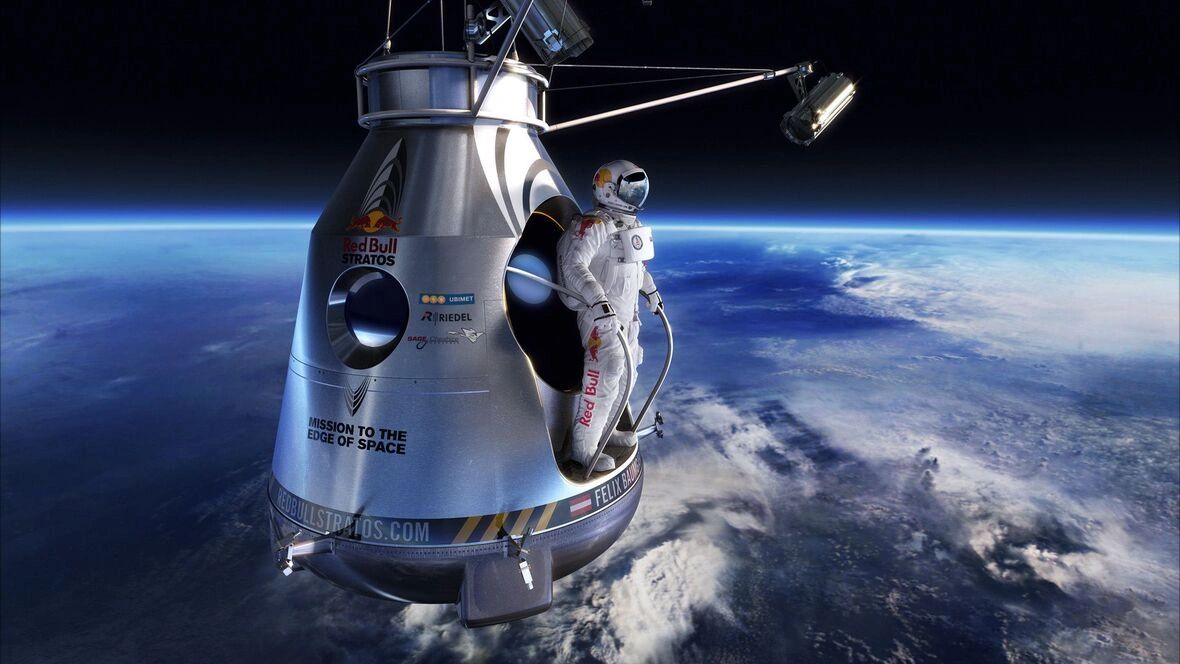
Two of the benefits of ambient marketing are its adaptability and independence. A standout example of Ambient Marketing: Embracing Versatility and Freedom is the “Red Bull Stratos” promotion. In 2012, Austrian skydiver Felix Baumgartner broke the sound barrier and set multiple records by jumping from the edge of space—a feat funded by Red Bull. This campaign not only generated massive buzz and media attention but also firmly positioned Red Bull as a brand synonymous with extreme sports and adrenaline-fueled experiences.
Other noteworthy ambient marketing initiatives include:
Coca-Cola’s “Small World Machines”: In 2013, the beverage company built two vending machines, one in Pakistan and one in India, that were linked together by a live video stream. The devices made it possible for citizens of the two nations to communicate with one another in real time and even share a Coke. The effort, which sought to foster harmony and pleasure between the two nations, attracted a lot of media coverage and social media chatter.
IKEA’s “PAX Wardrobe for the Homeless”: In order to bring attention to the problem of homelessness, IKEA developed an innovative atmospheric marketing strategy in 2016. In Sydney, Australia, they put a bed, a closet, and a table in a bus shelter and turned it into a temporary dorm. For several weeks, the refuge was open to the destitute, and during that time, it attracted a lot of media and social media interest.
“Boost your run” was the name of a marketing campaign by Adidas in 2016. It was held in Paris and encouraged joggers to generate energy while using a machine to light up a space. The campaign produced a lot of media attention and social media chatter as it promoted the release of their new “Boost” running sneaker.
Nissan’s “Camel Power” promotion: In 2012, Nissan created an indoor advertising campaign in Dubai that featured a modified Nissan Patrol SUV that was driven by a group of camels. By focusing on the vehicle’s off-road skills, the promotion got a lot of attention from the media and got people talking on social media.
These examples show how ambient marketing can be used to develop distinctive and unforgettable experiences that engage audiences, garner substantial media attention, and build chatter on social media benefits

It’s essential to remember, though, that if subliminal marketing isn’t done correctly, it could also fail. Brands must be aware of the environment in which their efforts are taking place and take care to avoid upsetting or annoying their target audience. Achieving the ideal equilibrium between ingenuity and utility is also crucial. The campaign needs to be creative enough to grab people’s attention while also being useful and in line with the brand’s main idea.
In the end, ambient marketing gives companies a unique way to connect with customers and stand out in a crowded market. Brands can build strong emotional ties with their customers and get people talking about them on social media by creating engaging experiences that are tailored to the interests of their audience. So that bad things don’t happen by accident, these projects must be done carefully and with care.
Telegram: @americanguerillamarketing