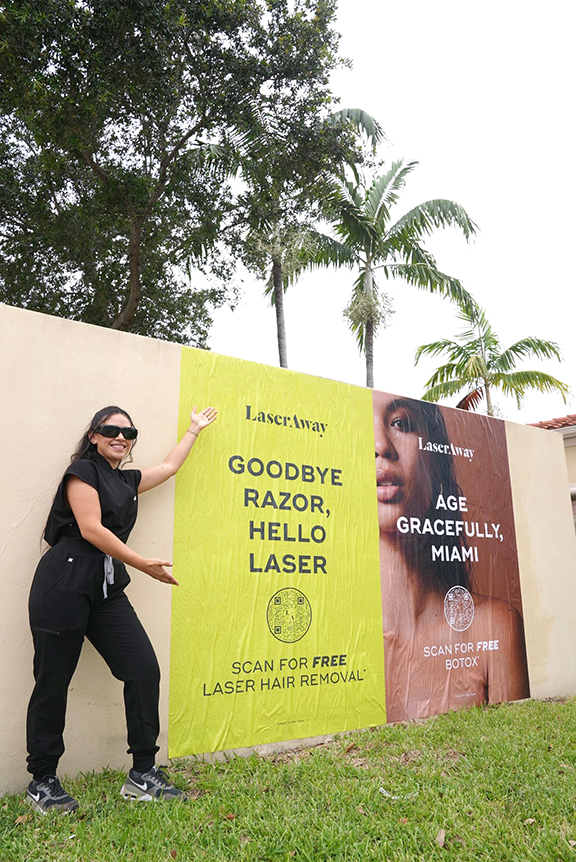
Public demonstrations spark energy for a day. Visuals can carry that momentum for weeks. When organized thoughtfully, signs, posters, decals, and snipes keep messages visible across high-traffic corridors long after chants quiet down. The goal is not confrontation but continuity, so communities can keep talking and learning in a way that feels safe and constructive.
Paper tactics excel because they are flexible, fast to deploy, and easy to remove. They also invite participation. People take photos, share quotes, scan codes, and follow short URLs that connect the street message to verified online resources. This mix brings attention without creating a burden for neighborhoods.
American Guerrilla Marketing supports this kind of effort with national printing, mapping, and installation capabilities, and a quick 24 to 48-hour turnaround. That means a peaceful coalition can plan a weekend action and have a citywide paper campaign up before the first speaker takes the mic.
Violence fades. Visuals stay.
Why choose paper campaigns?
Posters establish broad awareness and act like a soft backdrop for civic conversation. A poster series can blanket downtown streets, civic corridors, and residential edges so people encounter the message during daily routines, not just at an event.
Snipes build repetition. Small-format placements on construction fences, utility boards, and community kiosks create a pattern that people notice on commutes and walks. Frequency matters because it turns a single message into a familiar signal that invites curiosity.
Decals connect the street to digital action. A clean QR code or short URL routes to a landing page with core facts, safety tips, donation options, and volunteer signups. That single scan becomes the bridge between an in-person flashpoint and ongoing education.
When combined, these tactics can sustain a peaceful conversation for weeks, even when the headlines move on.
How Can I Build a City Plan Without Crossing Lines?
Every city is different, yet most follow familiar patterns: a dense core with high foot traffic, a couple of transit hubs or campus districts, a civic square or city hall, and a handful of cultural corridors where people linger. A strong plan honors these patterns without targeting any individual or group.
Key principles to map:
Respect for property and permits. Secure permission from owners, and match adhesives to surfaces that will not damage finishes.
Visibility without intrusion. Place materials where people expect public-facing media, not on private homes or sensitive community fixtures.
Clear routes. Think in loops, not isolated spots. A three-stop loop might include a transit exit, a lunch block, and a park entrance.
Safety first. Avoid sightline clutter near crosswalks and traffic signals. Keep ladders off busy sidewalks.
Access and equity. Include areas served by buses and bike routes, not only affluent districts.
A balanced footprint ties together the places where residents naturally gather. That is how a civic message feels like part of the city’s conversation rather than an interruption.
How Can Creative Invite Participation?
Short, legible headlines. A generous type size. High contrast. One clear call to action. These are small choices that create big lifts in retention and response.
A few practical tips:
Keep headlines to 4 to 7 words.
Use a consistent color field so the series reads as a system.
Feature one proof point, then drive to the QR code or short URL.
Place QR codes at standing eye level, not knee height.
Test scans from three feet, five feet, and eight feet before you print.
Consider a split-run test. Version A might feature a rights-focused headline and a service link. Version B might feature a local statistic and a volunteer link. Run each in matched zones and compare scans, signups, and time-on-page. Small tests can sharpen the entire message.
What Quantitative Framework Helps Plan Campaigns?
Campaign plans benefit from guardrails. The formulas below help set realistic counts, timing, and expected performance. You can adjust inputs to match your city’s size and your coalition’s budget.
Variables and suggested ranges:
Poster count: 0.05 to 0.1 per 1,000 residents, usually 200 to 800 total
Snipe count: two times the poster count, usually 400 to 1,200 total
Decal count: 0.02 times the poster count, usually 60 to 200 total
Campaign duration: 14 to 28 days
Downtown daily foot traffic estimate: five percent of metro population divided by 30
Max reach cap: city population plus thirty percent of metro population
If the city population is under 300,000, reduce outputs by forty percent for realism.
This structure keeps expectations grounded. It also helps coalitions report results back to supporters and donors with clarity.
How Does a Mid-Sized City Campaign Look?
Assume:
City population: 350,000
Metro population: 900,000
Poster count: 450
Snipe count: 900
Decal count: 90
Campaign duration: 21 days
Compute:
Max reach cap: 350,000 + 0.30 × 900,000 = 620,000
GTI: 450 × 2,000 × 21 = 18,900,000
Awareness: 18,900,000 × 0.35 = 6,615,000, capped at 620,000
Snipe audience: 620,000 × 0.45 = 279,000
Engagement: 279,000 × 0.03 = 8,370
Decal audience: 620,000 × 0.25 = 155,000
QR visits: 155,000 × 0.008 = 1,240
Virality: (8,370 + 1,240) × 0.01 = 96
This shows how a disciplined plan converts print into measurable action and social lift.
Sample results table
Metric
Formula
Example Output
Max reach
City + 0.30 × Metro
620,000
Awareness
GTI × 0.35 capped
620,000
Engagement
Awareness × 0.45 × 0.03
8,370
Information access
Awareness × 0.25 × 0.008
1,240
Virality
(Engagement + Info) × 0.01
96
Keep in mind the cap protects against inflated projections. If your GTI calculation pushes awareness above the cap, the cap wins. That makes reporting conservative and reliable.
A sensible footprint avoids sensitive zones and focuses on predictable, permitted surfaces.
Try this three-part structure:
Posters
Primary spines along office districts and civic corridors
Secondary rings touching residential edges and weekend markets
Snipes
Near transit nodes and bike-share docks
Along café rows and campus edges
Decals
From transit exits to rally points, with QR codes to an organizer portal
On sidewalks only where local rules and owner permissions allow
Why it works: messages circulate organically and give people choices about how and when to engage.
How Should Creative Production and Installation be Handled?
Print quality sets the tone. If the visuals look cared for, the public treats them with respect.
Posters
11×17 or 18×24 on 100–120 gsm recyclable paper
Soy or water-based inks
Weather-safe pastes that remove cleanly
Snipes
8.5×11 or 11×17, same stock for consistency
Edge-to-edge color for a unified wall effect
Decals
Removable vinyl with surface-matched adhesive
Matte finish to reduce glare and aid QR scanning
Installation:
Work in teams of two for speed and safety.
Carry permissions and a zone map for reference.
Photograph each zone for proof and post-campaign cleanup.
How Can a Landing Page Turn Street Interest Into Action?
A thoughtful landing page turns curiosity into momentum.
Checklist:
A headline that matches the print headline
A short statement of purpose
Clear safety and conduct guidelines
Three actions: learn more, volunteer, donate
A press kit link for media credibility
Accessibility features, including alt text and readable contrast
Track scans and visits by zone with unique QR codes or short URLs. That data helps refine future placements and messages without any need to profile individuals.
How Can I Encourage Sharing Without Forcing Virality?
People share visuals that feel striking, honest, and grounded in place. Aim for authenticity over polish.
Place a few posters near well-known public art, bridges, or riverwalks. These settings create natural photo backdrops.
Use a slogan that invites a selfie or a wide shot. Keep it legible from six to ten feet.
Build a snipe wall in an arts district or near a campus gallery. Layers of color and repetition often become short videos.
Design decals as breadcrumb trails that guide people to a rally or teach-in. Sequential scans can tell a story and invite a thread on social platforms.
A single clip of a vibrant wall can multiply local reach ten to twenty times when shared widely. Capturing the wall during golden hour or with candid pedestrian movement can increase shareability.
American Guerrilla Marketing can pair installation with quick video capture and influencer amplification, which helps peaceful causes extend their reach without stoking conflict.
How Can a Report build trust?
Share results with your community and partners. Transparency earns goodwill and helps sustain long-term projects.
What to report:
Estimated awareness versus the cap
Engagement from snipe zones
QR scans and top-performing links
Social shares and examples of earned media
Cleanup completion, with photos and timestamps
Publish a short recap within a week. Keep it factual, thank property partners, and invite feedback from neighbors.
How Can I Respect Rules, Neighbors, and the Environment?
Peaceful civic expression can live in harmony with local norms. That begins with clear permissions, compliance with city guidelines, and a plan to remove all materials at the end of the run.
Secure written approvals where required.
Match adhesives to surface types so removal is painless.
Avoid schools, hospitals, and sensitive public fixtures unless invited.
Clean up promptly, even if some materials remain in good shape.
Recycle all paper stock and dispose of adhesives responsibly.
American Guerrilla Marketing supports this practice with permits, property coordination, documented cleanup, and recyclable, eco-safe paper stocks. A 24 to 48-hour production and installation window keeps timelines tight and predictable.
Frequently asked questions
Q: How many posters are enough for a first campaign? A: Start at the low end of the range, measure results, and scale. If your city has 500,000 residents, 250 to 500 posters can establish a real presence.
Q: What if scans seem low? A: Raise contrast, simplify the landing page, and improve placement height. People scan when it feels effortless.
Q: How long should materials stay up? A: Two to four weeks creates a balance between awareness and visual fatigue. Commit to full cleanup at the end.
Q: Are layered snipe walls still acceptable? A: Yes, when permitted and maintained. Keep edges tidy and avoid covering community notices.
Q: How can we include multiple languages? A: Alternate versions by zone, or include bilingual layouts with a clear hierarchy. Test legibility with native speakers before printing.
How Can I Launch Quickly?
Finalize a single-line message and a subhead.
Build landing page content and test on mobile.
Map three to five high-traffic loops.
Print, kit, and stage materials for each loop.
Install, capture, and monitor metrics daily.
Clean up on schedule and publish a recap.
If you’re organizing a peaceful demonstration and want your message to echo safely across your city, contact Campaign Strategist Justin Phillips at [email protected].