Physical brand presence has always mattered in Seattle, and billboard advertising campaigns in Seattle’s technology, aerospace, and retail economy reach the exact audiences that drive commercial decisions. When your target market is working through Seattle’s commercial corridors, between client meetings, transit stops, and neighborhood retail, a well-placed billboard advertising campaign reaches them in precisely those moments. American Guerrilla Marketing has built outdoor and billboard campaigns for brands across Seattle that needed local market authority, not just national reach.
Guerrilla marketing uses unconventional, low-cost tactics deployed in public spaces to generate outsized brand impact. American Guerrilla Marketing designs and executes street-level campaigns, wheat posting, stencils, brand ambassadors, projections, and LED trucks, that create genuine consumer encounters and earned media coverage for brands of all sizes.
What separates campaigns that build lasting brand recall from those that generate temporary impressions is frequency and relevance. Billboard advertising in Seattle creates repeated encounters along the same routes your target audience travels daily, each encounter reinforcing the previous one without requiring a new media buy. That frequency effect is what generates brand preference that holds up when purchasing decisions actually happen. In Seattle’s Amazon and Boeing anchor a technology and aerospace economy that makes Seattle one of the highest-income, highest-density consumer markets in the West, where consumers are making those decisions constantly, frequency-based physical advertising outperforms scatter-fire digital reach on every cost-efficiency metric that matters.
What follows is a detailed breakdown of billboard advertising in Seattle: the market context that shapes campaign design, the tactical options available in this geography, how American Guerrilla Marketing approaches the specific operational challenges of Seattle field execution, and what brands at different budget levels can realistically expect to achieve. The FAQ section addresses the most common questions from Seattle brands evaluating street-level campaigns for the first time.
What Drives Billboard Pricing in Washington
Billboard pricing in Washington state, and everywhere else, is fundamentally determined by audience size and quality. A billboard facing a highway segment carrying 200,000 vehicles per day costs more than a billboard facing a surface street carrying 20,000, because the advertiser is purchasing ten times the potential impressions per day at the same four-week cycle cost. The cost-per-thousand-impressions (CPM) may be similar between the two locations; the absolute price per period reflects the volume difference.
Location quality includes more than raw traffic count. The visibility angle of the structure determines how much of the passing traffic actually sees the face. Approach visibility, how many seconds of line-of-sight does a driver have before passing the unit, determines whether the audience has enough time to read and process the creative. Competitive density (how many other outdoor units are visible within the same sightline) affects the unit’s competitive dominance in its immediate visual environment. And the demographic character of the passing traffic, its income level, purchasing behavior, category interest, and geographic alignment with the advertiser’s target, determines whether the impressions being purchased are the right impressions for the specific campaign objective.
Secondary pricing factors include format (digital or static), contract length (longer contracts typically carry lower monthly rates), illumination (illuminated units add cost), and proximity to specific audience concentrations, a billboard one block from Amazon’s Seattle campus commands a premium because the advertiser is buying access to a specific, highly valuable professional audience rather than a generic traffic count.
Seattle Billboard Pricing and Key Corridors
Seattle is one of the most premium outdoor advertising markets on the West Coast, driven by the city’s economic concentration in technology, aerospace, and professional services, its relatively small geographic footprint relative to its economic output, and the consequent scarcity of high-visibility outdoor inventory near the most desirable audience concentrations. The combination of high demand, limited supply, and premium demographic profile produces per-unit pricing that competes with markets twice Seattle’s population size.
I-5 and Highway Bulletins
Interstate 5 through the Seattle metro area is the highest-traffic, highest-priced outdoor advertising corridor in Washington state. Bulletins facing I-5 traffic in the core Seattle segment, between the West Seattle Bridge interchange and the Ship Canal Bridge, carry the heaviest vehicle counts and the most premium pricing. Standard static bulletins in this corridor typically range from $6,000–$12,000 per four-week period at established inventory, with premium units facing the highest-count segments commanding above that range.
I-90, approaching Seattle from the east through Mercer Island and the Eastgate interchange, carries a different but equally valuable audience profile: the technology professional commuters and commercial traffic moving between Bellevue, Redmond, and Seattle. This corridor reaches the Amazon, Microsoft, and tech professional audience at a per-period cost generally 10–25% below comparable I-5 inventory, making it a strategically efficient alternative for campaigns targeting the technology and professional services demographic.
SR-99, which parallels I-5 through central and north Seattle, offers an alternative highway corridor with lower pricing than I-5 but meaningful reach across the Aurora Avenue commercial zone, one of Seattle’s highest-volume surface commercial corridors. SR-99 bulletins typically run $2,000–$5,000 per four weeks, providing strong cost-efficiency for campaigns willing to trade the highest traffic counts for better CPM economics.
Urban Seattle: Aurora, Denny, and the Commercial Arterials
Seattle’s urban commercial arterials, Aurora Avenue North, Denny Way, South Jackson Street, and the Rainier Avenue commercial corridor, offer outdoor inventory at meaningfully lower cost than highway bulletins while maintaining high daily traffic counts from the city’s residential and commuter population. Bulletins on these corridors typically range from $1,500–$5,000 per four weeks, depending on location specifics, with the most premium positions at major intersections and transit concentration points at the higher end of that range.
Seattle’s neighborhood commercial districts, Capitol Hill on Broadway and Pike Street, Fremont on N 36th Street, Ballard on Market Street, and the Central District along MLK Jr Way, represent the most demographically targeted billboard environments in the city. The trade-off against the major arterials is lower raw traffic volume in exchange for significantly higher audience precision: Capitol Hill’s pedestrian-scale commercial zone delivers one of Seattle’s highest concentrations of 25-to-40-year-old urban consumers. For brands targeting that demographic specifically, the lower-traffic but higher-precision placement often outperforms the higher-traffic but lower-precision highway bulletin on a cost-per-qualified-impression basis.
Digital Billboard Costs in Seattle
Digital billboard units in Seattle rotate creative across multiple advertisers, with each advertiser’s content displayed for an eight-second interval in a rotation cycle that typically includes six to eight advertisers. This means a digital unit purchased at $8,000 per four weeks is not delivering a dedicated placement, it is delivering approximately 12.5% share-of-voice on that unit. The effective CPM on a digital unit is typically lower than on a static unit because of the higher total traffic count generated by digital inventory’s premium locations, but the dedicated visibility of a static placement may outperform the shared visibility of a digital slot depending on campaign frequency goals.
Digital billboard pricing in Seattle currently ranges from $3,000–$15,000 per four weeks for standard digital bulletins at commercial corridors and highway adjacencies. Premium digital inventory near the highest-traffic I-5 segments and at the highest-demand commercial intersections can reach $15,000–$25,000 per four-week period for individual advertisers in the rotation. The creative flexibility of digital, the ability to update messaging, run daypart-specific creative, and respond to real-time events or promotions, can justify the premium for campaigns that benefit from message variability.
Tacoma and the South Puget Sound
Tacoma’s outdoor advertising market sits between Seattle’s premium pricing and the more cost-efficient secondary markets of eastern Washington. Standard static bulletins in Tacoma’s primary corridors, I-5 through the Tacoma Narrows approach, South Pacific Avenue, and the Commerce Street downtown corridor, typically range from $1,200–$4,000 per four weeks. The market is significantly less competitive than Seattle in terms of advertiser demand, which means well-positioned inventory is generally available without the advance booking requirements that premium Seattle units demand.
Tacoma’s unique geographic assets include the Port of Tacoma approach on SR-509, which reaches the commercial and freight traffic serving the Port; the Tacoma Dome district, which concentrates event audiences during major performances and sporting events; and the Foss Waterway and waterfront commercial district, which draws visitors to one of the region’s most actively redeveloped urban waterfronts. Each of these environments represents a specific audience concentration that generalizes Tacoma’s billboard market significantly beyond its raw population size.
Spokane: Eastern Washington’s OOH Market
Secondary Washington Markets
Washington state’s secondary markets, Bellingham, Yakima, Tri-Cities (Kennewick-Pasco-Richland), Walla, Wenatchee, and the Olympic Peninsula, represent cost-efficient opportunities for brands with regional coverage objectives or specific audience concentrations in those markets. Bulletin pricing in these markets typically ranges from $400–$1,500 per four weeks, with prime inventory near major commercial intersections and highway approaches at the higher end.
The strategic value of secondary market OOH in Washington is often underestimated by brands that default to Seattle-centric media planning. The Tri-Cities market is the hub of Washington’s wine industry, agricultural processing, and the Hanford Site federal complex, a professional and industrial audience with specific category relevance for brands in energy, technology services, agriculture, and consumer goods. Yakima’s agricultural and food-processing economy generates a dual-demographic market of professional managers and working-class consumers that national brands in retail, food, and financial services actively target. Understanding the specific audience character of each secondary market is what transforms OOH planning from a reach exercise into a precision targeting strategy.
Format Comparison: Static vs. Digital vs. Mobile
Alternatives and Complements to Billboard Advertising
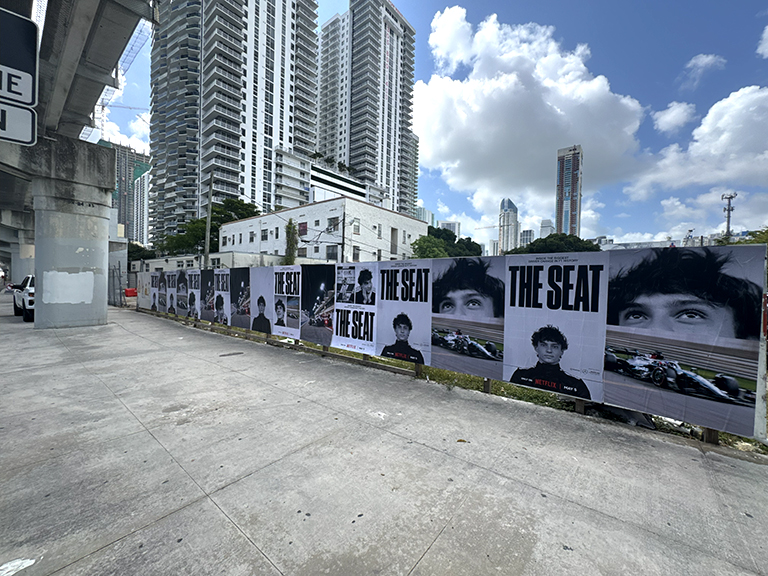
For brands operating in Washington’s premium markets who find billboard costs at the high end of budget tolerance, complementary street-level formats can achieve comparable, and in some contexts superior, audience reach at more efficient cost structures. Wheat Paste Poster Campaigns in Seattle’s Capitol Hill, Fremont, Ballard, and South Lake Union neighborhoods place brand creative directly in the pedestrian environments where the city’s most brand-responsive audiences concentrate, at costs significantly below highway bulletin rates with zero share-of-voice dilution.
Brand ambassador programs at Pike Place Market, the Seattle Center, and the University of Washington campus zone reach targeted audience segments in high-density environments with the added dimension of direct human interaction. Sidewalk advertising at the King Street Station Amtrak/transit hub, the Westlake Center light rail station, and the Capitol Hill station reaches the transit-dependent and transit-adjacent audience that specifically concentrates at these nodes, an audience that has both the time and the physical orientation to engage with ground-level creative in ways that highway-speed media cannot achieve.
Mobile LED billboard trucks offer the most flexible alternative to fixed OOH placements for Washington campaigns. A truck routing through Capitol Hill, South Lake Union, and the Eastlake commercial corridor in an eight-hour deployment window achieves meaningful multi-corridor reach without the four-week commitment and fixed-location limitation of any static or digital bulletin. For event-driven campaigns, concerts at Climate Pledge Arena, Seahawks games at Lumen Field, or events at the Paramount Theatre, a truck positioned at the venue approach zones during the peak arrival window achieves concentrated audience reach at the moment of highest engagement.
Campaign Strategy and Market Considerations
Washington state OOH strategy begins with a clear answer to the question of who the target audience actually is and where in the state’s diverse geography they concentrate. The temptation to default to Seattle, because it is the largest market and the one with the most prominent inventory, ignores the reality that a significant portion of Washington’s population, purchasing power, and brand-relevant consumer activity is distributed across Tacoma, Spokane, the Eastside tech corridor, and the secondary markets. For many campaign objectives, the budget efficiency of eastern Washington or secondary market investment outperforms a Seattle concentration on a cost-per-qualified-impression basis.
Format mix matters as much as location. A campaign that pairs highway billboard reach with street-level Wheat Paste Poster Campaign presence in the target neighborhood creates a two-channel outdoor presence that neither format achieves alone: the highway bulletin builds broad awareness among the mobile population while the street-level campaign creates intimate, repeated encounters with the pedestrian audience in the specific neighborhoods where the target consumer lives and moves. This layered approach is consistently more effective than maximizing any single format at the expense of reach across multiple audience behaviors.
Measuring OOH Campaign Results in Washington
Out-of-home measurement in Washington state relies on a combination of impression estimation, response tracking, and business-side analytics. Traffic count data from WSDOT and third-party OOH measurement vendors provides the impression baseline for each placement, a starting point for understanding potential reach that is confirmed or adjusted by actual campaign performance signals.
Response tracking connects physical placements to digital behavior: QR codes on creative allow direct attribution of scans to specific placements, short URLs with placement-specific codes track website traffic generated by each unit, and promo codes tied to outdoor campaigns document conversion from billboard exposure to commercial action. Branded search lift in the specific geographic areas where outdoor was placed during the campaign window provides an awareness signal that documents the reach of campaigns with no direct response mechanism.
Frequently Asked Questions
What makes Understanding Billboard Pricing in Washington: Insights & an effective marketing approach?
Effective street-level marketing programs combine location intelligence, creative execution, and precise timing to reach target audiences in the physical environments where they spend time. American Guerrilla Marketing builds campaigns around audience movement patterns and market-specific context rather than generic placement strategies.
How does American Guerrilla Marketing measure campaign success?
American Guerrilla Marketing tracks campaign performance through impression counts, field documentation, engagement data from brand ambassador activations, and digital attribution from QR codes and campaign-specific landing pages. Post-campaign reports provide market-by-market breakdowns with actionable insights for future activations.
What markets does American Guerrilla Marketing operate in?
American Guerrilla Marketing executes campaigns in major U.S. markets including New York City, Los Angeles, Chicago, Austin, Nashville, Miami, Atlanta, Denver, Seattle, and Boston, with additional reach into secondary markets and international locations for brands with broader geographic objectives.
How long does it take to launch a campaign?
Campaign timelines vary by scope and tactic mix. Simple wildposting or stencil programs can launch within 1–2 weeks. Full brand ambassador activations, experiential installations, and multi-market rollouts typically require 4–8 weeks for planning, production, and logistics coordination. Rush timelines are available for time-sensitive activations.