
September 12, 2026
Activation House
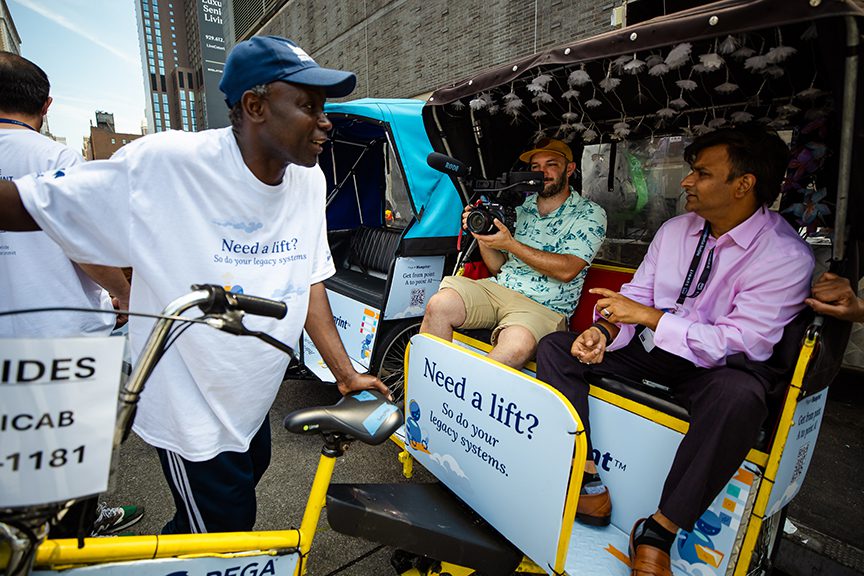
An activation house is a specific type of marketing partner built around live consumer experiences. Here is how one operates, what it delivers, and when you need one.
The term “activation house” describes a marketing organization whose primary capability is building and running live brand experiences. It is similar in meaning to “activation agency” but with a connotation that suggests a dedicated, specialized operation — a house built specifically for activation work rather than a generalist firm that does activation alongside other services.
Understanding what an activation house is and how it differs from broader agency models helps brand marketers make cleaner decisions about which type of partner to engage for a given campaign objective. This article breaks down what the term means, what the work actually looks like, and what a high-functioning activation house does that other agency types do not.
The “House” Model in Marketing Services
In the marketing services world, the term “house” has historically referred to a firm with a concentrated, specialized practice rather than a broad generalist offering. An activation house, by that framing, is a firm that has built its entire operating model around the disciplines required to produce live brand experiences. Strategy, creative, production, logistics, staffing, field management, documentation — all of these capabilities exist under one roof and are optimized for the specific demands of live consumer activation.
This is different from a generalist marketing agency that has an experiential division alongside advertising, digital, PR, and other practices. In a generalist agency, the experiential practice is one of several service lines. Experiential revenue may represent 15% of the agency’s business. The best operational talent in the firm might be concentrated in the more profitable or higher-revenue service lines.
In a true activation house, experiential is the entire business. The operational infrastructure, the talent, the vendor relationships, the market knowledge — all of it is built specifically for this type of work. That specialization produces better outcomes for brands that need genuine activation expertise.
What an Activation House Does
The core work of an activation house spans the full lifecycle of a live brand experience campaign.
Campaign Strategy
An activation house starts every engagement by understanding the brand’s business situation and translating it into a campaign plan. This is not about identifying the most visually impressive activation concept — it is about understanding what the brand needs to accomplish and designing a campaign that serves those objectives in a measurable way. What consumer problem are we solving? What behavior do we want to drive? What does success look like in six weeks and six months?
Creative Concept Development
The creative concept is the specific idea that makes the activation distinctive. Strong activation concepts are tight — easy to explain, compelling to experience, and clear in the emotional intention they create for the consumer. Activation houses that have developed many campaigns have a calibrated sense of what actually works in the field versus what looks good on paper. That calibration is worth more than raw creative talent.
Production and Physical Build
The physical elements of an activation — pop-up structures, vehicle builds, branded environments, interactive components — need to be produced to both creative and operational specifications. A structure that is beautiful but takes six hours to set up is an operational problem. An activation house brings production management expertise that balances creative intent with field practicality.
Staffing and Training
The brand ambassadors and field staff who run the activation are the most direct point of contact between the brand and the consumer. Activation houses that have invested in building strong staffing networks and thorough training programs produce consistently better consumer experiences than those treating staffing as a commodity. Training should cover brand messaging, product knowledge, consumer engagement technique, social media protocols, and operational procedures.
Field Operations Management
Experienced field managers on-site every day are not optional for a well-run activation. They manage staff performance, consumer flow, supply logistics, and real-time problem solving. When a venue is unexpectedly unavailable, when weather changes, when a supply delivery is late — the field manager is the person who handles it without escalating every problem to the client. That operational independence requires experience and preparation.
Measurement and Reporting
An activation house should deliver more than photos after a campaign ends. Comprehensive post-campaign reporting covers consumer engagement data, trial rates, social content generated, lead capture results, observations from field staff, and specific recommendations for future campaigns. This intelligence is what makes the next campaign better than the last one.
The defining characteristic of a true activation house is specialization. Every system, every relationship, every hire is optimized for live consumer activation. That depth of focus produces a level of operational reliability that generalist agencies with experiential practices rarely match.
Activation House vs. Other Agency Models
| Agency Model | Primary Focus | Activation Capability | Geographic Depth |
|---|---|---|---|
| Activation House | 100% live consumer experiences | Core strength, deepest capability | Built through field work in specific markets |
| Generalist Agency with XM Division | Multiple service lines | One of several offerings | Variable — depends on division investment |
| Event Production Company | Events and large-scale productions | Adjacent but not the same | Strong in home market, thin elsewhere |
| Staffing and Field Marketing Firm | Staff deployment and field sampling | Execution-focused, limited strategy | Often wide but shallow |
| Digital Agency with IRL Capability | Digital channels with live extensions | Bolt-on, not core | Usually limited to major metros |
When Do You Need an Activation House?
Not every campaign situation calls for a specialized activation house. Understanding when this type of partner delivers the most value helps brands allocate their marketing resources appropriately.
Complex Multi-Market Programs
When a brand needs to activate across five or more markets with consistent quality and reporting, a specialized activation house is the right choice. Managing that operational complexity — staffing, supply chain, logistics, documentation — across multiple cities simultaneously requires genuine operational infrastructure that generalist agencies rarely have at the depth needed.
Campaigns Where Execution Quality Is Critical
Product launches, brand repositioning efforts, or any campaign where the live consumer experience is the central brand statement need execution quality that does not slip on day twelve of a fourteen-day run. Activation houses with experienced field management maintain standards throughout the campaign rather than front-loading quality to the launch days.
Brands That Activate Regularly
For brands that use experiential marketing as a consistent channel rather than a one-time tactic, a dedicated activation house partner makes more sense than re-procuring from scratch each campaign cycle. The relationship accumulates institutional knowledge about the brand, the consumer, and what works in each market — and that knowledge translates into better campaigns over time.
The brands that get the most from their activation house partnerships are the ones who treat the relationship as an ongoing collaboration rather than a series of one-time project transactions. The accumulated field knowledge from regular campaigns is a genuine competitive advantage that takes time to build and cannot be purchased per-project.
What to Look for in an Activation House
These criteria apply when evaluating any activation-focused marketing partner:
- Operational depth in your specific markets: Ask about their existing staff networks, vendor relationships, and campaign history in each market you need to activate in. Generic claims of national reach mean less than specific evidence of real infrastructure.
- A documented measurement approach: How do they track campaign performance? What does a post-campaign report look like? Ask to see an actual example from a similar campaign type.
- Experienced field management team: Who is on the ground running your campaign? What is their field experience? Are they full-time employees or contractors hired project-by-project?
- Category experience: Have they run campaigns in your brand category before? The consumer dynamics, competitive context, and sampling logistics vary significantly across CPG, beauty, tech, and other categories.
- References from comparable campaign types: Ask for references from brands that ran campaigns similar in scope, market mix, and format to what you are planning. Not just their best case study, but brands that ran programs under the same constraints you will have.
AGM as an Activation House
American Guerrilla Marketing operates as a dedicated activation house with full capability from strategy through field execution and reporting. Our entire operational infrastructure is built specifically for live consumer activation — not as one division among several competing for internal resources, but as the entirety of what we do and the only thing we are optimized for.
We have active staff networks in New York, Los Angeles, Chicago, Miami, Austin, Atlanta, Boston, Seattle, Denver, and other markets. We have run multi-market programs across CPG, beverage, beauty, fashion, technology, entertainment, and financial services categories. Our field managers have worked on dozens of campaigns each and bring operational experience that improves every program we take on.
We are a direct, efficient partner. We tell you what a campaign will realistically cost, what it will realistically deliver, and what the operational plan looks like before you sign anything. We do not add complexity that does not serve the objective.
How Activation Houses Build Market Infrastructure
The operational infrastructure that distinguishes a genuine activation house from a generalist agency with an experiential practice is built through years of field work, not through software platforms or databases. Understanding how this infrastructure is built helps brands assess whether a given agency’s claimed market capabilities are real or nominal.
Staff networks in major markets are built through direct recruiting, training, and repeated deployment. An activation house that has run 30 campaigns in New York has a network of vetted, trained brand ambassadors who have proven their quality in real field conditions. These are not names in a staffing database — they are people who have worked multiple campaigns, know what the agency’s quality standards look like in practice, and can be deployed with confidence on a new program without starting from scratch. Building this type of proven staff network requires years of field work and consistent investment in people who perform well.
Vendor relationships in each market are similarly built through repeated work with local production companies, logistics providers, and equipment suppliers. An activation house that has sourced branded vehicle wraps in Chicago, sourced tent structures for outdoor activations in Los Angeles, and coordinated cold chain logistics in Miami has built vendor relationships that enable faster sourcing, more accurate cost estimates, and better problem-solving when logistics challenges arise. A generalist agency with no activation history in a specific market is paying market learning costs that an experienced activation house already paid years ago.
Location intelligence is accumulated through field observation across many campaigns. Which specific blocks in which neighborhoods of which cities produce the best results for which consumer types at which times of day — this knowledge is built from direct field observation over many programs, not from demographic modeling tools. An activation house with 50 campaigns of New York experience knows that the corner of Hudson and Leroy in the West Village produces a different consumer profile at 10am than at 2pm, and they know this from watching it, not from a census report. This accumulated location intelligence is genuinely proprietary and genuinely valuable for the brands that work with agencies that have it.
Contingency infrastructure is built from having managed real operational failures and learned from them. An activation house that has run hundreds of programs has handled weather failures, supply chain delays, permit revocations, staff no-shows, equipment malfunctions, and every other predictable form of field disruption. The protocols for managing these problems are built from experience, not from planning exercises. When a problem occurs mid-campaign, an experienced activation house has a practiced response. An agency encountering these problems for the first time builds the protocol under pressure at the client’s expense.
Getting the Most from Your Activation House Relationship
The best outcomes from activation house partnerships come from brands that understand how to work with a specialized partner effectively. There are specific practices on the client side that make the partnership more productive.
Brief the agency with specificity and depth. The quality of the campaign is bounded by the quality of the brief. An activation house given a clear, specific brief — with defined objectives, a precise consumer profile, realistic budget parameters, and a measurement framework — will produce better strategy and execution than one working from a vague “we want to do something cool in New York this fall” starting point. Take the time to articulate the problem before expecting the agency to solve it.
Grant the agency’s field management team genuine operational authority. An activation house field manager who needs client approval for every deviation from the plan is slower to respond to field conditions than one who has been granted authority to make real-time decisions within defined parameters. Define the parameters clearly in advance — what the manager can decide independently and what requires client communication — and then trust the manager to operate within them. Agencies whose field managers are undermined by clients who intervene in every operational decision become less effective over time because the field team stops trusting its own judgment.
Attend field operations in person. A client-side brand manager who visits activation sites, talks to consumers, observes ambassador performance, and watches how the activation actually works in the field has a qualitatively different understanding of the campaign than one who reviews reports from an office. These field visits also build trust and mutual understanding between the client team and the agency team that improves the working relationship over time. They are not optional for clients who want to truly manage their activation investment.
Commit to honest post-campaign feedback. Activation houses improve when they receive specific, honest feedback about what worked and what did not. Feedback that avoids conflict — “it went well overall” when there were real execution gaps — deprives the agency of the information they need to improve. The client who provides specific, direct feedback about where performance fell short of expectations is building a more honest and more productive relationship than one who avoids difficult conversations. Over multiple campaigns, the feedback quality is one of the primary inputs that makes the partnership better over time.
Build for the long term when you can. An activation house that has worked with a brand across four campaigns has four campaigns of institutional knowledge about the brand, its consumers, its best locations, and what works operationally. That accumulated knowledge compounds across campaigns and produces better programs than a relationship that is re-started from scratch each program cycle. Brands that are serious about activation as a channel get proportionally better results from long-term activation house relationships than from single-campaign engagements.
What an Activation House Cannot Do
Understanding the appropriate scope of an activation house partnership helps brands structure their agency relationships correctly and avoid expecting capabilities that a specialized firm is not built to provide.
An activation house is not a brand advertising agency. Strategy, creative, and execution for live consumer experiences is the work. Developing TV spots, managing paid digital campaigns, creating brand identity systems, or producing earned media programs are not in the core competency of a specialist activation firm. Brands that need all of these capabilities need either a generalist agency or a portfolio of specialist agencies. An activation house is the right specialist for the live experience component of a larger integrated program.
An activation house cannot substitute for a brand’s internal marketing function. The most effective activation programs are built on clear brand strategy, a well-defined consumer target, and a realistic business objective. When brands come to an activation house without these inputs, the agency can help clarify them, but the fundamental brand strategy work is the client’s responsibility. Activation houses execute well against clear direction. They are less effective as a replacement for the brand leadership and strategic clarity that the client needs to provide.
How Activation House Programs Are Priced
Understanding how activation house fees are structured helps brands evaluate proposals honestly and compare competing options on an equivalent basis.
Most activation houses use a project fee model that covers the strategy, creative, and campaign management components of the program, with production costs and staffing costs itemized separately. This structure allows the client to see what each component of the budget is actually covering and to evaluate whether the production and staffing allocations are appropriate for the program’s objectives.
The agency management fee typically covers: the strategy and creative team’s time to develop the campaign plan and concept, production management oversight, field management supervision during the campaign, and post-campaign reporting. For programs of moderate complexity running two to four weeks across two to four markets, this component typically represents 25-35 percent of the total program cost.
Production costs cover the physical elements of the activation: branded materials, vehicle wraps, structural elements, equipment rental, and any custom fabrication required. These costs vary enormously by concept — a simple sampling program has minimal production costs while a branded pop-up structure or a mobile tour vehicle has substantial ones. Request itemized production cost estimates rather than aggregate figures, because the individual line items reveal whether the production scope matches the campaign’s strategic requirements.
Staffing costs cover brand ambassador compensation, training time, and field management time during the live campaign. These costs should be broken down by role type and hours so that the client can verify that the staffing level is appropriate for the activation scope. Programs that cut staffing costs relative to production costs are often making a quality trade-off that reduces the quality of the consumer encounter while maintaining the visual impressiveness of the activation environment.
For brands that activate on a regular schedule — quarterly or more frequently — retainer arrangements can provide better value than project-by-project pricing. A retainer structure allows the activation house to invest in deeper brand knowledge, staff development, and planning resources that produce better outcomes than the same investment spread across disconnected project engagements. If the brand’s marketing calendar includes three or more activation programs per year, raising the retainer question with preferred agency partners is worth doing.
Frequently Asked Questions
What is an activation house in marketing?
An activation house is a marketing firm whose entire operation is built around creating live brand experiences. Unlike generalist agencies with an experiential division, an activation house has its full operational infrastructure — strategy, creative, logistics, staffing, field management — dedicated to this type of work.
How is an activation house different from a generalist marketing agency?
In a generalist agency, experiential is one service line among many. In an activation house, it is the only service line. That specialization produces deeper operational capability, better field infrastructure, and more reliable execution quality than agencies where activation is a secondary practice.
When should a brand work with an activation house?
For complex multi-market campaigns, for programs where execution quality is the central brand statement, and for brands that activate regularly enough to benefit from accumulated institutional knowledge about what works in their category and their markets.
What does an activation house charge?
Fee structures vary by scope and complexity. Most activation houses charge a project fee covering strategy, creative, and campaign management, with production costs and staffing itemized separately. Retainer arrangements make sense for brands that activate on a regular schedule.
How do I evaluate an activation house before hiring one?
Ask about their specific market infrastructure, request an example of an actual post-campaign report, find out who manages campaigns in the field and what their background is, and get references from brand managers who ran comparable programs with them.

Ready to Run Your Campaign?
Call us or email us. We’ll tell you exactly what we can do in your market and what it costs.
Related Services
Explore similar advertising solutions offered by American Guerrilla Marketing.
American Guerrilla Marketing — Los Angeles
Street-level campaigns in Los Angeles and nationwide. Wheatpasting, LED trucks, street teams, and more.
(646) 776-2770
Related Articles
-
Planning a Hanging Sign Design Campaign Start to Finish
November 16, 2026
-
Brand Ambassador Campaign Reporting Explained
November 16, 2026
-
Guerrilla Stunt Risk Management: Works and Fails
November 16, 2026
-
Guerrilla tactics marketing: How It Actually Works
November 16, 2026
-
How to Evaluate an Experiential Marketing Agency Before You
November 16, 2026